1.3 Causes of malnutrition
Summary
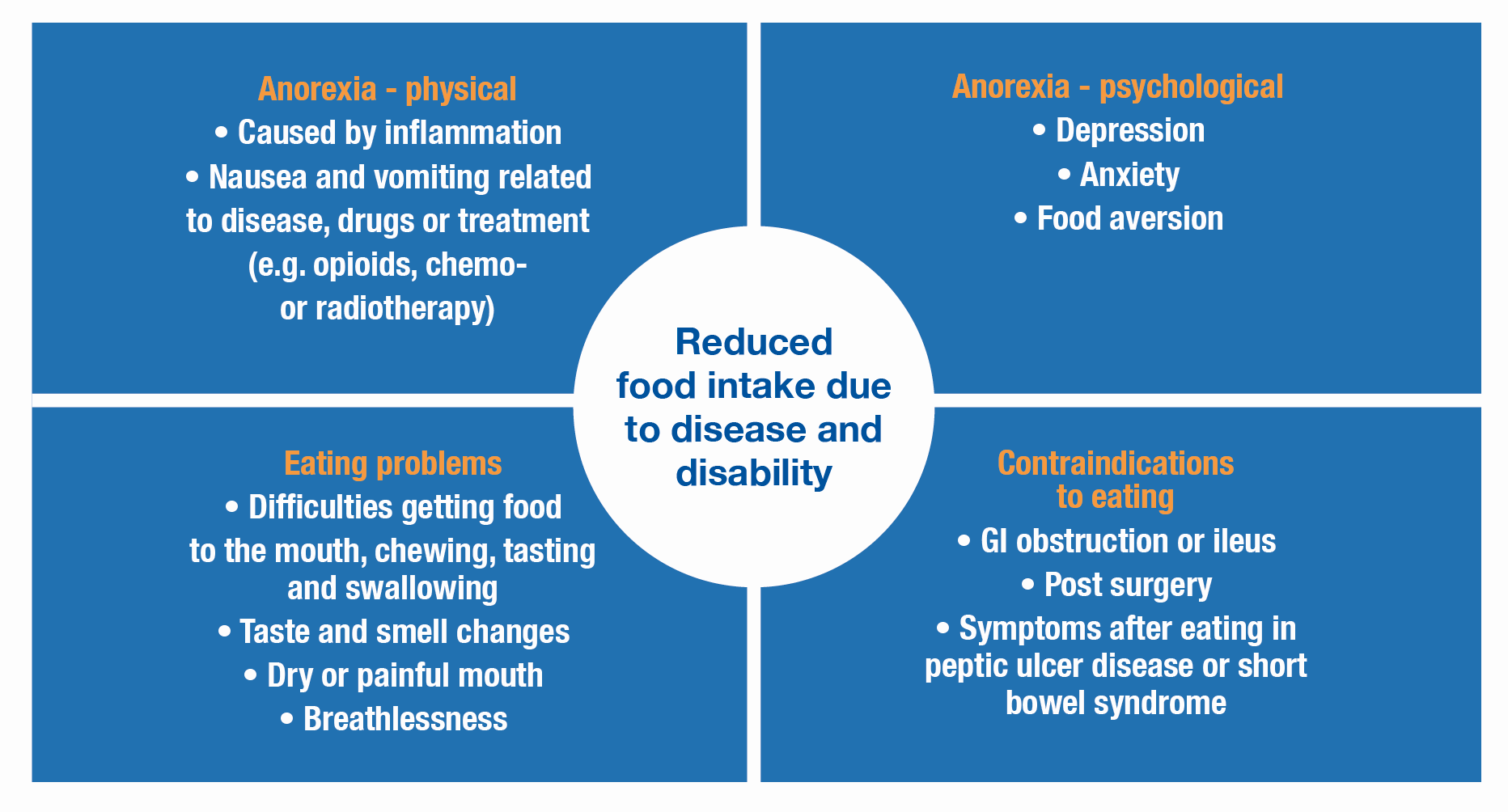
The causes of malnutrition are multifaceted, involving both environmental and dietary factors. Increased nutritional needs, chronic infections, and socioeconomic conditions are all recognized as contributors to malnutrition. Additionally, poor food and nutrient intake, often due to disability and disease, are central factors in the development of malnutrition; here are some examples:
- patients with cancer may have altered taste, nausea and anorexia due to their medical treatment
- patients with stroke or other neurological conditions may have swallowing difficulties or problems with self-feeding for example, poor oral-motor function in cerebral palsy
- breathlessness in severe respiratory disease can make eating difficult
- patients with severe dementia may forget to eat or even forget how to eat
- poor dentition and swallowing problems are a particular problem in older people
- inadequate nutritional knowledge and food insecurity may contribute to poor food and nutrient intake.
Inadequate food intake is common in patients in hospital including in children and older people and in patients in the community. More than 50% of patients in hospital don’t eat the full meal they are given and 22% of nursing home residents eat half of their served portion.
As a result, energy, protein and micronutrient intake (vitamins, minerals and trace elements) is compromised and often fails to meet recommendations or estimated requirements, which may be increased in disease. Identification of and addressing where possible the underlying causes of malnutrition will help ensure maximal effectiveness of nutritional support.
Many other factors at organisational or institutional level exacerbate the problem of malnutrition such as:
- lack of nutritional policies and equipment for screening
- lack of a clear description of responsibilities for health authorities, institutions and healthcare workers
- lack of leadership in nutrition policy at the hospital, regional, and national level.
- lack of nutritional knowledge due to inadequate training
- poor documentation of nutrition related information
- lack of adequate nutrition care planning and lack of monitoring
Conclusion
The causes of inadequate food intake to meet nutritional requirements in disease and disability are multi-factorial. They include patient-related factors as well as organisational and institutional factors. Therefore, a multi-disciplinary approach is needed to identify and implement appropriate and effective solutions. With clear leadership, all stakeholders need to be involved from national and professional bodies (to set national nutritional policy/quality standards) to the patient and carer. Awareness of the issue of malnutrition and education on how to manage it are vital components in achieving success in the fight against malnutrition.
Recommendations
| Action | Issue to consider |
|---|---|
| Evidence based approaches for nutritional care plans should be used, taking into account the causes of malnutrition, the objectives of intervention and also environmental and practical constraints |
|
The effects of disease and treatment on food and thus energy and nutrient intake are key factors in the development of malnutrition in adults and children
- Table 1.12 summarises the causes of nutritional inadequacy in various diseases.
- For children with faltering growth, contributing factors include not only underlying medical conditions, but also factors such as parental attitude and cultural beliefs, child management/coercive behaviour, maternal influences/family difficulties, poverty, neglect, and abuse. Progression through weaning, appetite, feeding difficulties, excess fluid, and dental caries are also important considerations.224
Diseases associated with malnutrition and causes of nutritional inadequacy(adapted from Gibbons and Fuchs 2009)225
| Disease or risk factor | Cause of inadequacy |
|---|---|
| Short bowel syndrome |
|
| Cystic fibrosis |
|
| Inflammatory bowel disease |
|
| Chronic liver disease |
|
| Chronic kidney disease |
|
| Heart disease |
|
| Cancer |
|
| Neurological diseases |
|
| Acute metabolic stress, e.g. burns, trauma, surgery |
|
| Unknown causes |
|
Poor food intake due to disease or disability leads to inadequate energy and nutrient intake
- Poor food intake may occur for a variety of reasons associated with disease and disability in adults and children, and it may be physical or psychological in origin (see Figure 1.18). Patients with cancer may have altered taste, nausea and anorexia due to treatment, whilst patients with stroke or other neurological conditions may have swallowing difficulties or problems with self-feeding, for example, poor oral-motor function in cerebral palsy. Breathlessness in severe respiratory disease can make eating difficult. Patients with severe dementia may forget to eat or even forget how to eat.