2.1.3 What is medical nutrition?
What is medical nutrition?
Medical nutrition products are specific nutritional compositions for disease intervention that effectively contribute to the therapeutic regimen by improving a patient’s general condition.2 The products within the medical nutrition category are sometimes referred to collectively as medical foods, clinical nutrition, or individually as enteral tube feeds or ONS. In addition, the term ‘medical nutrition’ is often used to refer to a particular category of foods defined within food law as Foods for Special Medical Purposes (FSMPs) (see also ‘Who makes medical nutrition products?’).
Parenteral nutrition is also a form of medical nutrition, but it is regulated as a medicine it is not part of the FSMP category. For the purposes of this dossier the term ‘medical nutrition’ will be used to refer to the entire spectrum of nutrition support strategies that use commercially available products manufactured by medical nutrition companies. In essence it covers all nutrition support techniques except dietary counselling which involves modification of the normal diet and normal food (see Figure 2.1).
What are the different types of medical nutrition?
There are a variety of methods of nutrition support available which can be delivered via different routes i.e. oral, enteral and parenteral depending on the needs and clinical condition of the patient (see Figure 2.2).
Oral nutritional supplements (ONS) are liquid, semi-solid or powder products that provide macronutrients and micronutrients with the aim of increasing oral nutritional intake. ONS are typically used to supplement food intake which is insufficient to meet requirements. However, many ONS are nutritionally complete and in some situations can be used as a sole source of nutrition.
Enteral tube feeding (ETF) is nutrition support delivered directly into the gastrointestinal tract via a tube. A variety of enteral feeding tubes and routes are available and decisions about the most appropriate technique are influenced by a number of factors including underlying medical condition, likely duration of tube feeding, gastrointestinal access and function and patient preference. More details about the different methods of ETF are covered in Section 3.2.
Parenteral nutrition (PN) is the intravenous administration of nutrients directly into the systemic circulation, bypassing the gastrointestinal tract. Depending on the accessibility of the venous system and the planned duration (short-term or long-term) of nutrition support, parenteral nutrition solutions are administered either via a central venous catheter or peripheral venous cannulas (see Figure 2.2). PN represents an alternative or additional approach for nutritional intervention when nutritional needs cannot be met from the oral or enteral routes alone or are contraindicated.
Nutritional support is not restricted to the exclusive administration of ONS, EN or PN, but they may complement each other, e.g. enteral feeding with supplementary PN, overnight enteral tube feeding in addition to diet and/or ONS.
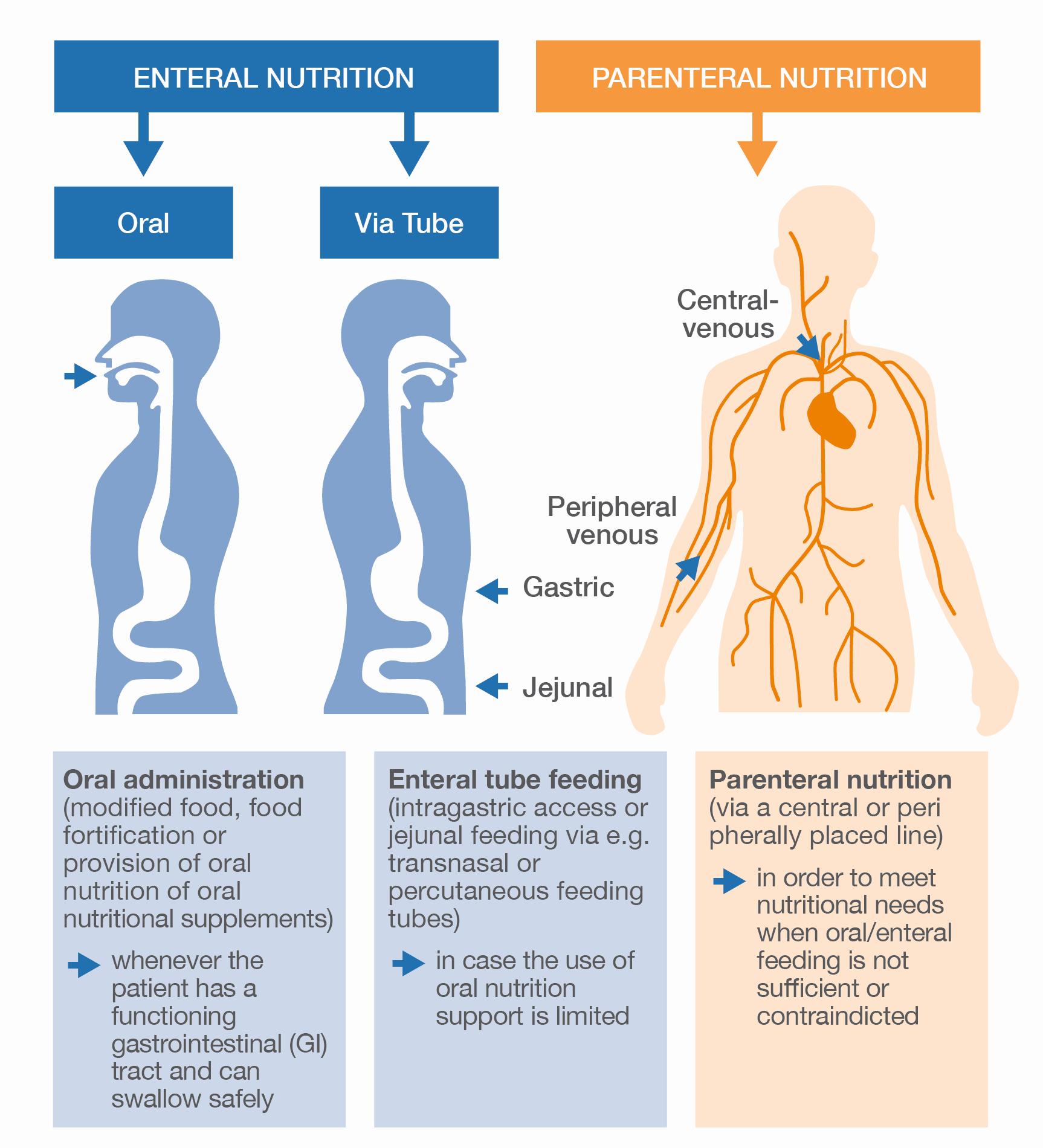
Methods of nutrition support (based on NICE (2006; 2017) and reproduced by kind permission of Fresenius Kabi))1,3
An extensive range of ONS, ETF and PN products is available, many of which can be used as a sole source of nutrition. In many patients, medical nutrition is used to supplement oral intake, where food intake is insufficient to meet nutritional requirements.
Why is medical nutrition needed?
‘Food and nutrition intake is fundamental to good health and resistance to disease. There is a positive duty at common law to care for and provide such treatment as is in the patient’s best interests and to take such reasonable steps as are necessary to preserve life. Where nutrition as food and fluid (including nutrition support) is necessary to preserve life, the duty of care will normally require the supply of such nutrition or nutrition support.’ (NICE, 2006)1.
“How will history judge the early 21st century? If things go on as they are, the verdict will be dismay and condemnation, that wealthy societies and established social protection systems could allow the tragedy of malnutrition to occur in such a large segment of the population. This is just not tolerable, and the European Nutrition for Health Alliance, with growing support, is determined to tackle this issue.” Mel Read, former Member of the European Parliament.
In circumstances where patients are unable to consume enough food to meet their nutritional needs to sustain life, medical nutrition (ONS, ETF and/or PN) is used. In all cases the potential benefits of nutrition support must be weighed against the potential risks or burden of providing it and this should be assessed on a case-by-case basis. In addition, according to the Vienna Declaration signed during the 2022 ESPEN Congress, access to nutrition care is recognised as a human right.4
What decision process is used to decide if medical nutrition is needed?
Decisions regarding the need for medical nutrition are undertaken by healthcare professionals in collaboration with patients and/or care givers. To maximise positive outcomes and to ensure patient safety, decisions about initiating, monitoring and cessation of medical nutrition should be undertaken by healthcare professionals who are experts in the topic. A Nutrition Support Team (NST) is a multidisciplinary team consulted to manage patients with complex nutritional needs (enteral and parenteral) which serves the primary responsibility of hot assuring that patients receive optimal nutrition support. Core members can include doctors, dietitians, nurses and pharmacists.Activities range from direct patient care to the development of guidelines and protocols for implementation by other healthcare workers (see Figure 2.3).5
Healthcare professionals should look to evidence-based guidelines to assist them in selecting the most appropriate method of nutritional support for their patient, taking account of a wide variety of factors including:
- the goals of care
- patient’s nutritional needs
- ability to take, digest, absorb, metabolise or excrete foods, nutrients or metabolites
- diagnosis and prognosis
- patient’s ability to adhere to the intervention
- patient safety
Experts locally, such as a NST, or nationally and internationally can and have developed guidelines, protocols, pathways and decision trees that can be employed by other healthcare professionals in the management of patients who require medical nutrition. See Section 4 for examples of international and internationally recognised guidelines that include ONS, EN and PN.
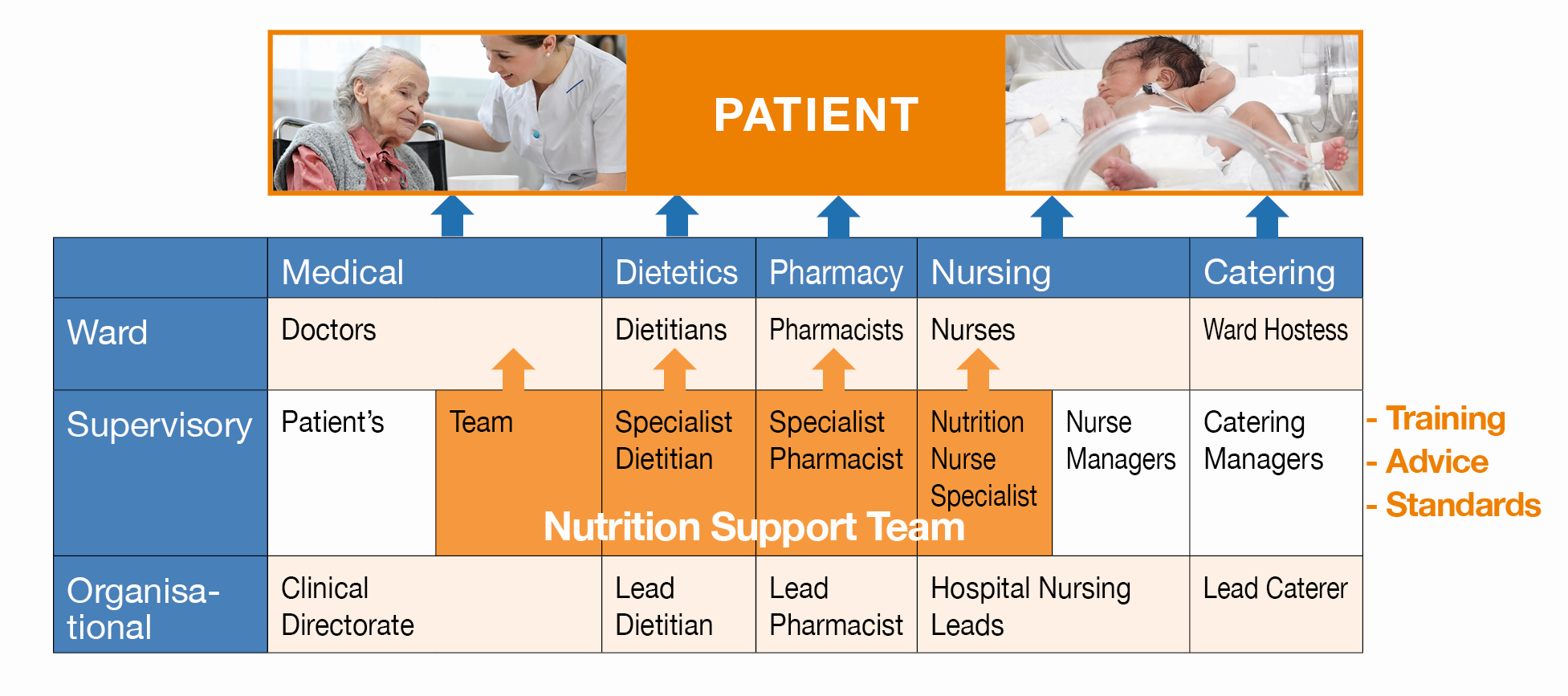
Nutrition Support Team members and range of activities (adapted from BAPEN see http://www.bapen.org.uk/ofnsh/page7.html (accessed 01.03.25))
It is essential that healthcare professionals combine their clinical experience and practical common sense with a sound knowledge of the evidence base in the provision of nutritional support, e.g. a patient with a poor appetite may not be able or willing to consume extra food or may lack the energy or ability to prepare it, a patient who has lost the ability to swallow may need ETF or a patient with intestinal obstruction may need PN. Medical nutrition products were conceived specifically to meet these medical needs, providing energy and nutrient-dense solutions in easily delivered forms. Patient pathway algorithms are available to assist with decision making, an example is shown in Figure 2.4.
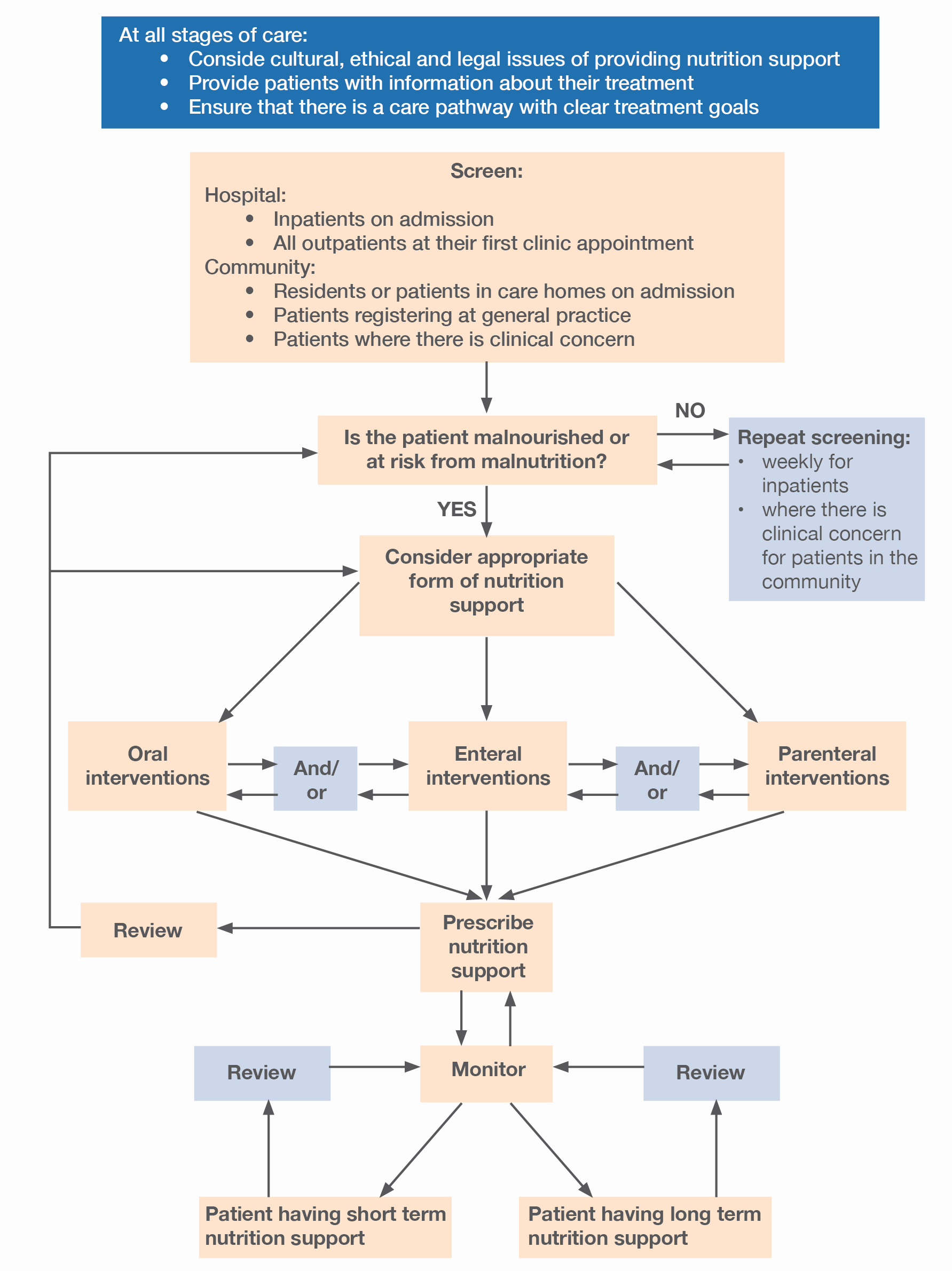
Example of a patient pathway algorithm for medical nutrition/nutrition support (NICE 2006)1
What are the goals of nutrition support using medical nutrition?
The overall goal of nutrition support is to meet the total nutritional needs of the patient. Medical nutrition helps to sustain life by providing either all or some of the patient’s energy, protein, vitamin, mineral, trace element and fluid requirements depending on whether the patient is able or willing to consume some food. The aim may be to improve, maintain or minimise deterioration in nutritional status depending on the underlying health issue and prognosis. A large body of evidence has accumulated over many years demonstrating the nutritional, functional, clinical and economic benefits of medical nutrition. This will be presented and discussed in subsequent sections of this document.
Who needs medical nutrition and when?
Medical nutrition may be required from birth or at any stage during infancy, childhood, adulthood or in old age. It may be required for a short period of time to support a patient through recovery from injury or through a course of medical or surgical treatment. In the case of chronic disease, it may be needed for a prolonged period of time, for example weeks, months or years. It will be required for life in patients where the consumption of normal food is not possible e.g. patients with rare metabolic disorders such as phenylketonuria (PKU), permanent loss of swallowing following a stroke or for patients with short bowel syndrome where there is no longer sufficient functioning bowel available to adequately digest and absorb nutrients. Indications for nutrition support are outlined in Table 2.1 (adapted from Sobotka et al.).6
Typical general indications for oral nutrition supplements (ONS), enteral tube feeding (ETF) and parenteral nutrition (PN) in patients with malnutrition or risk of malnutrition in hospitals and the community (adapted from Sobotka et al.)6
 HOSPITAL HOSPITAL |
 COMMUNITY COMMUNITY |
|---|---|
| ONS Inadequate food intake in malnourished patients not requiring ETF or PN |
ONS Inadequate food intake in malnourished patients not requiring ETF or PN |
| ETF Inadequate oral intake in patients with functional gut and/or swallowing problems (e.g. following stroke) |
ETF Persistent swallowing problems (e.g. stroke, motor neurone disease, multiple sclerosis and cancer of the upper gastrointestinal tract) |
| PN Gut unavailable for adequate feeding (e.g. post operative ileus, gastrointestinal obstruction or mucositis) |
PN Persistently or permanently unavailable gut (e.g. short bowel syndrome, gastrointestinal obstruction and pseudo-obstruction (propulsive disorder)) and/or inadequate feeding by ONS / ETF |
Patients may require nutrition support using ONS, ETF or PN alone or in combination in hospital or in the community, either in institutions such as care homes or in their own home. The prevalence of HETF and HPN is covered in more detail in subsequent sections.
What would happen if patients could not access medical nutrition?
For many patients, either in hospital or living in institutions or in their own home in the community, medical nutrition is their sole source of nutrition. If medical nutrition products were unavailable these patients would be unable to meet their nutritional requirements resulting in deterioration in nutritional status and ultimately death through starvation and/or dehydration. Over the years there have been many innovations in the formulation of ONS and ETF products to meet the needs of specific patient groups. These products are design to deliver complete and balanced nutrition for patients of different age groups (infants, young children, adults and older people) with a wide range of conditions e.g. cancer, malabsorption, diabetes, liver or renal disease. Inability to access medical nutrition specifically designed for the correct age group or condition could lead to over- or under-delivery of essential nutrients.
Medical nutrition is also used to supplement inadequate food intake in patients who are unable to eat sufficient food to meet their needs or in a pre-thickened format for patients who have difficulty swallowing. Failure to meet nutritional needs over time leads to deterioration in nutritional status leading to loss of function, poorer clinical outcome and increased healthcare resource use and costs resulting from increased complication rates, longer hospital stay and more frequent readmission to hospital (See Section 1.4 ‘Consequences of DRM’ for further information).
Who makes medical nutrition products?
Medical nutrition products (ETF and ONS) are manufactured by specialist medical food companies. Medical Nutrition products are sometimes referred to as ‘borderline substances’ as they ‘exist between conventional foods and pharmaceuticals at the so-called food-pharma interface’2 (see Figure 2.5). PN products are classed as prescription only medicines (POM) and are therefore only produced by companies with a pharmaceutical licence.
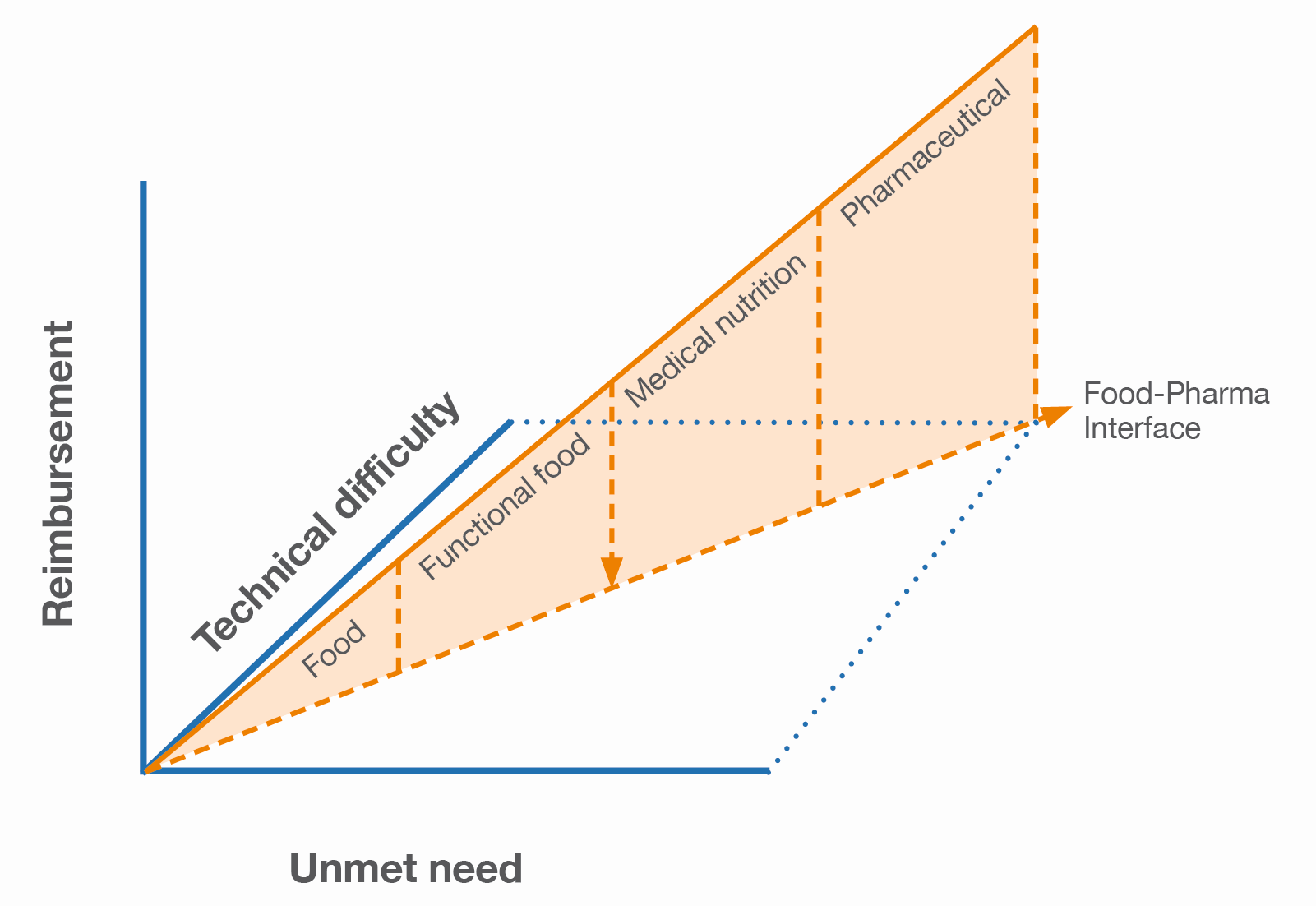
Industries situated at the food-pharma interface (adapted from Weenan 2013)2
Medical nutrition that can be delivered via the oral or enteral route (see Figure 2.1) is classed as Foods for Special Medical Purposes (FSMPs) as defined in Regulation (EU) 609/2013 on food intended for infants and young children, food for special medical purposes and total diet replacement for weight control. The regulation defines FSMPs as “products specially processed or formulated and intended for the dietary management of patients, including infants, to be used under medical supervision; it is intended for the exclusive or partial feeding of patients with a limited, impaired or disturbed capacity to take, digest, absorb, metabolise or excrete ordinary food or certain nutrients contained therein, or metabolites, or with other medically-determined nutrient requirements, whose dietary management cannot be achieved by modification of the normal diet alone.”
There are 6 important elements to the definition of an FSMP, all of which should be taken into account in determining whether a product falls within the scope of the category. A food product can only be categorised as an FSMP if all 6 elements of the definition are met, based on its intended use. When determining whether a product falls within the scope of the FSMP category, consideration must be given to each element.
The six elements of the Foods for Special Medical Purposes (FSMP) definition
|
The six elements of the FSMP definition The product is: |
||
|---|---|---|
| i | Specially processed or formulated for its intended use. | ✓ |
| ii | Intended for the dietary management of patients, including infants. | ✓ |
| iii | Intended to be used under medical supervision. | ✓ |
| iv | Intended for the exclusive or partial feeding of patients. | ✓ |
| v | Intended for patients who have a limited, impaired or disturbed capacity to take, digest, absorb, metabolise or excrete ordinary foodstuffs or certain nutrients contained therein or metabolites, or with other medically-determined nutrient requirements. | ✓ |
| vi | For patients whose dietary management cannot be achieved by modification of the normal diet alone. | ✓ |
In Europe, the legal definition of FSMPs (e.g. ONS, ETF) highlights that medical nutrition products fall within the scope of the FSMP category of foods when the nutritional requirements associated with the disease or medical condition (for which the FSMP has been specially processed or formulated) cannot be achieved by the modification of the normal diet. There is no documented definition of modification of the normal diet, but it can be considered to include the following:
- modification of balance of foods (i.e. eating more or less of certain foods);
- modification of nutrient density of foods, e.g. through adding cream, butter or sugar to increase the energy content of foods such as soups, vegetables and puddings;
- alteration of the consistency of foods, such as pureeing;
Medical nutrition is indicated when normal food items are not suitable, impractical or inadequate to meet the nutritional needs caused by the patient’s disease or medical condition.
Development of medical nutrition.
Before the development of commercially available ETF formulas recipes of milk, eggs and additional nutrients or liquidised food made up in hospital kitchens were used to attempt to meet the nutritional needs of tube fed patients. These ‘home-made’ mixtures posed numerous problems including issues with food-borne microbial contamination, difficulties achieving reliable or consistent delivery of micronutrients, tube blockage due to difficulties in achieving a homogeneous consistency, the need to use very large bore tubes that were uncomfortable for patients, the time needed for preparation and administration, difficulties with storage and short-shelf life and in particular the problems associated with providing adequate nutrition and in a reasonable volume.
The first commercially available ETF formulas came on the market in the 1960s and were elemental i.e. consisted of amino acids and glucose. Later nutrient ‘intact’ formulas based on maltodextrin, protein and fats were introduced and were designed to be nutritionally complete. Many were flavoured and so could be used via a tube or taken orally.Throughout the 1980s and beyond, many innovations in ETF and ONS took place including the addition of fibre and the modification of formulas to meet the nutritional needs of specific patient groups as mentioned earlier. A major development was the design of formulas to meet the needs of different age groups from infants and children to adults. More recently, developments such as the design of low volume, energy dense ONS, the addition of specific nutrients to help modulate the immune system (immuno-nutrition), addition of omega 3 fatty acids to target cancer cachexia or modifying the consistency of products to meet the needs of patients with swallowing problems have taken place.
In recent years there has been a trend amongst a minority of patients on HETF (and in some hospitals) choosing to use blenderised or liquidised home-made meals administered via enteral tubes. Feedback from the Dietitians Interested in Special Children (DISC) group indicated that up to 20% of their paediatric HETF patients now incorporate some form of blended diet, either as a replacement for or in combination with commercial enteral formulas.7
This practice carries risks of nutritional inadequacy, increased likelihood of tube blockage, increase in infection risk and enteral feeding tubes/equipment have not designed for this purpose. In guidance relating to the prevention and control of healthcare-associated infections NICE recommend that ‘wherever possible pre-packaged, ready-to-use feeds should be used in preference to feeds requiring decanting, reconstitution or dilution’.9 There are particular risks of this mode of feeding to infants aged less than six months, patients fed via the jejunal route and patients who are immuno-compromised. Additional costs are likely both for the patient/care giver for additional equipment and for the healthcare provided from increased dietetic resource required to support the patient and from increased complications as listed above. If patients or carers decide to administer liquidised food via an enteral feeding tube an individualised risk assessment should be carried out in line with local policy.10
Currently in Europe enteral tube feeds are integrated into reimbursement systems so funding issues are less of a concern.11 However, the issues associated with the use of ‘home-made’ feeds outlined above illustrate how important it is to maintain funding for ETF products to safeguard patients. For patients requiring PN, there is no alternative to medical nutrition and lack of it would quickly result in dehydration and death.12
Parenteral nutrition entered clinical practice in the late 1960s and was one of the most important developments in medicine after antisepsis, anaesthesia, and antibiotics.PN is a highly complex, multi-component sterile drug with as many as fifty components making it probably the most complex therapy in modern medicine.13 In the early days, PN was delivered with multi-bottle systems i.e. amino acids, glucose, electrolytes and fat administered in parallel from separate bottles by combining multiple connectors delivering into a common IV catheter. The single-bottle system is associated with various disadvantages rendering its use inconvenient in clinical practice, such as the need for a connector and multiple administration sets, frequent bottle changes, the necessity to set up different, irregular flow rates and the need to make many additions which is time consuming and increases the probability of administration errors.14,15
Innovations in formulation and presentation have enabled the provision of ready-to-use (RTU) bags. RTU systems comprise all components of PN (macronutrients, water, electrolytes, vitamins and trace elements) individually admixed in one container and administered via one single infusion line.15 Clinical advantages of RTU admixtures include: simultaneous supply of all nutrients leading to improved utilization and nitrogen balance and less metabolic complications 16-18 and fewer manipulations leading to reduced risk of errors and infections.18-21
Specialist medical nutrition manufacturers continue to invest in research programmes designed to identify and meet the existing and emerging health needs of patients of all ages from birth into older age and constantly strive to bring improvements and innovations that address patient safety issues.
What is the science behind medical nutrition and how has it evolved?
As progress in nutrition and medical research has advanced to meet the complex needs of patients, the manufacturers of medical nutrition products have responded to these needs by developing an increasingly diverse range of products specifically designed to meet the needs of different age groups and different medical conditions.
In addition to being based on sound medical and nutritional principles, medical nutrition products are often recommended and endorsed by expert groups and consensus panels from many European and national scientific medical and nutrition societies such as ESPEN (European Society for Clinical Nutrition and Metabolism), ESPGHAN (European Society of Paediatric Gastroenterology, Hepatology and Nutrition) and ECCO (European Crohn’s and Colitis Organisation). In addition, they are also endorsed by national expert groups and reference groups and integrated in disease management protocols together with drug therapy and general medical support (for further information refer to Section 4 ‘Medical Nutrition in key guidelines’). Basics in nutrition and metabolism and basic principles for disease management together with the experience-based clinical practice supported by solid scientific data (epidemiological studies, observation studies, intervention studies and systematic reviews) lays the foundation for these state-of-the-art guidelines/recommendations. Medical nutrition products are designed accordingly. However, it should be noted that there are inherent difficulties in undertaking studies to demonstrate the clinical benefits of medical nutrition since it is undesirable and unethical to randomise patients who are malnourished or at risk of malnutrition to control groups that receive no nutrition support.
Medical nutrition is a new area that is rapidly evolving and brings a great deal of innovation to nutritional intervention. Since the 1960s many innovations in medical nutrition have supported better management of patients worldwide. Research undertaken by medical nutrition companies focuses on using medical nutrition to improve patients’ lives, target specific therapeutic areas at different stages in life and provide effective solutions for healthcare professionals to meet patients’ needs.
In subsequent sections of this document the evidence base for ONS, ETF and PN will be outlined to demonstrate the nutritional, functional, clinical and economic benefits of medical nutrition. As the needs of patients and healthcare providers have evolved over time, so too has the science behind medical nutrition. Research continues to drive innovation to achieve the optimal outcome for patients by identifying potential improvements in the formulation, timing, duration and route of nutrition support. Increasingly healthcare providers and payors are interested in the cost-effectiveness of medical nutrition and so this has become a major focus in recent years.
Is medical nutrition part of recognised recommendations and standards in healthcare?
Section 4 of this document provides detailed lists of nationally and internationally recognised evidence-based standards and guidelines developed by learned societies or multi-professional groups that recommend ONS, ETF and PN as an integral part of patient care. The lists are organised by country, age and patient group and demonstrate the wide acceptance that medical nutrition is an essential part of good nutritional and overall patient care.
Is medical nutrition effective?
Section 3 of this document outlines the nutritional, functional and clinical benefits of ONS, ETF and PN. There is consistent, good quality evidence from multiple individual trials and meta-analyses demonstrating the beneficial nutritional, functional and clinical effects of ONS in malnourished patients. ETF is an important life-saving technique used widely across all healthcare settings in patients of all ages with a variety of medical conditions. The use of ETF is increasing in the community and many patients on home enteral tube feeding (HETF) live independently and achieve normal activity levels. ETF has nutritional, functional and clinical benefits but the evidence based on randomised controlled trials (RCTs) is more limited than for ONS. Because of the value of ETF in sustaining life it is often considered unethical to withhold treatment. This means undertaking RCTs, whereby one group of subjects is randomised to receive ETF whilst the other group don’t, would be considered to be unethical. PN is also an important life-sustaining therapy for adults and children when oral and enteral nutrition is contraindicated, impossible or inadequate. PN can be used for patients of any age and across all healthcare settings. Use of PN has transformed the prognosis for many patients with formerly fatal conditions and is considered one of the most important advances in paediatric therapeutics over the last four decades. Because PN is a life-saving therapy for patients with intestinal failure, evaluation of its efficacy compared with no nutrition support is not possible. RCT evidence for PN is more limited than for ONS or ETF. However, numerous prospective and retrospective observational studies (and some RCTs) have demonstrated nutritional, functional and clinical benefits of PN.
Is medical nutrition cost-effective?
Besides improving the well-being of patients, fighting malnutrition with ONS is an opportunity for healthcare providers to control costs. This is especially relevant in light of the ageing population and the high prevalence of chronic disease that adversely impacts nutritional status, which in turn contributes to increased cost burden. Comprehensive systematic reviews have shown that managing malnutrition with ONS can produce an average cost saving of around 10% compared to standard care across a broad range of patient groups. Meta-analyses in hospitalised patients show that ONS use is associated with 1 in 3 fewer deaths, 1 in 3 fewer complications and shorter length of hospital stays. Controlling and managing malnutrition with ONS is a clinically and cost-effective solution. There is limited data available in the literature about the potential cost savings and cost-effectiveness of ETF across healthcare settings, from different countries and in particular in children.
However, in England an economic evaluation of the use of nutritional support including ONS, ETF and PN ultimately saves rather than costs money (£119,000 – £432,000 per 100,000 depending on the model used) (See Section 3, Figure 3.14). The report highlights that it is necessary to make a commitment to invest money before the financial benefits can be reaped.22 Published data about the potential cost savings and cost-effectiveness of PN across healthcare settings and in different countries are limited. However, PN has been shown to compare favourably with other supportive treatments used in the ICU (e.g., dialysis). Furthermore, timely use of PN in the ICU has also been shown to significantly reduce the total cost of acute hospital care in the US. HPN is also likely to be cost-saving compared with hospital-based PN for many healthcare systems as it shortens length of hospital stay for patients who are ready to be discharged but who require intravenous nutrition. Moreover, a nutrition-focused quality improvement program targeting malnourished hospitalised patients in the US led to significant reductions in 30-day readmissions and hospital length of stay, resulting in substantial cost savings. The program generated total savings of $1,902,933 compared to patients treated before the program was implemented and $4,896,758 compared to a separate group of patients receiving standard care during the same period. Per-patient savings were $1,499 when compared to pre-program patients and $3,858 when compared to those receiving usual care.23
Introduction of commercial, premixed multichamber bag PN also realises considerable cost savings for both adult and paediatric patients by reducing preparation costs and improving safety.
What are the current concerns/major obstacles to the use of medical nutrition?
Although in many countries advances have been made in recent years to implement screening programmes to ensure that patients who are malnourished or at risk of malnutrition are identified and managed appropriately, still malnutrition often goes unrecognised and untreated. Unless malnutrition is identified appropriate action cannot be taken. A survey entitled ‘experiences of patient malnutrition’, carried out by Dods Research in association with AGE UK and the Malnutrition Task Force, examined the responses of 1,518 healthcare professionals in the UK. The research found that only half (51%) thought malnutrition was a priority in their organisations. Furthermore, just 47% felt confident that they had sufficient knowledge and skills to help people at most risk of malnutrition. In addition, a systematic review evaluating the nutrition knowledge of physicians and nurses found that their average scores ranged from 32.5% to 72% correct, with the lowest levels of knowledge observed in the area of medical nutrition therapy.24
This highlights the need for increased efforts to integrate information on the prevalence, causes, consequences of DRM and how medical nutrition can be used to tackle malnutrition, into the education and training of healthcare professionals. In addition, nutrition screening and management should be part of national healthcare policy and plans in all countries.
Many patients and carers see the development of malnutrition as an inevitable part of disease or ageing. Public health campaigns could be employed to educate patients and carers about how to identify malnutrition, how to seek help and how to manage the condition.
To ensure equitable access to medical nutrition and to mitigate the high cost associated with DRM healthcare providers and payers should take account of the evidence base for the cost effectiveness of medical nutrition to ensure that medical nutrition is funded and available to all those that need it.