
1.4.1 Functional consequences
Malnutrition has functional consequences in adults and older people
Malnutrition is associated with decreased muscle function and impaired functional status. In adult hospital patients, decreased hand-grip strength is a predictor of loss of functional status.277 Reduced muscle strength and fatigue can lead to falls, reduced ability to self- care, and poor recovery from chest infection.122 Muscle atrophy and loss of strength can occur rapidly during extended periods of disuse or mechanical unloading, such as after acute hospitalization or bed rest.278 Even brief periods of disuse, though sometimes necessary for recovery from illness or injury, may have adverse health effects.In individuals who are already malnourished, these effects can further intensify the functional consequences associated with malnutrition. A systematic review analysing the effects of short-, medium-, and long-term bed rest (ranging from 5 to 120 days) in a pooled sample of 318 healthy adults found significant strength loss and muscle atrophy in the knee extensor muscles. The most substantial decline in strength and muscle mass occurred in the early stages of bed rest, after which the decline plateaued.278 In another study examining short-term disuse (<10 days), ten healthy young men underwent one week of strict bed rest. The results showed an average loss of 1.4 ± 0.2 kg in lean tissue and a 3.2 ± 0.9% reduction in quadriceps cross-sectional area (both P < 0.01).279
- Malnutrition leads to significant muscle wasting and weakness, resulting in inactivity and reduced ability to perform daily activities such as working, shopping, cooking, and self-care. In a recent study among community-dwelling older adults, higher daily protein was associated with a slower decline in walking speed and a reduced likelihood of developing mobility limitations, independent of physical activity levels.280
- Low plasma vitamin D levels (< 20 ng/ml) have been associated with poorer physical performance and a greater decline in physical performance than with plasma vitamin D levels of at least 30 ng/ml.59 In addition, low plasma vitamin D concentrations have been associated with a greater risk of future nursing home admission, and they are independently associated with an increased risk of falling in older people, particularly in those aged 65–75 years.281,282
- The clinical criteria for frailty (‘shrinking’ [i.e. unintentional weight loss/sarcopenia], weakness, poor endurance, and low activity) are associated with chronic under-nutrition resulting in loss of weight and muscle mass and poor muscle function.283
- One study highlights the that over one-third of hospitalised older adults had disease-related malnutrition or sarcopenia, both of which were significantly associated with higher hospital readmissions, mortality, and reduced quality of life, high prevalence of disease-related malnutrition and sarcopenia in older adults, reinforcing the link between undernutrition and frailty in older adults.284 Malnutrition is further described as part of a spectrum that includes cachexia and sarcopenia in cancer patients, all of which contribute to muscle wasting and worsening physical function.285 It has also been emphasised that low muscle mass and malnutrition significantly impact overall health status, increasing morbidity and the risk of disability in older adult patients with cancer.286 Without appropriate intervention, frail older people are likely to experience functional limitations and disability, increased morbidity and use of healthcare resources, and mortality.214 Therefore, it is essential to address the risk of malnutrition early and provide appropriate treatment, as this will improve overall patient outcomes and reduce related healthcare costs.
- A review of the links between nutrition and frailty suggested that loss of appetite, weight loss, sarcopenia, low energy and protein intake, low intake, and blood levels of vitamins (B, C, D, E, folate), antioxidants (carotenoids) and trace elements (selenium and zinc) influence the development or aggravation of frailty.287
- Maintaining function in older people is considered a high priority by the WHO with an objective to prevent decline and institutionalisation (see Figure 1.23). Indeed, through the UN Decade of Action on Nutrition (2016–2025), the WHO aims to combat all forms of malnutrition by promoting sustainable food systems, improving healthcare interventions, and strengthening nutrition policies.132 This is important, given that frailty and malnutrition are associated with increased healthcare utilisation and higher rates of hospital readmission. Overall economic burden is higher than compared to well-nourished individuals.288,289
- A systematic review and meta-analysis of 19 studies examining the relationship between malnutrition and cognitive frailty in older adults revealed that 57% of older adults with cognitive frailty were malnourished. The meta-analysis demonstrated that malnourished older adults had a 3.77 times higher risk of developing cognitive frailty compared to well-nourished individuals (OR = 3.77, 95% CI: 2.49–5.69).290
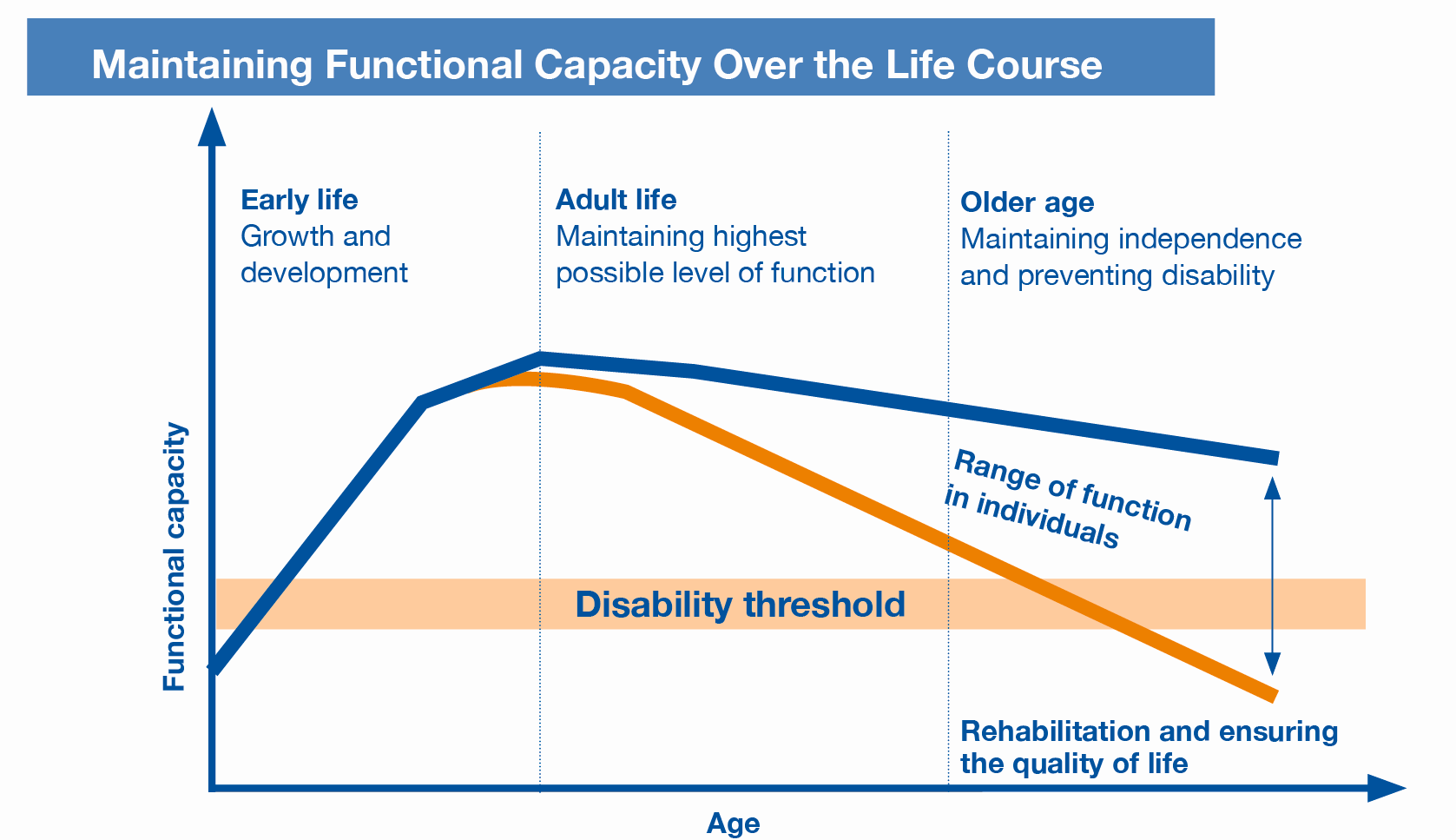
Maintaining functionality and independence 291
 Malnutrition is associated with impaired function in children and adults with cystic fibrosis
Using the German Cystic Fibrosis Quality Assurance (CFQA) patient registry, cross- sectional and longitudinal analyses were undertaken in 3,298 patients aged > 2 years to investigate the relationship between malnutrition (stunting and/or wasting in children, BMI < 19 kg/m2, weight < 80% or height < 90% of the median normal value for sex and age in adults) and lung function. The study found that:292
- patients with malnutrition had significantly worse lung function;
- malnourished adolescents had a serious decline in lung function compared with their well-nourished counterparts;
- a fall in weight or height of ≥ 5% predicted within 1 year was associated with decrease in lung function; patients with improved nutrition showed constant or improved lung function.
Malnutrition is associated with impaired quality of life across different diseases including cancer
- Malnutrition has been shown to impair quality of life (QOL) in free-living older people and in patients with cancer, hip fracture, and COPD. Poor QOL is also reported in malnourished surgical patients, patients with end-stage renal disease undergoing haemodialysis and in general admissions to the acute hospital setting.53
- Malnutrition is also strongly associated with impaired QOL in cancer patients, with significantly worsened physical function, reduced treatment tolerance, and increased mortality, leading to diminished overall well-being.293 The Global Leadership Initiative on Malnutrition (GLIM) criteria have identified a strong correlation between malnutrition and higher mortality, functional decline, and poor QOL in both hospitalised and community-dwelling older adults.294 Among older with gastrointestinal cancers, frailty, low BMI, palliative chemotherapy and gastroesophageal cancer.295
- Additionally, sarcopenia, a condition linked to malnutrition, has been shown to decrease survival rates in cancer patients.296 Cachexia and malnutrition in oncology settings further exacerbate treatment-related complications, negatively affecting patients’ physical health.285
- The importance of systematic nutritional screening in oncology practice has been emphasised as a key factor in improving patient outcomes and maintaining a better QOL.297 Despite its significant impact, malnutrition in cancer care remains underdiagnosed and undertreated, highlighting the need for better nutritional interventions to enhance QOL and overall survival.298