
1.3.2 Community

 Inadequate food intake is common in patients in the community
- A cross-sectional observational study in Sweden found eating difficulties to be common in special accommodation residents, i.e. nursing home-type care (56%). Patients with a low BMI had significantly more eating difficulties than patients with a normal or high BMI.233
- An analysis by nutritionDay of 11,923 non-malnourished nursing home residents found that 22% consumed only half of their served portion, 5.2% ate a quarter, and 1.2% ate nothing at all. The likelihood of developing malnutrition increased as lunch intake decreased. 241
- According to a meta-analysis by Besora-Moreno et al. (2020), low body mass index, insufficient energy intake, and social circumstances are all contributing causes to malnutrition in the elderly. Additionally, the risk of malnutrition is significantly increased (p < 0.001) by living alone, having a poor income, being widowed or divorced, and having little education. 242 Furthermore, due to a lack of regular screening in community settings, malnutrition in older individuals is frequently underdiagnosed.243
- A systematic review and meta-analysis of people aged ≥50 who lived in the community revealed that 17% of them were undernourished, with a higher frequency in women (30%) than in males (22%). The risk of undernutrition increased with age and frailty status. Additionally, 83% of frail people are at risk of undernutrition, and 60% of frail individuals also have sarcopenia, demonstrating the close correlation between undernutrition, sarcopenia, and frailty. 244
- To add to this, sarcopenia and dysphagia are closely linked, and their coexistence can lead to reduced energy intake, dehydration, and worsening malnutrition. Elderly people with sarcopenic dysphagia frequently don’t get enough energy, which makes them more susceptible to undernutrition and fragility. 245
- In a large survey (nutritionDay in 2007) of Austrian and German nursing home residents (n = 1922), 1 in 3 residents ate ≤ 50% of their lunch on the day of the assessment.179
Energy intake is compromised and fails to meet recommended intake levels in community patients
- Stratton et al. (2003) collated studies that measured food intake in a variety of patient groups; in community patients, energy intake was better than in hospital patients but still of concern in a number of patient groups.53
- In community-based older people with medium and high risk of malnutrition (identified using ‘MUST’), total daily energy intake was found to be significantly lower than the national average for older people (1368 [SD 513] kcal vs 1628 [SD 464] kcal, z-score p < 0.004).246
- According to the meta-analysis by Besora-Moreno et al. (2020), the Mini Nutritional Assessment (MNA) is the most reliable method for detecting malnutrition in older adults. The MUST tool, although used frequently, does not include assessments of cognitive and psychosocial aspects.242
- In situations where MNA is not practical, the Subjective Global Assessment (SGA) and Patient-Generated Subjective Global Assessment (PG-SGA) may be substituted.247
- A cross-sectional study of 161 residents in 70 private nursing homes in Finland found that the mean energy consumption was 1,723 kcal/day (SD ± 506 kcal), ranging from 329 kcal to 3,167 kcal/day. Moreover, the energy consumption of female residents was substantially lower (1,557 kcal) than that of male residents (1,888 kcal, p < 0.001).248
- Almohaisen et al. (2022) conducted a meta-analysis of research from North America, South America, Asia, Europe, and Australia, and discovered that 17% of older individuals living in the community are undernourished. Additionally, it stated that women are more vulnerable than men, possibly as a result of lower dietary intake and variations in body composition.11,249
iii Lower reference nutrient intake (LRNI): an amount of a nutrient sufficient for only the few people in a group who have low needs
- A cross-sectional study conducted across five nursing homes (n = 189) found that nearly all residents were at an increased risk of not meeting their energy requirements. The average daily energy intake was 20.7 kcal/kg body weight, with 85.2% of residents consuming less than the recommended amount.250
Protein intake is compromised in patients in the community
- In a study of the nutritional status of older people in low-level care facilities in Australia (semi-independent ambulatory residents; similar to residential care homes in the UK) (n = 95, mean age 85.8±6.6 years), 3-day weighed food intake showed that 30% of residents consumed less than the estimated average requirement (EAR) for protein (i.e. 46 g/day). However, when intake was compared with a requirement of 1 g/kg/day of protein, 77% of residents were found to have an inadequate intake.251
- Frailty affects 2–29% of community-dwelling older individuals in Australia and New Zealand (ANZ), while malnutrition affects 1–17%, with up to 60% at risk of developing these conditions, emphasizing the critical need for early detection, screening, and nutritional treatments. (Rattray & Roberts, 2024).252 Similarly, a meta-analysis of 50,284 older adults from the US, Japan, and Europe found that frailty is substantially correlated with low protein intake, while increasing protein intake reduces the risk by 33% (OR: 0.67, CI = 0.56–0.82, p < 0.0001). Many older adults fail to meet the recommended daily consumption of ≥1.0 g/kg of protein to maintain muscle mass because of social factors, decreased appetite, and dental health problems, which makes them more susceptible to malnutrition and frailty.253
- A cross-sectional study of 161 residents in 70 private nursing homes in Finland found that the mean protein intake was 69 g/day, which falls within recommended levels; however, some residents consumed as little as 14 g/day, indicating a risk of protein-energy malnutrition, with protein intake per kilogram of body weight averaging 1.0 g/kg (SD ± 0.34) and ranging from 0.2 to 2 g/kg BW/day.248 These results are in line with a systematic review and meta-analysis on the risk of protein-energy malnutrition (PEM) in older adults in Europe, which found that 8.5% of older adults living in the community, 17.5% of those receiving residential care, and 28.0% of those hospitalised are at high risk of those hospitalised are at high risk of malnutrition. Additionally, the study discovered that women, adults over 80, and those with comorbidities have an increased risk of PEM (p < 0.0001).128
Micronutrient intake is compromised in patients in the community
- Low intakes (below reference values) of some but not all micronutrients are evident in a substantial proportion of free-living and institutionalised older adults and in those at risk of malnutrition.254,255 Over 80% of older adults have intakes below the reference nutrient intake (RNI) for potassium, magnesium, copper and vitamin D (see Figures 1.20 and 1.21).
- Even in well-nourished, apparently healthy free-living older people consuming adequate macronutrients, lower than recommended micronutrient intake is prevalent and this increases significantly with age.256
- Furthermore, in older populations, frailty, osteoporosis, and cardiovascular disease are linked to micronutrient deficiencies, specifically for vitamin D, B12, folic acid, and calcium.257
- Assessment of energy and nutrient intakes in 52 Swedish nursing home residents showed that of 16 micronutrients considered, males had a mean intake below the Swedish Nutrition Recommendations (SNR) for 9 nutrients and females for 8 nutrients. Intakes of vitamin D, vitamin E, folic acid and selenium were very low, reaching only 40–60% of the SNR.258
- Lower than recommended intakes of fibre, vitamin E, vitamin D and folic acid were found to be particularly common in all age groups of residents in serviced housing in Finland. The proportions of residents failing to meet these nutrient requirements were 98%, 98%, 83% and 86% respectively.199
- In community-based older people with medium and high risk of malnutrition (identified using ‘MUST’), mean total daily intake for micronutrients such as magnesium, iron, zinc, selenium, iodine, vitamin A and folate was found to be below the RNI and the national average daily intake in older people.246
- According to a systematic review conducted in several Western countries, including European countries such as Sweden, Spain, France, and the UK, as well as Australia, the USA, and Canada, many older adults in the community suffer from deficiencies in essential trace minerals, such as copper, zinc, selenium, and iodine. Research shows that 31% of women and 49% of men suffer from zinc deficiency, and 49% of women and 37% of men consume less selenium than the Estimated Average Requirement (EAR). Furthermore, a significant percentage of older adults do not consume enough iodine and copper each day, which raises the possibility of health issues linked to micronutrient deficiencies.259
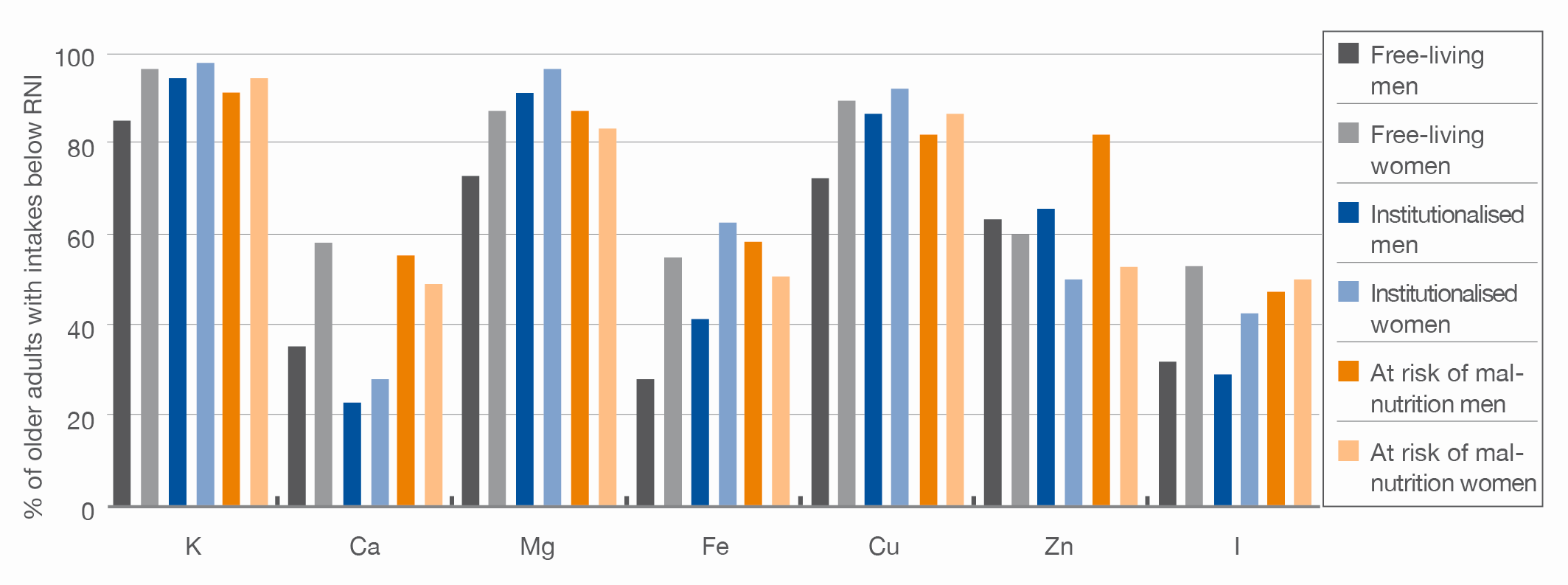
Percentage of older adults in the UK with mineral intakes below the RNI (adapted from Stratton 2007)254
RNI for men and women aged ≥ 50 years. Number of patients varies according to micronutrient and group (male and female): free-living (n = 540–735), institutions (n = 93–319), at risk of malnutrition (all settings n = 55–80)
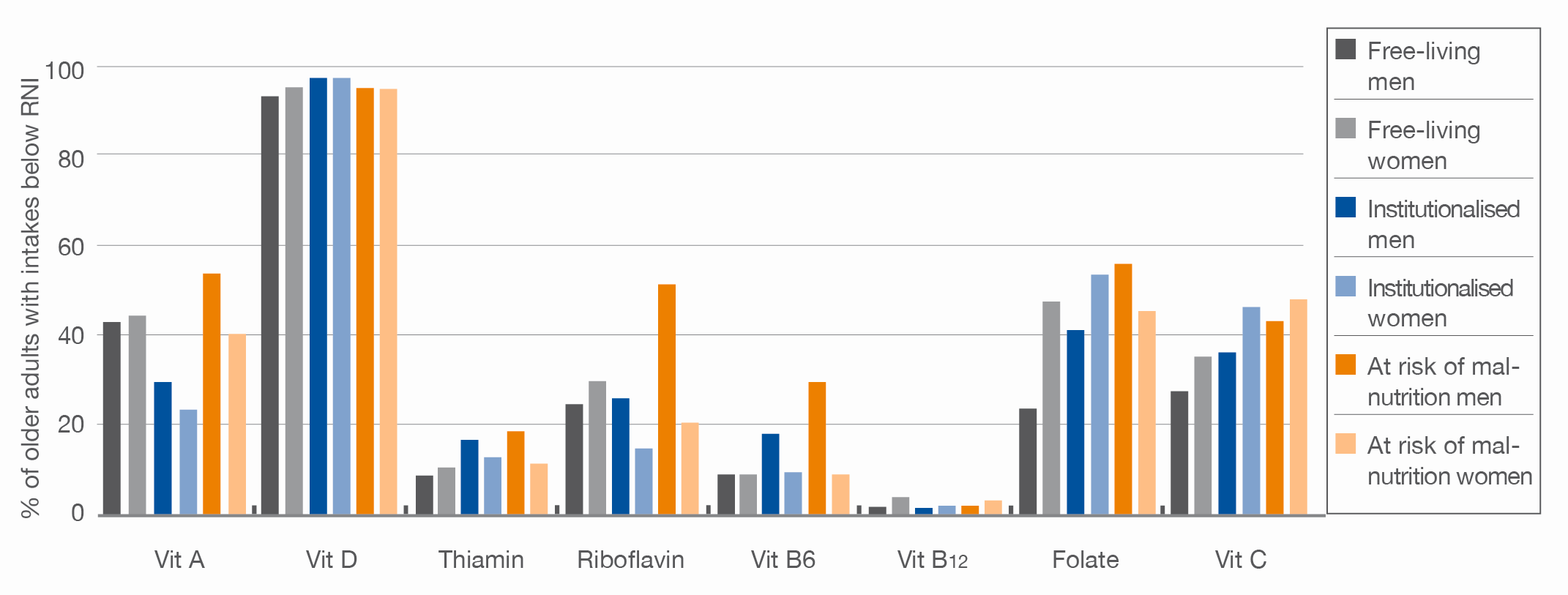
Percentage of older adults in the UK with vitamin intakes below the RNI(adapted from Stratton 2007)254
RNI for men and women aged ≥ 50 years. Number of patients varies according to micronutrient and group (male and female): free-living (n = 540–735), institutions (n = 93–319), at risk of malnutrition (all settings n = 55–80)
 Energy and nutrient intake are compromised in children with a variety of conditions
- Two recent reviews of growth, nutritional issues and management in children with neurological impairment and cerebral palsy both identified poor food intake and inadequate energy intake as factors in the development of malnutrition and poor growth in this patient group.260,261 Poor oral-motor function impairs the ability to consume sufficient energy and nutrients to sustain adequate growth.261
- Recurrent infections and gastrointestinal problems such dysphagia, constipation, and gastric reflux are common contributors to malnutrition in children. These conditions were associated with a reduction in nutrient absorption. 262
- Poor sanitation and hygiene may worsen these problems by increasing the risk of gastrointestinal infections, which can lead to malabsorption and nutritional depletion. 263
- Furthermore, socioeconomic factors including food insecurity and limited access to specialized feeding support may exacerbate vitamin and energy deficiencies in this vulnerable population. 264
- Eating problems are commonly reported in children with motor disability (20%), with an adverse impact on intake of some but not all nutrients:265
- energy intake 76% of recommendations;
- vitamin D intake 76% of recommendations;
- iron intake 87% of recommendations;
- fibre 52% of recommendations. 354
- Targeted nutrition therapy, such as enteral feeding, when necessary, can assist children with severe disabilities increase their energy intake and prevent worsening malnutrition. Children who have neurological impairments frequently suffer from gastrointestinal issues such as reflux and dysphagia, which can impede their ability to absorb nutrients and increase their risk of malnutrition. It is frequently advised to use enteral feeding, particularly gastrostomy tube feeding, in these situations to guarantee adequate hydration and nutrition.262 Additionally, it has been shown that enhancing caregiver awareness of appropriate feeding techniques and removing socioeconomic obstacles through government and healthcare initiatives improve the nutritional results of children. 263,266
- Sullivan et al. (2002) assessed the macro- and micronutrient intake (using a 24-hour recall and a 3-day diet diary) of a group of neurologically impaired children with motor and feeding problems and found that:267
- 59% of the group with severe disabilities consumed below 80% of the EAR vs 16% of the group with moderate disabilities;
- generally, children met their protein requirements;
- nearly half of the children did not meet the RNI for iron;
- half of the children with severe disabilities failed to meet at least 81% of the RNI for potassium, iron, copper, magnesium and zinc;
- low intakes of selenium, vitamin A, niacin and folate were also seen in the groups with moderate and mild disabilities.
- Children from lower-income households are particularly vulnerable to malnutrition due to financial limitations that limit access to specialized feeding assistance and high-quality foods.264 Dietary consumption may also be impacted by geographic location and climate-related food insecurity, with variables such as temperature fluctuations and precipitation affecting the prevalence of malnutrition. 266
- A review of nutrition in children with chronic renal failure (CRF) and on dialysis by Rees and Shaw (2007) described energy intakes below recommended intakes, deteriorating intake with severity of CRF, and decreased intake over time. Low intakes of calcium, zinc and vitamins were also reported.268
- Children (10–16 years of age) with active Crohn’s disease (CD) and children with CD in remission have been shown to have energy intakes significantly lower than estimated energy requirements (p = 0.001 and p = 0.03 respectively) and lower than recommended intakes of calcium and iron.269
- According to recent research, children with chronic kidney disease (CKD) stages 2–5 and 5D (Stage 5 CKD on Dialysis) need 100% of their estimated energy requirements (EER), after taking into account body size and degree of physical activity. Nonetheless, protein-energy malnutrition (PEM), which affects growth, neurocognitive development, and long-term morbidity, is still a serious problem. As CKD progresses, energy intake often declines, increasing the risk of malnutrition and poor health outcomes. In addition to energy inadequacies, calcium and vitamin D deficiencies are common in CKD patients, requiring regular monitoring and supplementation to avoid bone damage. Intake of phosphorus must also be carefully managed because too much of it can lead to cardiovascular problems, especially when serum parathyroid hormone (PTH) levels are higher than desired ranges. Moreover, to promote ideal growth and development, nutritional interventions such enteral feeding should be given priority when oral intake is not enough to fulfil energy needs. 270
Post-Transplant Nutritional Management in CKD
Children who have a kidney transplant are nevertheless susceptible to metabolic complications such as steroid-induced osteoporosis, excessive weight gain, and dyslipidaemia. Post-transplant nutritional interventions are necessary to control these risks and maintain long-term metabolic stability and general health. 270
 There are multiple inter-related causes of malnutrition in cancer
- The possible causes of malnutrition in cancer patients are summarised in Table 1.13, but many of the factors listed in Figures 1.18 and 1.22 are also involved in the development of malnutrition in cancer patients. The causes are multi-factorial, and they can be related to the effects of the tumour and/or treatment and the psychological effects of living with cancer.205
Possible causes of weight loss and malnutrition in cancer patients(adapted from Henry 2011)205
| Causes |
|---|
| Catabolic effects of the tumour/abnormal metabolism of nutrients |
| Inadequate intake due to tumour-induced anorexia |
| Reduced food intake secondary to treatment side effects such as nausea, vomiting, stomatitis, constipation and malabsorption |
| Obstruction from tumour or as a consequence of treatment, e.g. dysphagiasecondary to cancer of the oesophagus, bowel obstruction secondary to disease, and dysphagia as a consequence of radiotherapy to the pharynx |
| Pain, anxiety and depression |
There are numerous reasons why food and thus energy and nutrient intake are poor in disease
- Energy and nutrient intake are affected by factors arising from the patient’s condition and situation, healthcare workers’ knowledge and action, institutional organisation, eating difficulties, inadequate provision of energy and nutrients, lack of guidance for staff, poor knowledge of nutrition, and failure to follow nutritional policies (see Figure 1.22).53,66,67,88,91,217,232,233,236,271-276
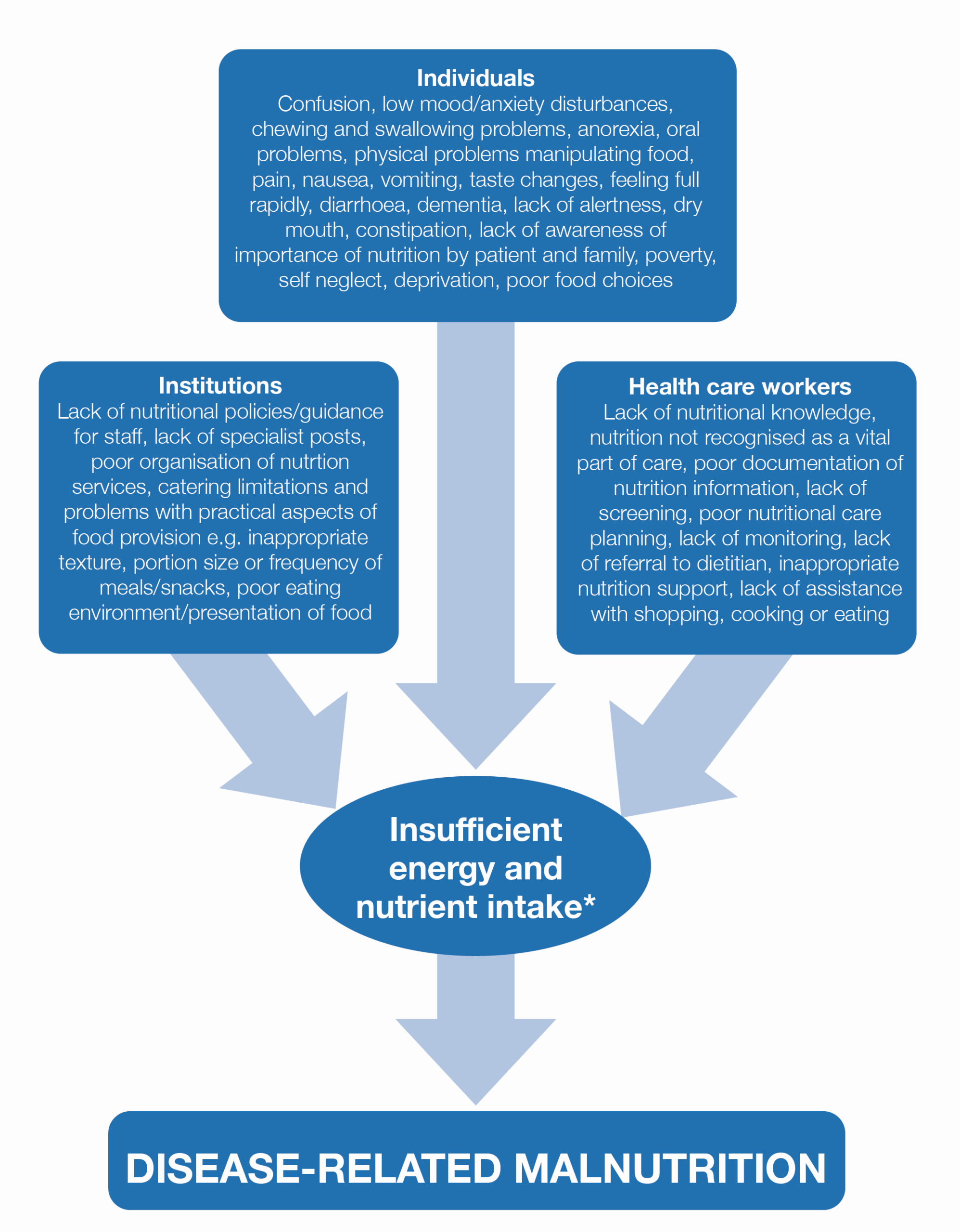
Factors leading to insufficient energy and nutrient intake in adults as a cause of disease-related malnutrition(adapted from Stratton et al. 2003)53
*Requirements for some nutrients may be increased due to malabsorption, altered metabolism and excess losses