
3.1.1.2 NUTRITIONAL STATUS
 ONS lead to weight gain and prevention of weight loss in adult hospital patients
- In a systematic review by Stratton et al. (58 trials, 34 RCT, n = 3883) in the hospital setting, ONS were found to improve body weight in 81% of trials (35 assessed weight), of which 46% were significant. Average weight change between supplemented and control patients was +3% (17 RCTs) across a variety of patient groups: surgical patients, older people, and patients with COPD. A similar effect was seen in trials in which mean BMI was < 20 kg/m² or > 20 kg/m².2
- According to the ESPEN guidelines, nutritional support, especially ONS, greatly improves body weight and nutritional status in hospitalised malnourished patients or those at risk of malnutrition. 10
- In hospitalised patients with high nutritional risk and poly-morbidity, ONS interventions were also found to improve functional outcomes, reduce weight loss, and enhance handgrip strength while lowering mortality. 12
- In a meta-analysis by NICE of ONS versus standard care in hospital patients who were malnourished or at risk of malnutrition, it was demonstrated that the use of ONS led to significant increases in weight (weighted mean difference 1.13 [95% CI 0.51–1.75, p = 0.0003]) (see Figure 3.10).30
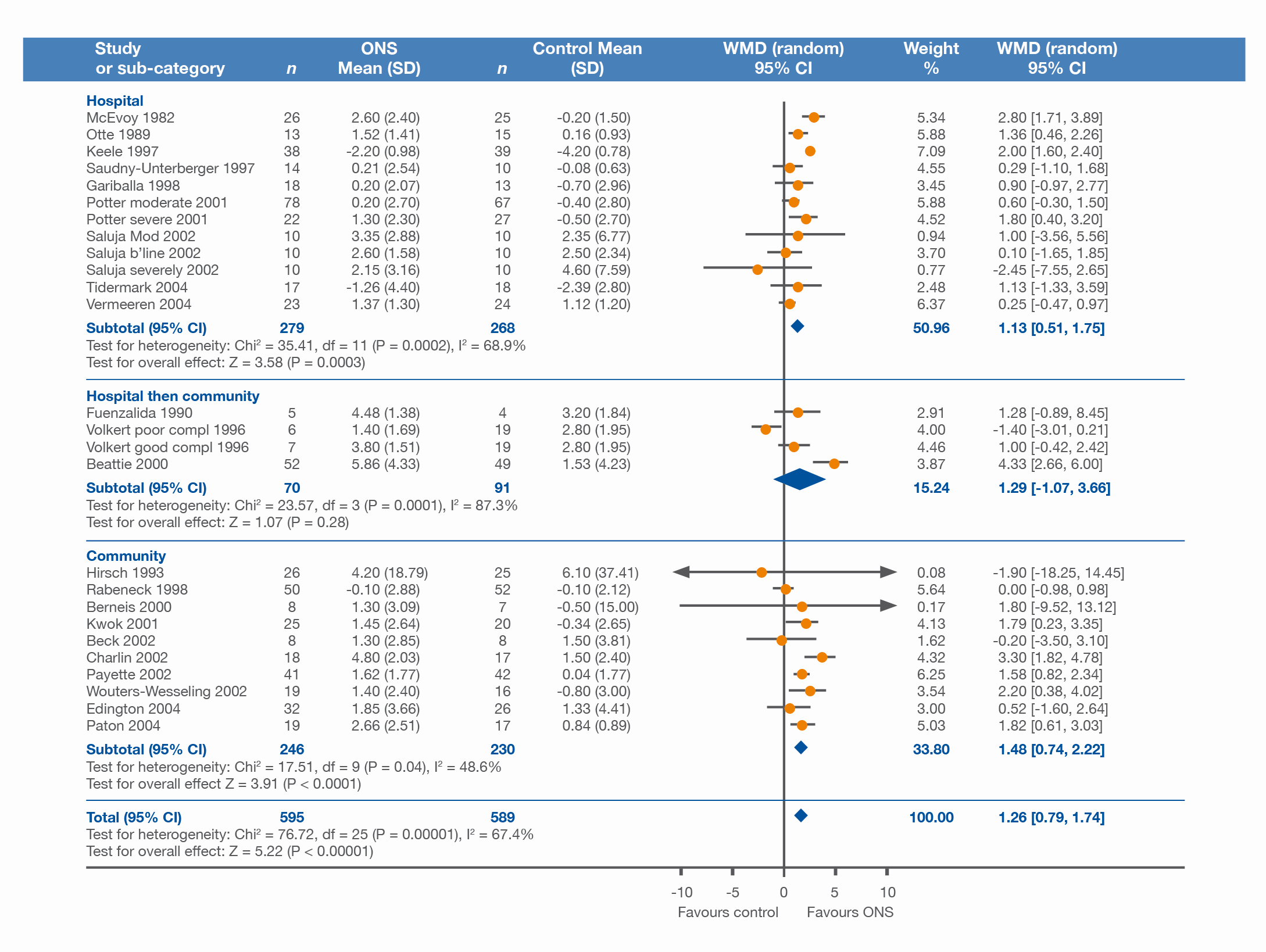
Figure 3.10
ONS versus standard care(all patients): weight change by setting (adapted from NICE 2006) 30
 ONS lead to weight gain and prevention of weight loss and skeletal muscle loss in adult patients within community settings
- Meta-analysis of percentage weight change in 13 RCTs (COPD, older people, HIV, liver disease, cancer, post-surgical patients) showed a mean significant effect size with ONS of 0.61 (95% CI 0.50–0.71), though with considerable heterogeneity between the trials.2
- In the meta-analysis conducted by NICE of ONS versus standard care in patients who were malnourished or at risk of malnutrition, it was demonstrated that the use of ONS led to increases in weight in patients in the community (weighted mean difference 1.48 [95% CI 0.74–2.22, p < 0.0001]) (see Figure 3.10).30
- A systematic review and meta-analysis of the effects of oral nutritional intervention in care homes using ONS (3 RCTs [n = 195]) found a significant difference in body weight (1.7 [95% CI 0.8–2.6] kg, p < 0.001 random effects model).7
- According to the Manual of Dietetic Practice, in chronically ill community patients, ONS dramatically improves body weight and nutritional intake, especially for those who are underweight (BMI <20 kg/m²) and have experienced recent weight loss. Additionally, improvements in quality of life and physical function, such as muscle strength, have been documented.38
- A study conducted in the UK demonstrated that ONS interventions in community settings reduce hospital readmissions and admissions, while also lowering overall healthcare costs. Consuming ONS led to more weight gain and higher intakes of protein and total energy than following dietary recommendations alone.3
- According to a large RCT conducted in Singapore, daily ONS with HMB (β-hydroxy β-methyl butyrate) combined with dietary counselling improved nutritional and functional outcomes, resulting in a significant increase in body weight and a lower risk of hospital readmission.8
- A clinical trial conducted in China investigating the effects of ONS in post-discharge patients at nutritional risk after colorectal cancer surgery found that ONS may help reduce skeletal muscle loss and the prevalence of sarcopenia, as well as enhance chemotherapy tolerance, compared to dietary advice alone. After three months, the skeletal muscle index was significantly higher in the ONS group than in the control group (39.75 ± 5.83 vs. 38.01 ± 6.18 cm²/m², p = 0.037). Additionally, the prevalence of sarcopenia was significantly lower in the ONS group (28.6% vs. 42.1%, p = 0.040).13
 High-protein ONS lead to weight gain in adult patients across healthcare settings
- Meta-analysis of 12 RCTs in patients across healthcare settings (n = 1244) (2 RCTs in hospital, 7 RCTs in the community and 3 RCTs across hospital and community) showed significantly increased weight in patients who received oral nutritional intervention with high-protein ONS versus controls (1.7 kg [95% CI 0.8–2.7], p < 0.001 random effects model) (see Figure 3.11).9
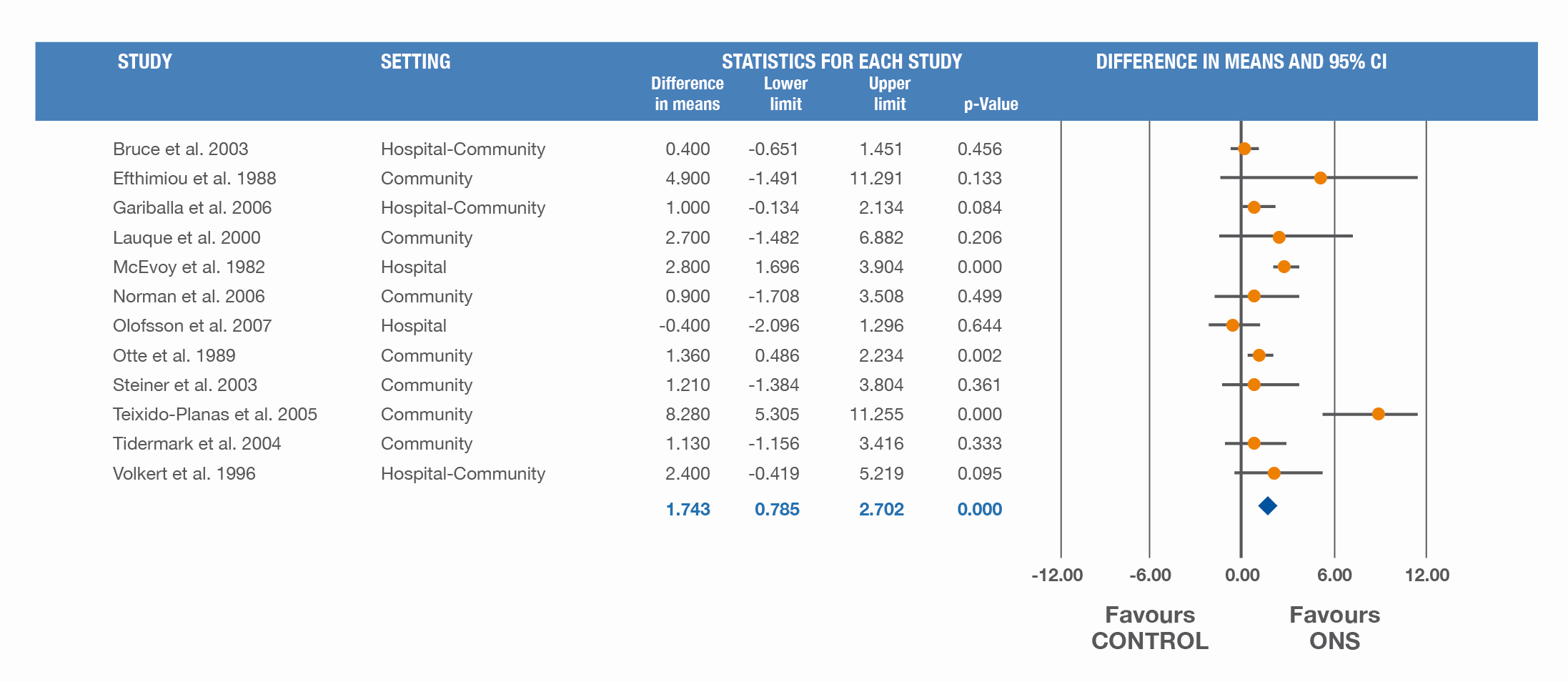
Figure 3.11
Meta-analysis showing significant improvement in weight with oral nutritional intervention with high-protein ONS (adapted from Cawood et al. 2012) 9
 ONS lead to weight gain in older people across healthcare settings
- In a large meta-analysis of studies in older people, greater weight gain was seen with supplementation compared with routine care (pooled weighted mean difference for percentage weight change was 2.15%; 95% CI 1.8–2.49) (variety of in-patient and community settings) (see Figure 3.12).18 Analyses for weight change carried out in subgroups based on diagnosis showed a significant increase in weight with supplementation for:
- a mixed group of patients with geriatric conditions (weighted mean difference 2.65%; 95% CI 2.19–3.10);
- patients with chest conditions (weighted mean difference 1.58%; 95% CI 0.99–2.17).
- Dietary advice and ONS given for 4 months to older people at risk of malnutrition on discharge from a geriatric service resulted in the prevention of weight loss, whereas controls lost 3.1 kg during the study.38
- A systematic review and meta-analysis of 12 studies assessing the effect of ONS in older adults with dementia showed a significant improvement in weight (p < 0.0001) and Body Mass Index (BMI) (p < 0.0001) at 6.5 ± 3.9-month follow-up when supplements were given compared to the control group (usual care in 8 studies, placebo drink/supplement in 4 studies).21
- ONS have been shown to increase body weight in community-dwelling undernourished older people compared with controls (weight gain mean difference of 1.17 kg [95% CI 0.07–2.27, p = 0.04] following adjustment for adherence).39
- A randomised double-blind placebo-controlled trial (RDBPCT) in older care home residents has shown that oral nutrition intervention with ONS led to weight gain (1.6 kg difference in change, p = 0.035).40
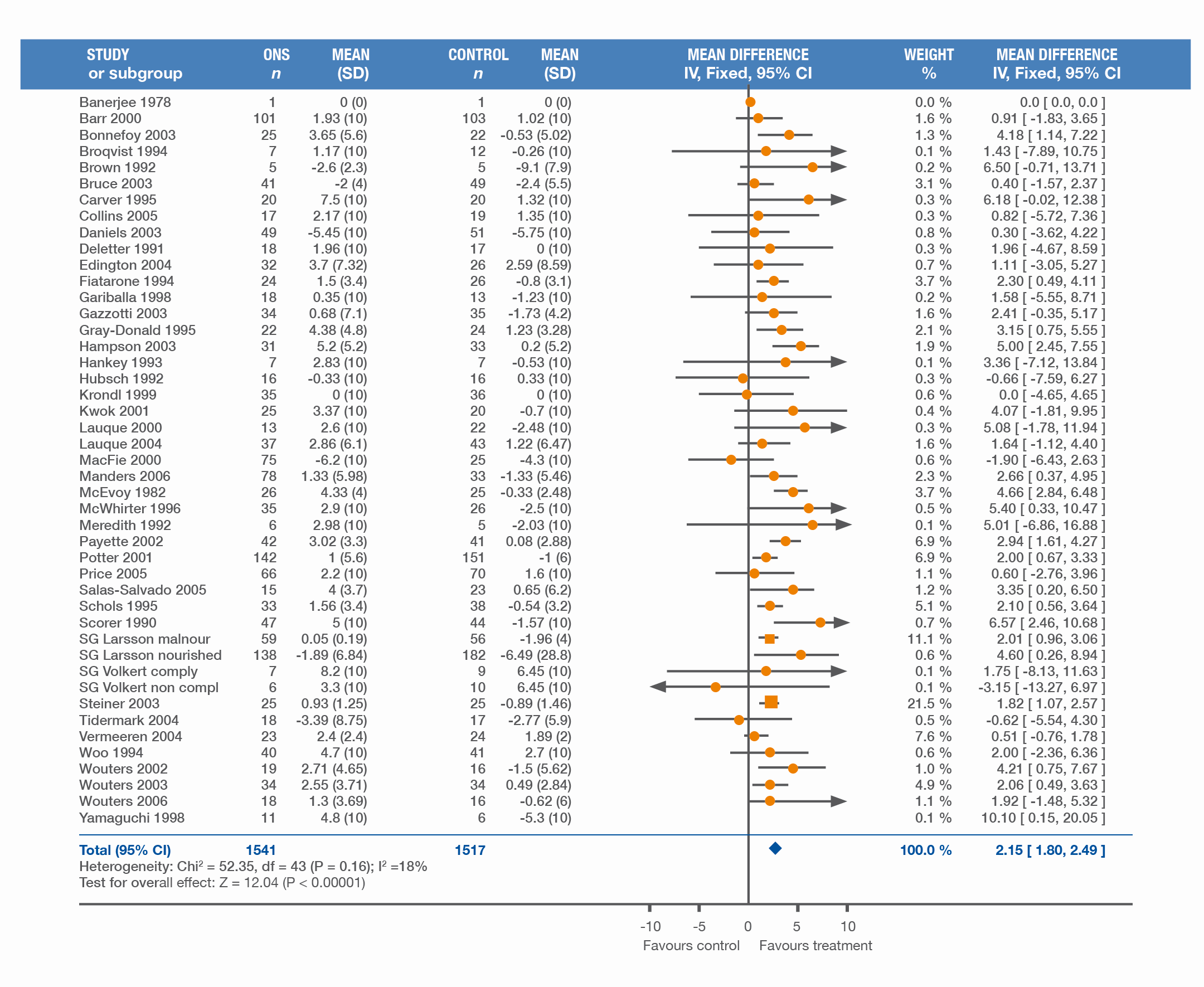
Figure 3.12
Weight change in older people with protein and energy supplementation vs routine care (adapted from Milne et al. 2009) 18
ONS improve micronutrient status
- NICE (2006) highlighted that care should be taken when using food fortification strategies as a means of increasing oral nutrient intake, as food fortification tends to increase energy and/or protein intake without increasing micronutrient intake. Oral nutritional support should contain a balanced mixture of protein, energy, fibre, and micronutrients.30 Under European law, Foods for Special Medical Purposes (FSMPs), which include ONS, must comply with compositional standards which specify required levels of vitamins and minerals.41 Deviations are permitted, but they must be based on a sound scientific rationale.
- The ESPEN guidelines state that a sufficient intake of micronutrients (vitamins and trace elements) to meet daily estimated requirements should be ensured in poly-morbid medical inpatients who are only fed orally (strong consensus, 100% agreement).12
- In an RDBPCT of high-protein ONS during acute illness in older people (ONS continued after discharge), significant improvements were seen in markers of micronutrient status,e.g., red cell folate and plasma vitamin B12 levels, compared with the decrease seen in the placebo group. This effect was sustained at 6 months (see Figure 3.13).42
- In older people, ONS has been demonstrated to raise vitamin D levels, promoting immunological, muscular, and bone health. According to a study done in Singapore, ONS therapies raised 25-hydroxyvitamin D levels and were linked to better physical performance.8
- According to a systematic review on dementia patients, ONS significantly increased red cell folate levels (23.4 vs. 0.3 nmol/l, p < 0.001) and vitamin B12 levels (129.5 vs. -1 pmol/l, p 0.001), as well as the levels of vitamins B1, B6, B12 and folate.25
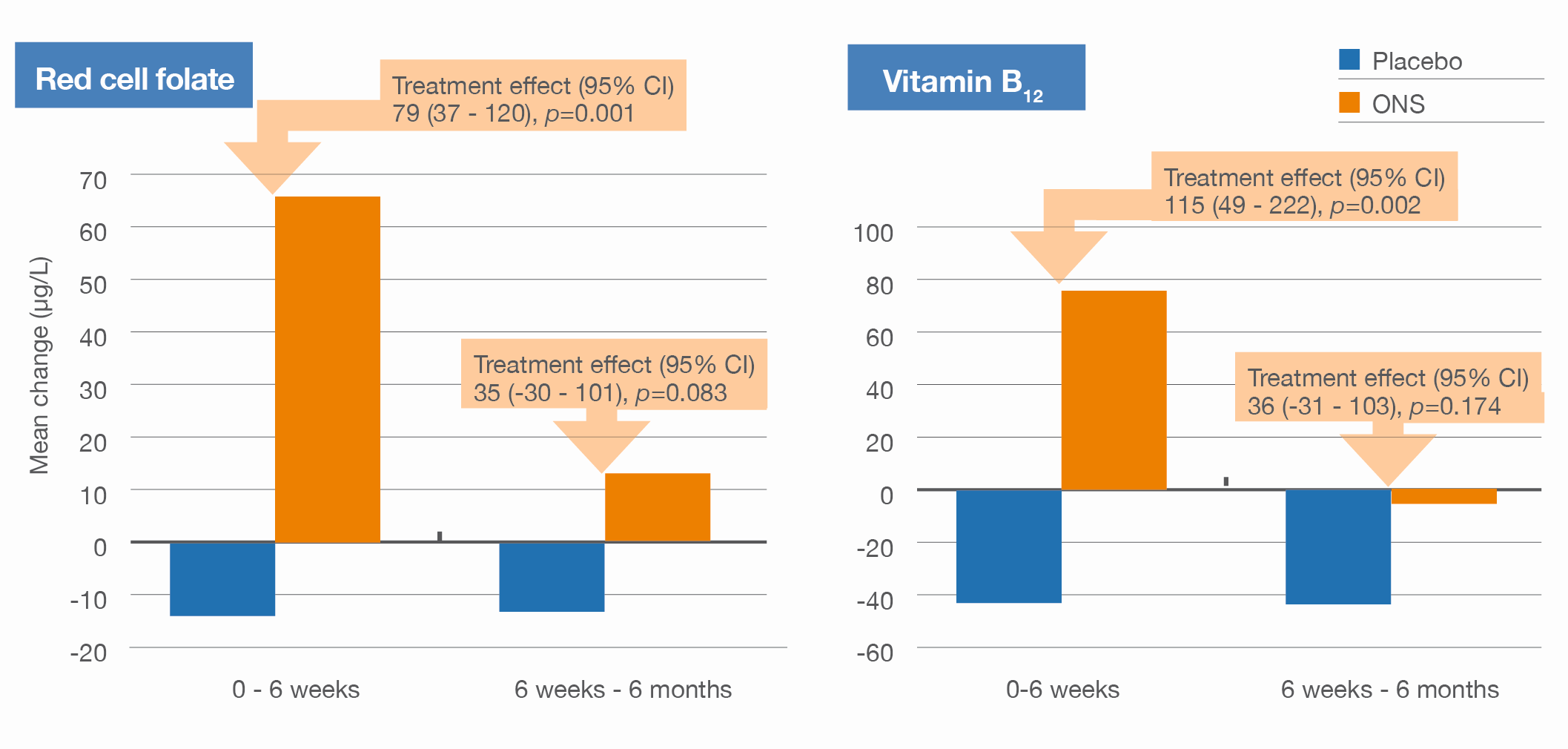
Figure 3.13
Improved red cell folate and plasma vitamin B12 concentrations in patients supplemented with ONS compared with placebo group (adapted from Gariballa et al. 2006) 42
- An improvement in micronutrient status (vitamin B1, thiamine diphosphate, vitamin B6, vitamin B1, folate and vitamin D) has also been observed following supplementation with ONS compared with placebos in a group of psycho-geriatric nursing home patients.43
- Improved plasma vitamin D, vitamin B12, vitamin B6, homocysteine and folate levels have been observed in older residents of care homes given ONS versus placebos.40 Most vitamin deficiencies normalised, most notably vitamin D (10% vs 75% remained deficient in the ONS vs the placebo groups).34
- The ESPEN guidelines state that ONS provide enough micronutrients for malnourished or at-risk patients such as vitamins A, D, E, B-complex, and trace elements, to meet their daily nutritional needs (high consensus, 100% agreement).12
ONS improve lean body mass in older people
Loss of lean body mass (LBM) (muscle) can lead to reduced muscle function and fatigue, and in turn reduced function, e.g., ability to self-care, ability to undertake normal daily activities, risk of falls (see also Section 3.1.2, Functional Benefits of ONS).
- Use of ONS has been demonstrated in clinical trials to improve LBM among:
- older people with Alzheimer’s disease in hospitals and day care centres who are nutritionally at risk (significant increase in fat-free mass [FFM] 0.78±1.4 kg, p < 0.001);26
- older hospital patients who are malnourished (significant increase in FFM + 1.3 kg,p < 0.001);32
- older patients in a meta-analysis of 15 trials, n = 1382 (pooled weighted mean difference for percent arm muscle circumference change 1.20%; 95% CI 0.45–1.96%).18
- A 2021 randomised controlled trial found that lean muscle mass was significantly increased in community-dwelling older individuals with sarcopenia over a 12-week period (p < 0.05) when daily consumption of an ONS containing β-hydroxy-β-methyl butyrate (HMB) was paired with an exercise program. Moreover, increased protein consumption and improved total ONS compliance were also linked to improvements in muscle mass; during a 6-month period, older persons with high adherence rates showed quantifiable gains in handgrip and lower extremity strength.8
- Another study highlighted the importance of ONS in preserving muscle strength and functional independence by showing that older adults at risk of undernutrition who took HMB-containing ONS significantly improved their activities of daily living (ADL) and increased their body weight.44
High-protein ONS lead to improvements in body mass in adult patients across healthcare settings
- Meta-analysis of 4 RCTs (n = 118) (1 RCT in hospital and 3 RCTs in community patients) showed significant improvements in MAMC (an indicator of nutritional depletion) in patients who received oral nutritional intervention with high-protein ONS versus controls (mean difference 0.47 cm [95% CI 0.30–0.64], p < 0.05).9
- A large randomised controlled trial (n = 811) showed that high-protein ONS significantly improved handgrip strength in females at day 180 (p = 0.048) and increased muscle mass, body weight (p < 0.05), and mid-arm muscle circumference (MAMC) in community-dwelling older adults at risk of malnutrition. In addition, the intervention group showed a significantly greater percentage of weight change compared to the placebo group at all measured time points: 2.4% vs. 1.0% on day 30, 3.6% vs. 1.2% on day 90, and 4.5% vs. 2.0% on day 180 (all p < 0.001).8
 ONS may improve body weight and growth in children with a variety of diseases
- A systematic review of the effect of ONS in children by Stratton et al. (2003) concluded that:2
- a rather limited evidence base suggests that ONS may increase body weight, muscle mass and growth in growth-retarded children with CD;
- non-randomised trials consistently show that use of ONS is associated with increased growth in growth-retarded children with cystic fibrosis.
- A 2021 systematic review and meta-analysis of 11 RCTs (n = 2,287) showed that for children with undernutrition, ONS significantly increased weight (+0.423 kg, 95% CI 0.234–0.613, p < 0.001) and height (+0.417 cm, 95% CI 0.059–0.776, p = 0.022) over 30, 60, and 90 days (p < 0.05), with significant improvements in weight-for-age z-scores (WAZ) and height-for-age z-scores (HAZ).45
- A multi-centre randomised parallel open study of nutritional counselling with or without ONS in children with growth faltering (mean age 48.5 months, range 36.0–61.0 months; n = 92) and picky eating behaviour not related to an underlying medical condition showed significantly greater increases in weight and height in the study group versus controls.46
- In an uncontrolled study of children with spastic quadriplegia (n = 35), ONS significantly improved anthropometric parameters (baseline vs 6-month follow-up), including height, weight, MAC, TSFT, weight z-score, WFA (%), WFH (%) and BMI.47
- In 2014, Smyth et al. undertook a systematic review of 3 randomised or quasi-randomised controlled trials (n = 131) investigating the effect of ONS in children with cystic fibrosis vs. nutritional advice or no intervention and found a trend in the ONS group for greater improvement in weight at 3 months (2 trials, n = 112, mean difference 0.32 kg; 95% CI -0.09 to 0.72, p = 0.12) and 6 months (2 trials, n = 117, mean difference 0.47 kg; 95% CI -0.07 to 1.02, p = 0.087) but not at 12 months (1 trial, n = 102, mean difference 0.16 kg; 95%CI -0.68 to 1.00).48 This review was updated in 2015 by Francis et al., who also found no statistically significant effect of ONS for the outcome ‘change in weight (kg)’.29 No significant change in any other measure of height, weight, BMI, or MAMC was observed in either review.29, 48 In the 2014 review data on change in weight and height from 13 subjects (at 3 months) from the Kalnins trial were included, however in the 2015 update data from only 8 subjects (3 & 6 months) were included as a result of personal correspondence between the review authors and Dr Kalnin.29 Care should be taken when interpreting the results on parameters of nutritional status from both the 201448 and 2015 reviews, since they include only 3 trials, 2 of which had a very small number of participants (Hanning et al. 1993, n = 1649 & Kalnins et al. 2005, n = 1350). In addition, the trial by Hanning et al. 1993 was an explanatory trial designed to investigate the relationship between nutritional status and skeletal muscle, i.e., it sought to explain the biological mechanism rather than to provide treatment recommendations.48 Finally, the trial by Poustie et al. 200651 which contributed the majority of the subjects to the reviews (n = 102, and the only one to follow up at 12 months) may have had poor compliance coupled with an overly ambitious end-point in cystic fibrosis patients of a 10-point difference in centile for BMI within one year, which may explain the lack of effect of the intervention.52
- In a prospective randomised study in children with malignant disease undergoing intensive chemotherapy (n = 52, mean age 7.5 ±3.0 years), significantly fewer patients in the intervention group (EPA-enriched ONS) showed a loss in body weight (6.1% vs 47.4%; p = 0.001) and BMI (12.1% vs 52.6%; p = 0.002), and a negative deviation in weight percentile (6.1% vs 31.6%; p = 0.021) compared to the control group at 3 months. After 6 months (n = 23), the percentage of patients with weight loss was significantly lower in the treatment group versus the controls (6.7% vs 50%; p = 0.03).53