
3.1.3.2 COMPLICATIONS (INCLUDING DEVELOPMENT OF PRESSURE ULCERS)
Meta-analyses show a reduction in a variety of complications in patients given ONS compared with standard care
- Stratton et al. (2003)2 showed that complication rates (infective and others such as GI perforation, pressure ulcers, anaemia, cardiac complications) were significantly lower in supplemented (18%) than in unsupplemented (41%) hospital patients (see Figure 3.18) (surgical, orthopaedic, older people, neurology, p < 0.001; OR 0.31; 95% CI 0.17–0.56, meta-analysis of 7 trials, n = 384; no significant heterogeneity between studies).2 This represented a 56% reduction.
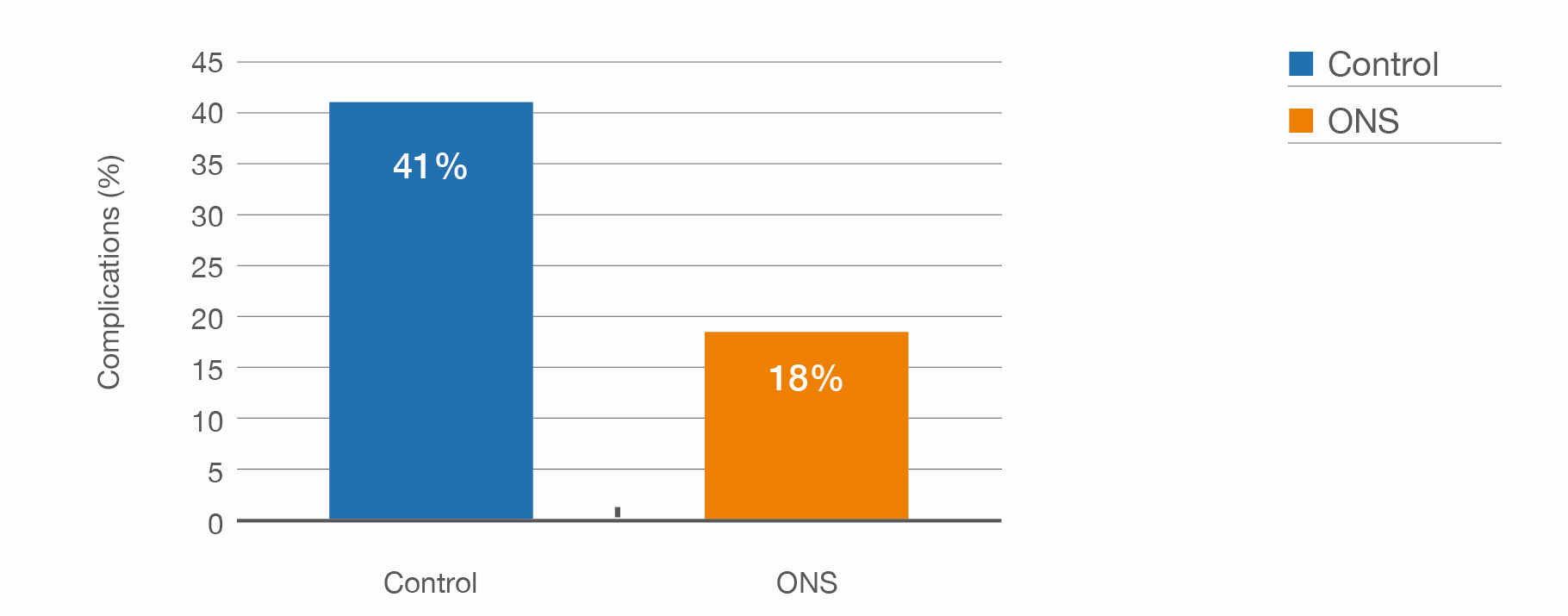
Figure 3.18
Lower complication rates in supplemented vs control patients in hospital (adapted from Stratton et al. 2003) 2
- Complication rates were reduced by >50% in patients managed with ONS independent of BMI (with a BMI < 20 kg/m² [3 trials, 12% vs 27%; OR 0.38; 95% CI 0.07–1.97] and > 20 kg/m² [1 trial, 12% vs 27%]) or when BMI was unknown (3 trials, 38% vs 75%, OR 0.21;95% CI 0.04–1.18).2
- NICE (2006) similarly found a significant reduction in complications in hospital patients given ONS versus standard care (9 trials, RR 0.75; CI 0.64–0.88) (see Figure 3.19).30
- Meta-analysis by Milne et al. (2009) showed a reduction in complications in older people treated with ONS compared to routine care (24 trials, n = 6225, RR 0.86; 95% CI 0.75–0.99) and in a subgroup analysis of patients with hip fracture (6 trials, n = 298, RR 0.60; 95% CI 0.40–0.91) but not in other patient subgroups (variety of hospital and community settings) (see Figure 3.20).18
- A systematic review of 39 RCTs found that ONS significantly reduced overall complications by 32% (OR 0.68, 95% CI 0.59–0.79). ONS also reduced complications in medical patients (OR 0.76, 95% CI 0.59–0.98) and in surgical patients (OR 0.65, 95% CI 0.55–0.77). Patients receiving ≥600 kcal/day from ONS had a 32% lower risk of complications (OR 0.68, 95% CI 0.55–0.83).55
- The EFFORT trial found that individualised nutritional support including ONS (91% of patients) led to a lower risk of all-cause mortality, ICU admission and severe complications within 30 days. Among survivors, those in the intervention group were also less likely to experience a functional decline of 10% or more on the Barthel Index by day 30, compared to controls.87
- The Manual of Dietetic Practice also indicates that ONS reduces complications such as infections and pressure ulcers. ONS has been shown to prevent pressure ulcers in at-risk patients and reduce hospital readmissions by improving nutritional status.88
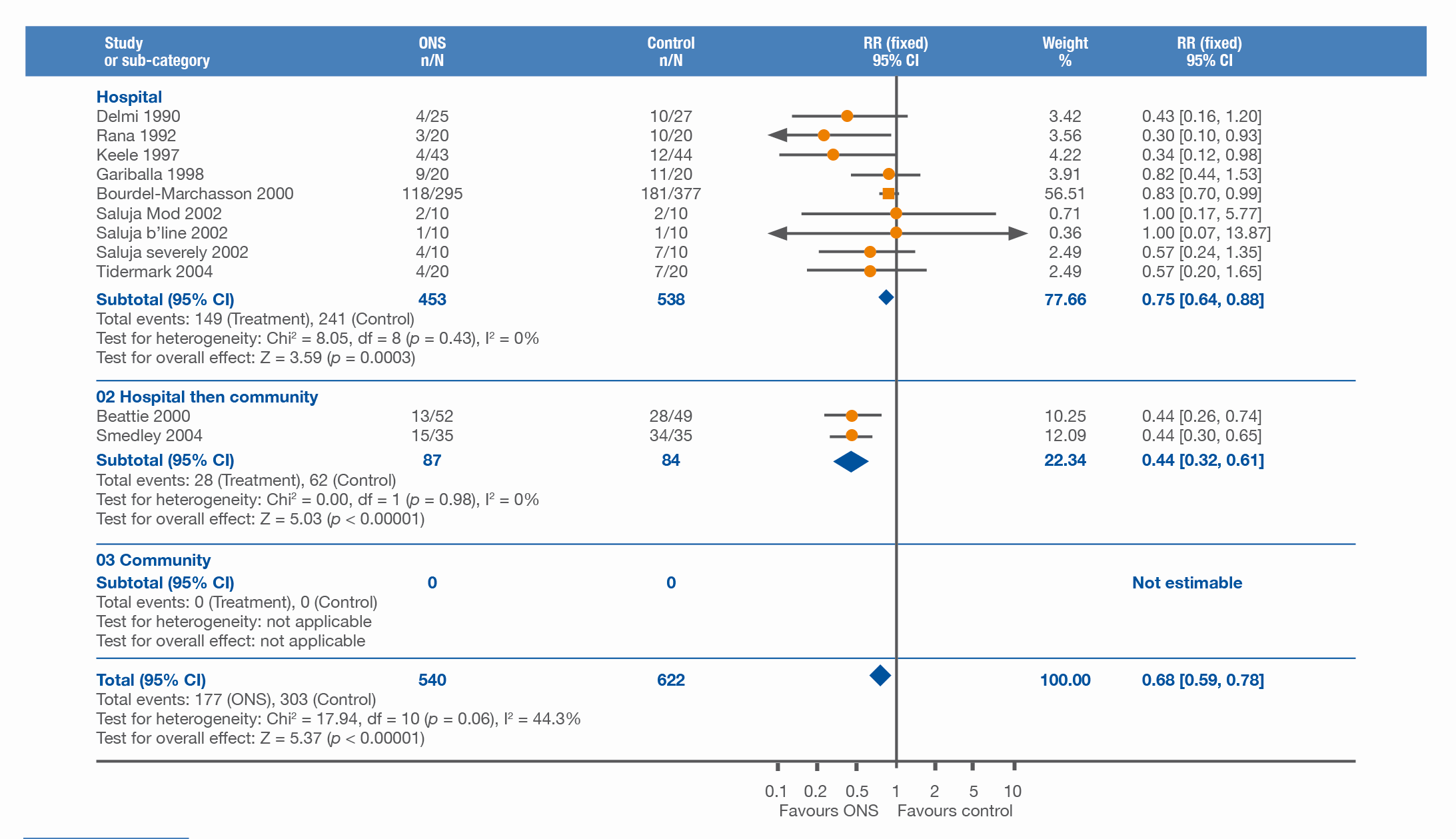
Figure 3.19
ONS versus standard care (all patients): complications by setting (adapted from NICE 2006) 30
Figure 3.20
ONS vs routine care in older patients (variety of settings): complications (adapted from Milne et al. 2009) 18
- The effectiveness of interventions for the treatment of dysphagia and nutritional and fluid supplementation in stroke patients was evaluated in a systematic review including 33 studies, eight of which assessed the effect of nutritional supplementation. ONS was associated with reduced pressure sores (2 trials; n = 4125; OR 0.56; 95% CI 0.32 to 0.96; p = 0.03; I2 = 0%) compared to no supplementation.20 Note that the majority of patients in the review were from the FOOD trial, only 8% of whom were malnourished.
- A systematic review and meta-analysis of 44 RCTs (n = 5,716, mean age 67 years) found that ONS significantly reduce complications, including infections, pressure ulcers, and wound healing issues in community settings. Meta-analysis of 39 RCTs showed a 32% reduction in complications (OR 0.68, 95% CI 0.59–0.79, p < 0.001), with benefits seen both in community-only (OR 0.65) and mixed (hospital + community) settings (OR 0.72). The reduction was most pronounced with ≥80% adherence to ONS (OR 0.63, p = 0.001) and when using ready-to-drink formulations (OR 0.69, p < 0.001).55
- A systematic review evaluating the effect of pre-operative nutritional support in elective GI surgical patients reviewed 13 studies of which 3 evaluated standard ONS. The results from these 3 studies combined showed no difference in the clinical outcomes (total complications [n = 263], infectious complications [n = 250]) or length of stay between standard ONS vs. no nutrition89 even though one of the studies did find significantly less post-operative weight loss in the ONS vs. no nutrition group (p < 0.05) and fewer minor complications (p < 0.05)90.The review did not appear to take into account the variation in duration of supplementation prior to surgery (5-59 days in Macfie et al. 2000;91 10-252 days in Burden et al. 201192 and 7-61 days in Smedley et al. 200490)or analyse the effect of patients’ nutritional status. The review authors note that the majority of participants included in the trials reviewed were well nourished and highlight that “…participants who would be most likely to benefit from nutritional support were not included…”.89
- A subgroup analysis in Burden et al. 2011 (unblinded RCT) showed a significant reduction in surgical site infections (Buzby criteria) in weight-losing patients admitted to hospital for elective curative surgery for colorectal cancer who received high-protein ONS preoperatively (p = 0.034) compared with patients who received dietary advice.92
- Meta-analysis as part of a large comprehensive systematic review of the cost and cost-effectiveness of using standard ONS in the hospital setting showed a 1 in 3 reduction in complications in surgical patients given ONS versus controls (35% reduction in complications) (see Figure 3.21).1
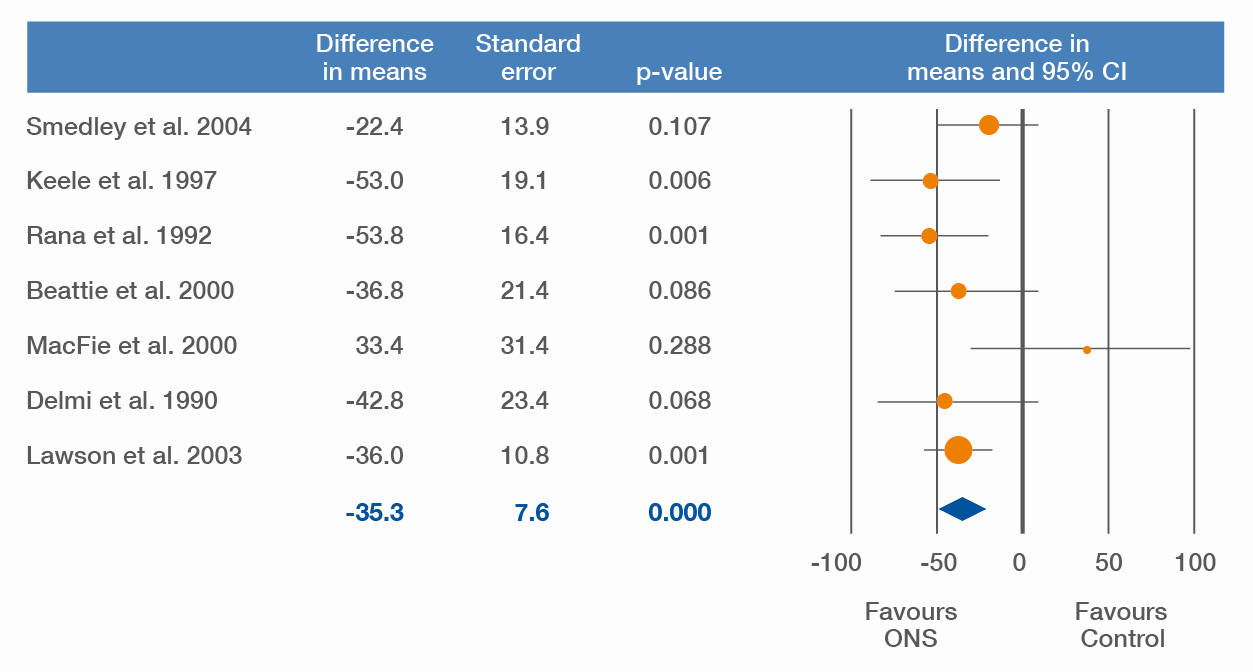
Figure 3.21
Random effects meta-analysis of complications in surgical patients expressed as percentage of total complications. (Adapted from Elia et al. 2016) 1
A negative sign indicates fewer complications in the ONS group (difference -35.3 [se 7.6]%, p < 0.001; I2 = 23.9%, p = 0.247).
- The total complication rate was found to be significantly lower in hospitalised hip fracture patients (aged >65 years) supplemented with ONS according to measured energy requirements/intake vs. a control group who received a normal diet and ONS if already prescribed (27.3% vs. 64.3%, p = 0.012). This was mainly due to a 73% reduction in the number of infectious complications in the intervention group (13.6% vs. 50%, p = 0.008).16
- A systematic review and meta-analysis93 assessed the effect of ONS combined with dietary advice (DA) versus DA alone as part of prehabilitation in patients undergoing colorectal cancer surgery.
- Six studies, including 583 patients (average age 63 years, 87% with colorectal cancer), provided oral protein supplementation, with compliance rates ranging from 72% to 100%;
- No significant reduction in overall complication rates was observed between ONS + DA and DA alone (OR 0.82; 95% CI 0.52–1.25);
- Secondary outcomes such as incision infection rates (OR 0.57; 95% CI 0.30–1.09) and anastomotic leakage rates did not show consistent benefits;
- The study concluded that current evidence is too heterogeneous to confirm a definitive benefit of pre-operative ONS in enhancing surgical outcomes, and future research should focus on individualised interventions for at-risk patients.

 ONS reduce complications in patients who start ONS in hospital and continue in the community
- The meta-analysis undertaken by NICE (2006) showed fewer complications in patients who started on ONS in the hospital setting and then continued in the community (2 trials, RR 0.44, CI 0.32–0.61).30
- In GI surgical patients undergoing a variety of procedures, a significant reduction in complication rates was seen in patients receiving ONS (250–600 kcal/d for 7 days to 10 weeks, 6 trials, OR 0.37, CI 0.23–0.60).94
- A systematic review of post-discharge supplementation with ONS in patients undergoing GI surgery highlighted the lack of available data specifically on the post-discharge period; nevertheless, it concluded that it would be sensible to offer nutritional support to malnourished patients at high risk of poor nutritional intake post discharge.95
- In studies focusing on hip fracture patients, ONS were shown to reduce complications and improve recovery outcomes. Among six randomised controlled trials analysing hip fracture patients, ONS led to fewer infections, pressure ulcers, and delayed wound healing. One study reported a 55% complication rate with ONS vs. 70% in controls, while another showed a 16% vs. 37% difference in complications (p <0.05). Meta-analysis confirmed a significant reduction in postoperative complications when ONS was used both postoperatively and post-discharge.96
High protein supplements may be of special interest in reducing clinical complications
- A Cochrane systematic review (Avenell and Handoll 2010) of intervention with ONS among older hip fracture patients concluded that protein-enriched ONS (> 20% total energy from protein) reduce the number of long-term medical complications (RR 0.78; 95% CI 0.65– 0.95).75
- Specifically, high protein ONS have been shown to significantly reduce the incidence of complications in hospital and community settings in patients with hip fracture, leg and pressure ulcers and acutely ill patients compared with controls (10 RCTs,n = 1830; OR 0.68, 95% CI 0.55–0.83, p < 0.001), corresponding to an average of 19% absolute reduction in complications (see Figure 3.22). The effect remained significant in subgroup analyses by setting (hospital: 3 RCTs, n = 932; OR 0.69, 95% CI 0.53–0.89,p = 0.005; community: 7 RCTs [4 starting in hospital], n = 846; OR 0.66, 95% CI 0.47–0.93,p = 0.017).9
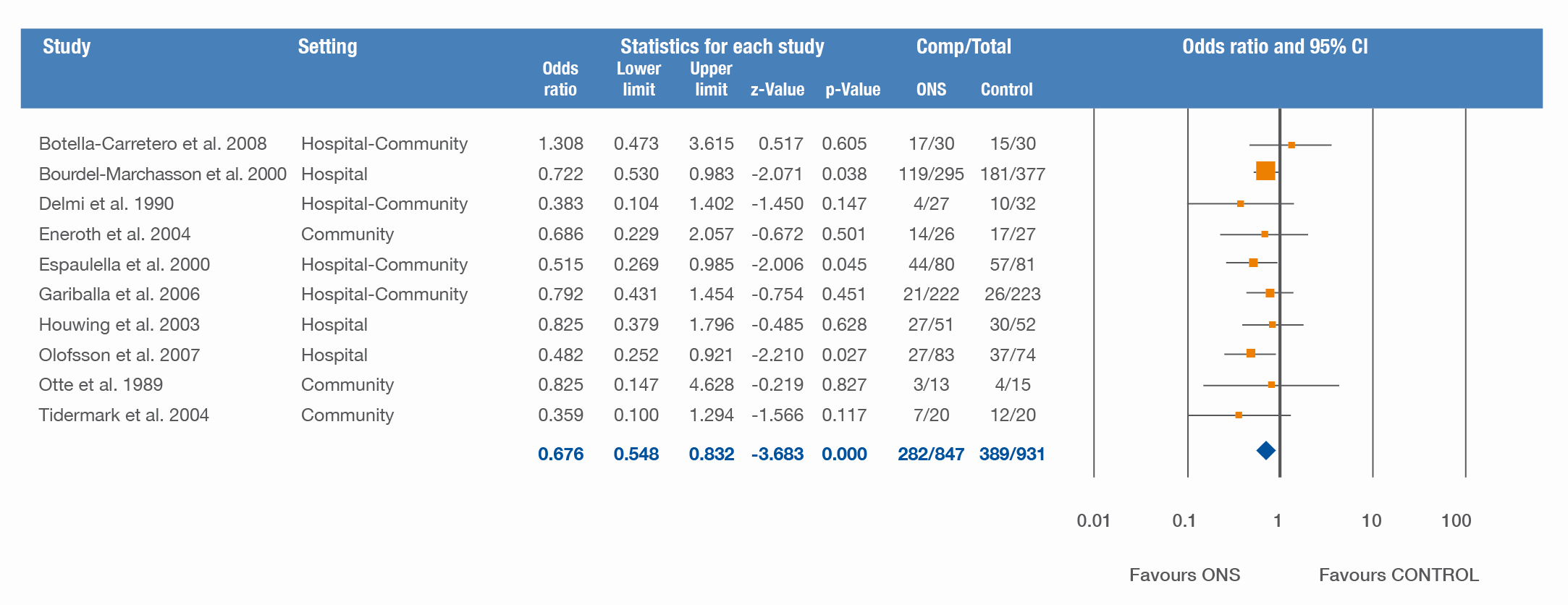
Figure 3.22
Significantly lower rate of complications with high-protein ONS compared with controls (adapted from Cawood et al. 2012) 9
High protein ONS are of particular interest in the prevention of development of pressure ulcers
- Pressure ulcers affect 10% of people in hospitals, and older malnourished people are at highest risk. Older people recovering from illness appear to develop fewer pressure ulcers when given 2 high-protein ONS daily.97
- Meta-analysis of studies using high-protein ONS showed a significant reduction in the risk of developing pressure ulcers in high-risk patient groups (by 25%) (4 trials, n = 1224, OR 0.75; 95% CI 0.62–0.89) (see Figure 3.23).98
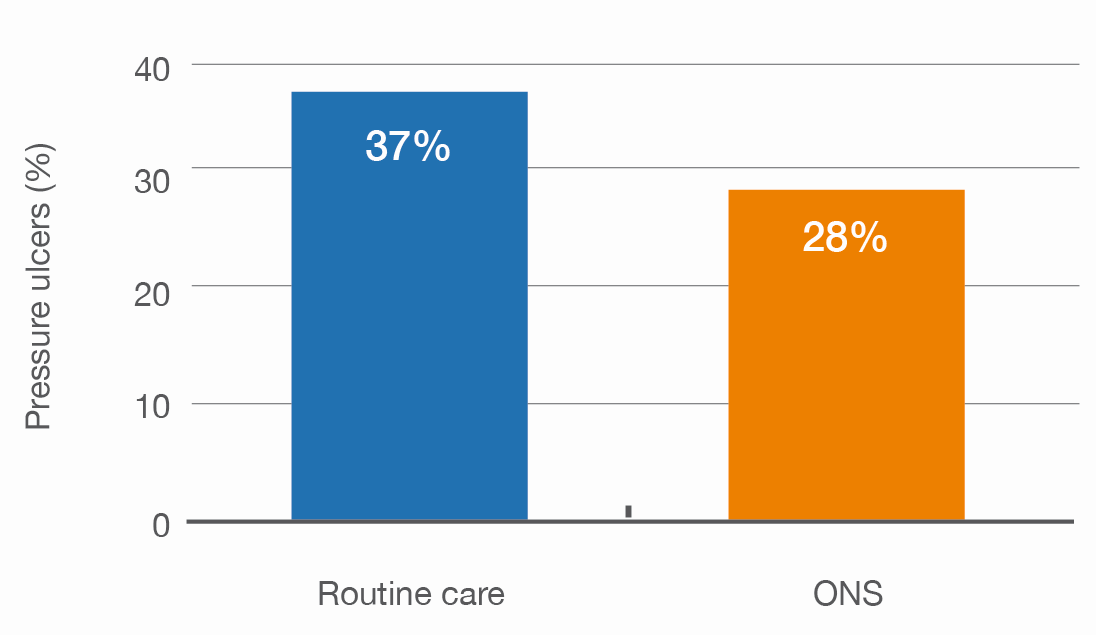
Figure 3.23
Prevention of pressure ulcers in at risk patients with ONS (hospital and long-term care): summary of results from a meta-analysis (adapted from Stratton et al. 2005) 98
 Clinical benefits of ONS in children
Complications
- A multi-centre randomised parallel open study of nutritional counselling with or without ONS in children with growth faltering (mean age 48.5 months, range 36.0–61.0 months; n = 92) and picky eating behaviour not related to an underlying medical condition showed a significantly lower percentage of upper respiratory tract infections in the study group versus the controls (28% vs 51%, p = 0.027).46
Other
- In a prospective randomised study in children with malignant disease undergoing intensive chemotherapy (n = 52, mean age 7.5±3.0 years), the remission rate was significantly higher in the group supplemented with protein- and energy-dense ONS (enriched with EPA) compared with the group who received usual care (87.9% vs 63.2%; p = 0.036).53
- A systematic review and meta-analysis45 found that ONS significantly improved growth outcomes in undernourished children.
- Children receiving ONS had greater weight gain (+0.423 kg, 95% CI: 0.234, 0.613, p < 0.001) and increased height velocity (+0.417 cm, 95% CI: 0.059, 0.776, p = 0.022) compared to controls;
- Improvements were also observed in weight-for-age (WAZ: +0.166, p = 0.001), weight-for-height (WHZ: +0.254, p < 0.001), and height-for-age (HAZ: +0.041, p = 0.018);
- The study supports ONS as an effective intervention for childhood malnutrition, with greater benefits over at least 90 days.
- To add to this, paediatric nutrition guidelines emphasise the importance of ONS in managing malnutrition and supporting growth in children. ESPGHAN/ESPEN recommend early screening for malnutrition and the use of standardised assessment tools to identify children who may benefit from ONS interventions. Studies show that ONS improves weight gain (+0.423 kg, p < 0.001) and height growth (+0.417 cm, p = 0.022) in undernourished children.99
 Nutritional intervention with ONS can improve energy intake and reduce weight loss in cancer patients
- Stratton et al. (2003) reviewed the effect of ONS in patients with cancer and found that ONS may improve total energy intake and food intake but that these improvements may not be sustained over time. Significant improvements in total energy intake were seen in 2 out of 3 RCTs.2
- Regular nutrition intervention (dietary counselling with ONS) has been demonstrated to improve nutrient intake and nutritional status during radiotherapy in patients with oesophageal and head and neck cancers in various stages.100
- A systematic review with meta-analysis of patients with cancers in various locations and of various grades undergoing radiotherapy demonstrated that that ONS significantly increased dietary intake by an average of 381 kcal/d (95% CI 193–569 kcal in 3 RCTs).101
- Patients admitted to hospital for elective curative surgery for colorectal cancer who received high-protein ONS had significantly higher total energy intake preoperatively compared with controls (who received dietary advice) (1722 [489] kcal/d vs 745 [366],p = 0.001).92
- A study investigating weight loss in patients with oropharyngeal cancers undergoing radiotherapy +/- chemotherapy demonstrated that all groups receiving ONS alongside dietary counselling showed significantly less weight loss than those not receiving ONS. In the radiotherapy group, a relative reduction in weight loss of 40% was seen versus routine care (p = 0.008), and in those undergoing radiotherapy, a 37% relative reduction was seen (p = 0.007).102
- A systematic review and meta-analysis found that omega-3 PUFA-enriched ONS improved weight maintenance, reduced inflammation, and enhanced immune response in cancer patients undergoing chemo/radiotherapy. Patients receiving ONS had significantly lower weight loss compared to controls (mean difference: -1.11 kg, 95% CI: -1.85 to -0.38, p = 0.003). Additionally, inflammatory markers such as c-reactive protein (CRP) were reduced, and lean body mass was better preserved.58
Nutritional intervention with ONS can improve QOL outcomes in malnourished patients with cancer
- Patients with GI or head and neck malignancies undergoing radiotherapy who received nutritional intervention comprising intensive counselling plus ONS versus usual care showed a significantly smaller decrease and faster recovery in global QOL (p = 0.009) and physical function (p = 0.012) over a 12-week period.103
Nutritional intervention with ONS may result in cost savings in patients with cancer
- Use of ONS alongside nutritional counselling in oropharyngeal patients undergoing radio- therapy was associated with decreased need for Percutaneous Endoscopic Gastrostomy (PEG) tube placement (reduced from 31% to 6%), demonstrating potential cost savings from reduction in tubes, placement costs and complications.102
- The majority of studies published include patients with cancers of the head and neck or GI tract. A systematic review of patients with head and neck squamous cell carcinoma receiving radiotherapy with or without chemotherapy was published in 2010. Within this review, 80% of the studies demonstrated reduced weight loss in those patients receiving nutritional counselling and ONS and support the use of ONS as an adjunct to counselling by a professional dietitian.104
Benefits of EPA-enriched ONS in cancer patients
- The role of EPA, a long-chain polyunsaturated fatty acid derived from fish oil, has been of increasing interest in the management of patients with cancer. EPA may modulate many aspects of the systemic inflammatory response associated with cancer cachexia.101,105 It has also been associated with reducing and reversing weight loss in cancer patients and improvements in QOL.106
- In clinical practice, EPA has been supplemented as capsules and also in the form of EPA-enriched energy- and protein-dense ONS, which may work together to manage a reduced nutritional intake alongside the metabolic changes.105
Nutritional intervention with EPA-enriched ONS lead to improved nutritional intake and reduced weight change in cancer patients
- Supplementation with EPA-enriched ONS (versus isocaloric, isonitrogenous standard ONS) in non-surgical malnourished lung cancer patients resulted in significant improvements in energy and protein intakes after 4 weeks: 2456 kJ (p = 0.03) and 25.0 g (p = 0.01) respectively. Intervention resulted in better weight maintenance (by 1.7 kg, p = 0.04) after 4 weeks and a smaller reduction in LBM (1.9 kg, p < 0.05) after 5 weeks.107
- A post-hoc dose response analysis of intake of EPA-enriched ONS versus standard ONS in patients with advanced pancreatic cancer showed significant correlations between supplement intake and weight gain in the EPA group (r = 0.5, p < 0.001) and increase in LBM (r = 0.33, p = 0.036) that were not seen in the control group.108
- A prospective observational study supplementing patients undergoing surgical treatment for squamous cell cancers of the head and neck with EPA-enriched ONS perioperatively showed that 70% maintained or gained weight prior to surgery, with 57% continuing to maintain or gain weight during hospital admission. There was a statistically significant increase in LBM (+3.21 kg over course of the study (p < 0.01) in the study group.109
- In a small study of colorectal cancer patients receiving EPA-enriched ONS prior to and during chemotherapy, a significant weight increase in the 3 weeks prior to the start of chemotherapy (mean 2.5 kg, p = 0.03) was maintained during the subsequent 6 weeks of treatment.110
Where weight gain occurs, this is associated with better QOL outcomes
- Functional status and symptom scale domains of the European Organisation for Research and Treatment of Cancer Quality of life Questionnaire (EORTC QLQ-C30) were significantly improved after 30 days and 60 days in patients with lung cancer undergoing chemotherapy, who gained weight when receiving EPA-enriched ONS (p = 0.05).111
- Intake of EPA-enriched ONS and weight gain correlate positively with QOL measured by the EQ-5D index in pancreatic cancer patients (r = 0.37, p = 0.01 and r = 0.46, p < 0.001).108