
3.2.2.2 NUTRITIONAL STATUS
 ETF typically attenuates loss of body weight and lean tissue in hospital patients
- The review by Stratton et al. (2003) showed that in 81% of RCTs in patients with burns, critical illness, cystic fibrosis, liver disease and those post-surgery, ETF produced weight gain or attenuated weight loss relative to a control group (of which 53% were significant). The effect on weight appears to involve improvements or better retention of lean and fat tissue mass. Meta-analysis of % weight change suggested a mean effect size with ETF of 1.41 (95% CI 0.66–2.16) compared with routine care, but with significant heterogeneity between studies (Figure 3.47).50
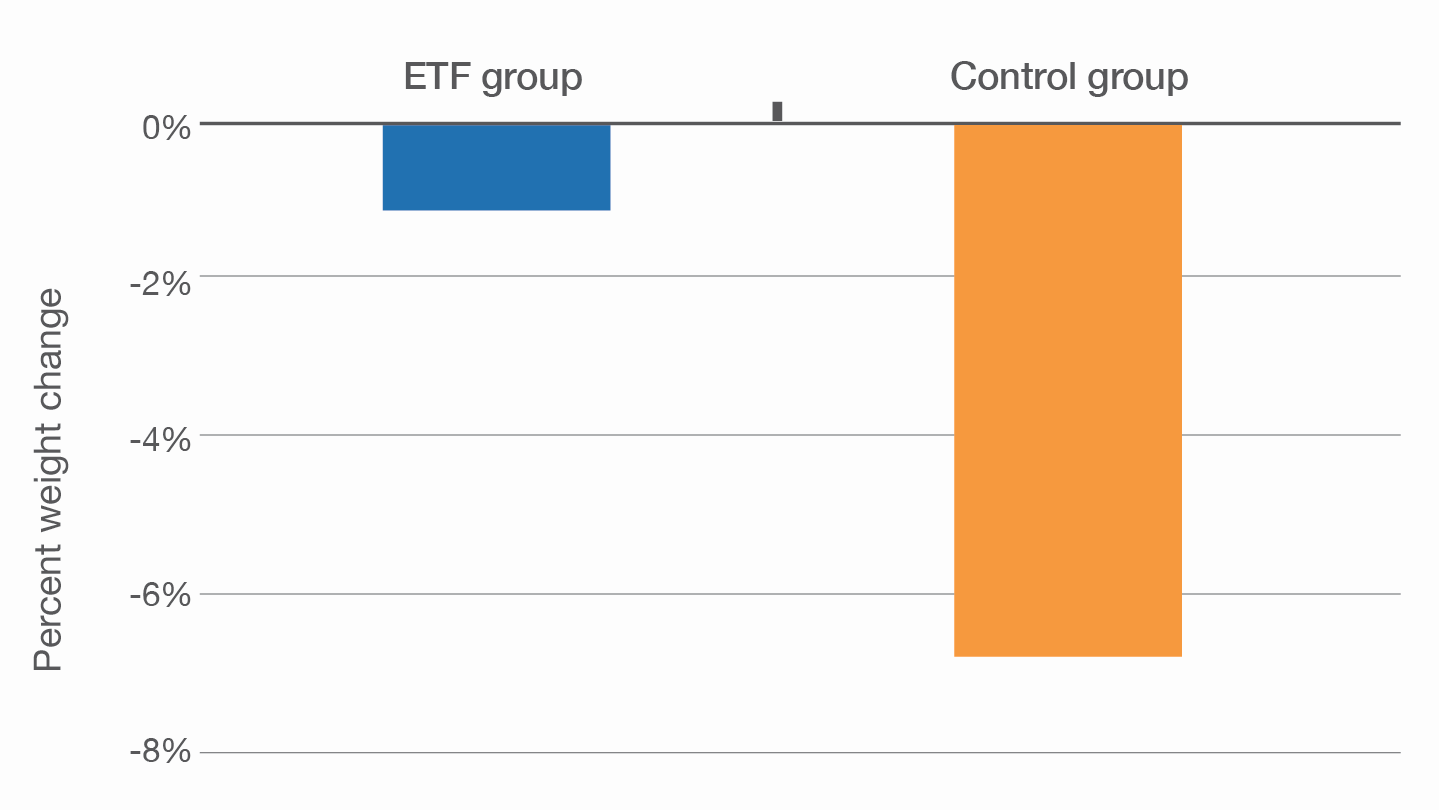
Figure 3.47
Attenuation of weight loss with ETF in the hospital setting(results from 9 RCT, n = 312; weighted mean analysis) (adapted from Stratton et al. 2003) 50
 In community patients, ETF can prevent weight loss and improve body weight and lean tissue mass
- In a systematic review of ETF in community patients by Stratton et al. ETF increased or maintained weight over variable periods of time in all trials that made assessments (significant improvement in all three RCTs). In trials that assessed body composition, 88% indicated improvements in fat mass and/or muscle mass in a variety of patient groups, such as COPD, cystic fibrosis, HIV and renal disease.50
- In a meta-analysis of 15 RCTs including 1,059 patients, home enteral nutrition (HEN) and oral nutritional supplements were evaluated in individuals who underwent upper gastrointestinal resection for malignancy. When compared to a standard oral diet, HEN significantly prevented weight loss (95% CI: 1.24–2.73).53
 Prophylactic gastrostomy feeding in head and neck cancer patients may reduce percentage weight loss compared to usual care
- In an evidence update by the National Institute for Health and Care Excellence in the UK, prophylactic gastrostomy feeding in head and neck cancer patients resulted in a lower percentage body weight lost at 6 months (among only those patients who had lost weight) in the group receiving prophylactic gastrostomy feeding (11.4%) than the control group receiving usual care (13.6%, p = 0.03).54 Note: usual care included nutritional advice and enteral feeding when necessary.
 ETF can improve growth in children in the community
- In the systematic review of ETF in community patients by Stratton et al. (2003). ETF improved growth in infants and children with cancer, cystic fibrosis, HIV and gastrointestinal disease.50
- A retrospective analysis (n=402) on children (median age: 39 months) entered into an HEN program due to neurological impairment disorders found significant improvement in nutritional status. Specifically, the growth profile significantly changed within the first two years after initiating HEN. 55
 Enteral tube feeding improves weight variables in specific groups of children
- A systematic review assessing the effects of nutritional interventions in patients with cystic fibrosis found that in 5 studies, a significant improvement in weight variables was evident after the start of enteral tube feeding, with follow-up periods lasting from 1-4 years.52
- A systematic review of 13 studies looking at the effects of gastrostomy tube placement on the quality of life and physical benefits of care givers and children with neurological impairment, found no overwhelming conclusions but reported improvements in weight gain in a thematic analysis.56