
3.1.3.1 MORTALITY
Meta-analyses consistently show a reduction in mortality in patients given ONS versus standard care
- Stratton et al. (2003) found that in hospital patients, mortality rates were significantly lower in supplemented (19%) than control (25%) patients (see Figure 3.15) (older people, liver disease, surgery and orthopaedics, p < 0.001; OR 0.61 [95% CI 0.48–0.78], meta-analysis of 11 trials, n = 1965; no significant heterogeneity between individual studies).2 This represented a 24% reduction in mortality.
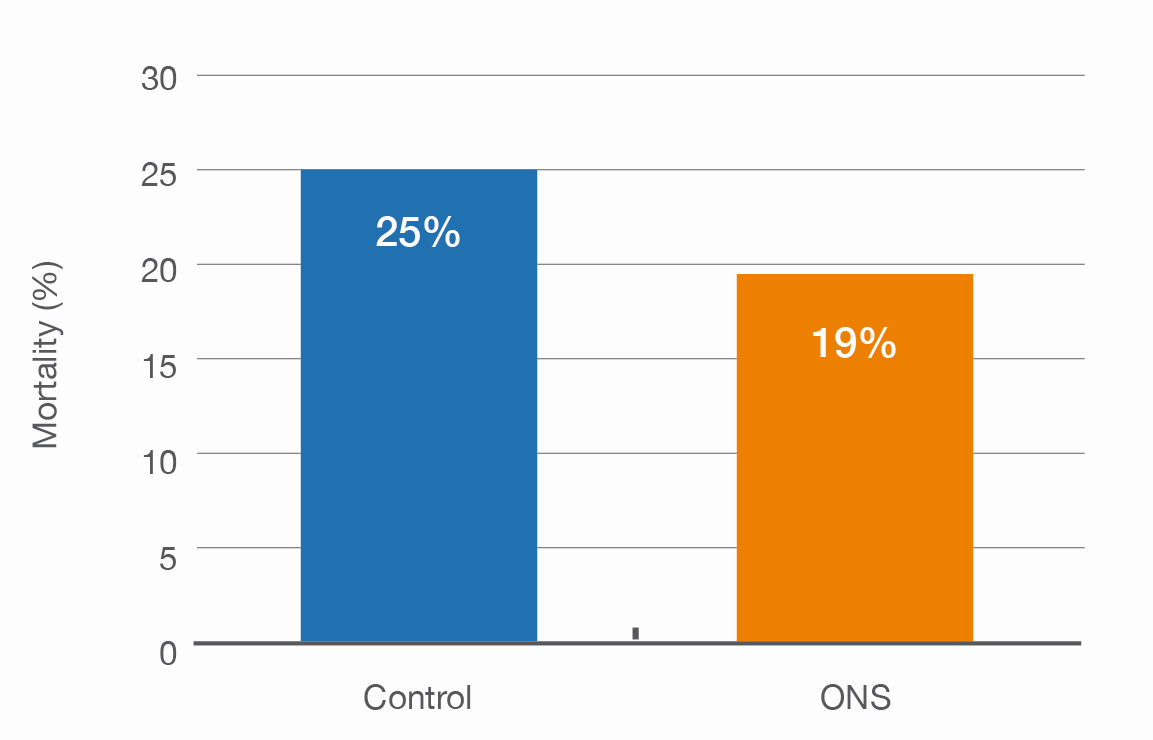
Lower mortality in supplemented versus control patients (adapted from Stratton et al. 2003) 2
- The reduction in mortality with ONS tended to be greater in patient groups in which the average BMI was < 20 kg/m² than in those with a BMI > 20 kg/m².2
- Meta-analysis as part of a comprehensive systematic review of the cost and cost-effectiveness of using standard ONS in the hospital setting showed a 1 in 3 reduction in deaths in patients given ONS versus controls (35% reduction in mortality). (see Figure 3.16)1
- Meta-analysis by NICE (2006) of RCTs of ONS versus standard care in malnourished patients across healthcare settings and diagnoses demonstrated a statistically significant reduction in mortality (25 studies, relative risk [RR] 0.82; 95% CI 0.69–0.98) (see Figure 3.17)30
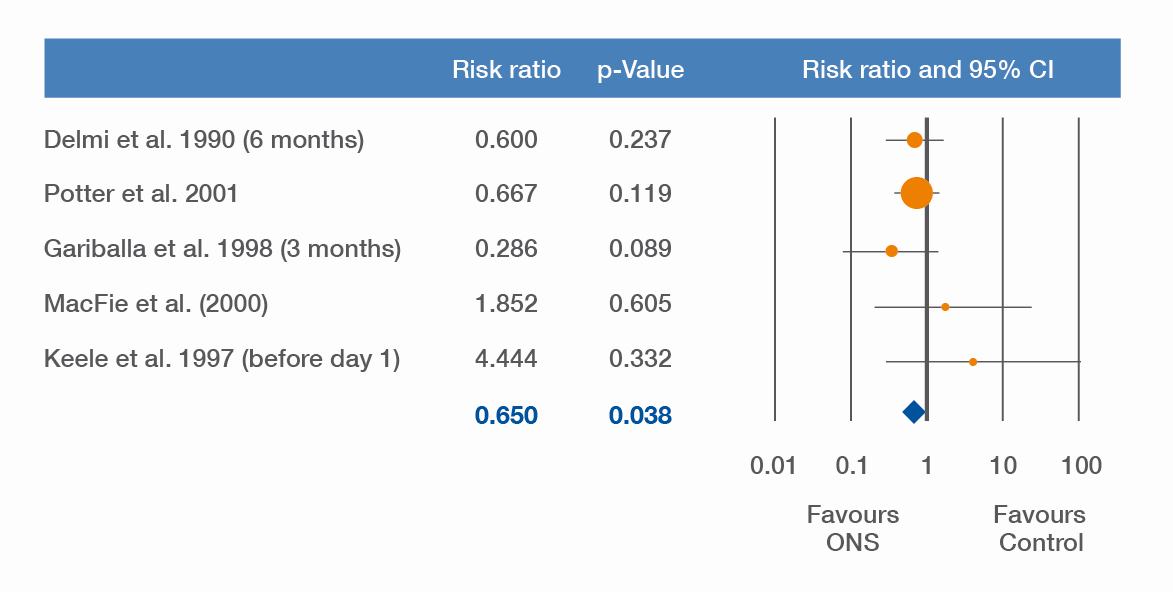
Random effects meta-analysis of mortality reported in hospital studies with economic outcomes. (Adapted from Elia et al. 2016)1
(Risk ratio 0.650 [95% CI 0.432, 0.976], p = 0.038; I2 = 0%, p = 0.459). The studies that reported mortality at 3 months and 6 months are indicated according to originally designated group
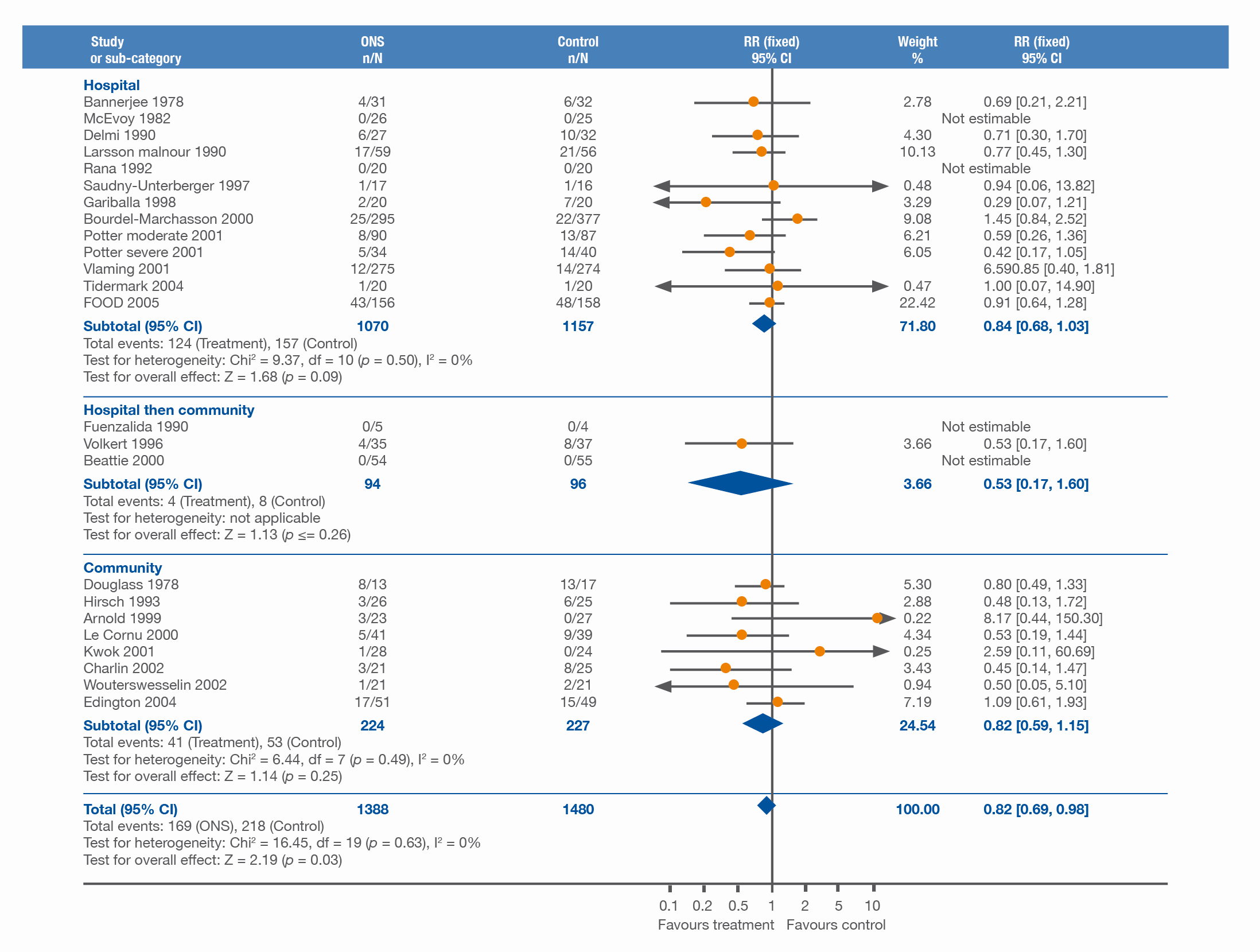
ONS vs standard care (all patients): mortality by setting (adapted from NICE 2006)30
 High protein ONS can lead to a reduction in mortality in hospital patients
- A high-protein oral nutritional supplement containing beta-hydroxy-beta-methylbutyrate (HP-HMB) was shown to reduce 90 day mortality by 50% compared to placebo in a multi-centre RCT (4.8% vs. 9.7%; relative risk 0.49, [95% CI 0.27 to 0.90]; p = 0.018) in older, malnourished adults (≥ 65years, n = 652) hospitalised for congestive heart failure, acute myocardial infarction, pneumonia, or chronic obstructive pulmonary disease. Supplementation was started in hospital and continued in the community.73
 Meta-analyses show a reduction in mortality in undernourished older patients given ONS
- A Cochrane systematic review (Avenell et al. 2006) of intervention with ONS among older hip fracture patients showed that significantly fewer patients had unfavourable outcomes (combined outcome of mortality and survivors with medical complications) with ONS versus routine care (RR 0.52; 95% CI 0.32–0.84).74 A recent update of this review no longer shows a significant effect (original review intervention group n = 66 and control group n = 73, updated review intervention group n = 126 and control group n = 103).75 The update includes 1 new study, i.e., a study of ONS in normally nourished or mildly malnourished older patients where malnourished individuals were excluded.76
- A Cochrane systematic review completed by Milne et al. in 2005 of protein and energy supplementation in older people reported that nutritional supplementation was associated with a statistically significant reduction in mortality (32 trials, n = 3021; RR 0.74; 95% CI 0.59–0.92). In subgroup analysis in this report, improved survival with ONS was observed in undernourished patients (21 trials, n = 1825; RR 0.72; 95% CI 0.55–0.94), when people were aged ≥ 75 years of age (24 trials, n = 2033; RR 0.69; 95% CI 0.54–0.87), when participants were not well (28 trials, n = 2628; RR 0.73; 95% CI 0.59–0.92), and when they were offered ≥ 400 kcal/d as ONS (19 trials, n = 2177; RR 0.71; 95% CI 0.56–0.90).77
- The reduction in mortality with ONS was borderline statistically significant in an update of this meta-analysis in 2006 (25 trials, n = 6852, OR 0.86; CI 0.74–1.00)78 and not significant in a further update in 2009 (42 trials, n = 8031, RR 0.92; 95% CI 0.81–1.04).18 The updates included the Feed Or Ordinary Diet (FOOD) trial, which contributed 4,023 patients of whom only 8% were classified as malnourished at baseline. As most patients were well-nourished, it has been suggested that the wrong patient group was selected for nutritional support.79 The results of the FOOD trial suggested that routine use of ONS in well-nourished stroke patients is unlikely to be useful; however, the potential benefit of ONS in malnourished patients was not investigated in this trial.80 The patients most likely to benefit from nutritional support, i.e., severely malnourished patients, are often excluded from trials in nutritional support, as withholding treatment may be unethical.81
- The 2009 updated Cochrane review by Milne et al.18 also included Gariballa et al. (2006), where the number of deaths reported at 6 months was higher in the supplemented group (32/223; 14%) compared with the placebo group (19/222; 9%), but this was not significant (p = 0.6).42 Twelve of the deaths in the supplemented group and 7 in the placebo group occurred within the first 6 weeks of randomisation, and 15 of the patients who died in the supplemented group consumed 3 or less of the total number of ONS prescribed.42 This may reflect the nature of the study group, i.e., acutely ill older patients.
- However, subgroup analyses in all 3 meta-analyses by Milne et al. (2005, 2006 & 2009) have consistently shown a statistically significant reduction in mortality in undernourished patients receiving ONS compared to routine care (21 trials, n = 1825, RR 0.72; 95% CI 0.55–0.94;77,82 17 trials, n = 2093, OR 0.73; CI 0.56–0.94;78 25 trials, n = 2466, RR 0.79; 95% CI 0.64–0.9718). Furthermore, an improvement in survival was also consistently shown in all three meta-analyses when patients were offered ≥ 400 kcal/d as ONS (19 trials, n = 2177, RR 0.71; 95% CI 0.56–0.90;77 15 trials, n = 6157, OR 0.85; CI 0.73–0.99;78 24 trials, n = 7307, RR 0.89; 95% CI 0.78–1.0018).
- Significantly lower mortality was found in older undernourished medical patients who were randomised to receive individualised treatment in hospital and the community, which included ONS (Group 1) (3.8%), than in patients who received individualised treatment (including ONS) in hospital only (Group 2) or standard hospital care (Group 3) (11.8%, p = 0.046).83
- A systematic review and meta-analysis on nutritional interventions for heart failure patients who are malnourished or at risk of malnutrition or cachexia found that ONS supplementation may reduce mortality and hospital readmission rates. One included study showed that combining personalised nutrition intervention with conventional treatment led to a decrease in all-cause mortality and hospital readmission. Additionally, a multicentre randomised controlled trial on older malnourished hospitalised patients, including those with heart failure, found that 90-day mortality was lower in the ONS group (4.8% vs. 9.7%, RR 0.49, 95% CI 0.27–0.90). While these results suggest a potential survival benefit, the overall quality of evidence remains low to moderate, necessitating larger and more robust studies to confirm these findings.59
- The Cochrane Review on dietary advice with or without ONS for disease-related malnutrition in adults84 states that there was no significant difference in mortality between those receiving dietary advice with ONS and those receiving either dietary advice alone or no intervention:
- At 12 months and beyond, data from three studies (542 participants) showed no significant difference in mortality between the dietary advice plus ONS group and the no advice/no ONS group (RR 1.07, 95% CI 0.96 to 1.20);
- At seven to twelve months, data from three studies (461 participants) found no significant reduction in mortality (RR 0.99, 95% CI 0.76 to 1.29);
- Across multiple time points (0–12 months), several analyses concluded that dietary advice with ONS did not significantly impact mortality rates compared to control groups.
However, while the Cochrane Review found no significant reduction in mortality, it is important to consider that mortality alone may not fully capture the clinical benefits of ONS. Therefore, despite the lack of a direct mortality benefit, the overall evidence supports the use of ONS as an effective intervention for improving patient outcomes.
Other reviews: Mixed patient groups and combination of different forms of nutrition support
A systematic review of randomised clinical trials (RCTs), published in 2016 by Bally et al. assessed the effects of nutritional interventions such as dietary advice, food fortification, oral supplementation and enteral feeding on outcomes of medical inpatients with malnutrition or at risk for malnutrition. This study did not show a significant reduction in mortality, hospital- acquired infections, functional outcomes or length of hospital stay.85 However, a significant reduction in non-elective readmissions was demonstrated in the intervention group compared with controls (20.5% vs. 20.9%; risk ratio, 0.71; 95% CI, 0.57-0.87.85
ONS have been shown to be more effective than dietary advice or snacks
- In a trial of hospital patients with fractured neck of femur at risk of malnutrition (screened using ‘MUST’) (n = 50, median age 82 [range 46–97], median BMI 19 kg/m2 [range 12.5–26 kg/m2]) randomised to receive either ONS (300 kcal per serving) or isoenergetic readily available snacks ad libitum post-operatively, significantly fewer patients in the ONS group had complications than in the snack group (27% vs 58%, p = 0.04). Although not significant, a reduction in the incidence of specific complications was also observed, i.e., infections, 17% vs 33%, and wound-related complications (poor wound healing, pressure ulcers), 17% vs 38%.86
- A total of 22 reviews were included in an overview of systematic reviews that compared ONS with routine care in adult patients who were either malnourished or at risk of malnutrition. The results revealed significant benefits of ONS in 4 out of 4 analyses of energy intake, 7 out of 11 analyses of body weight, 7 out of 22 analyses of mortality, 10 out of 17 analyses of complications, 1 out of 3 analyses of muscle strength, 4 out of 9 analyses of body composition/nutritional status, 2 out of 14 analyses of length of stay, and 2 out of 5 analyses of hospital readmissions. Among the reviews, 10 were of high quality (AMSTAR scores 8–11), 9 were of moderate quality (AMSTAR scores 3–8), and 3 were of poor quality (AMSTAR scores 0–3).57
- See Table A4.1, Appendix IV for a comparison of the average nutrient content of ONS with typical food snacks.