
3.1.4.1 HEALTHCARE RESOURCES
 ONS reduce length of hospital stay
- Meta-analysis by Stratton et al. (2003) showed that length of hospital stay in supplemented compared with control patients was reduced significantly in all 9 RCTs that presented results, either as means or medians (9/9 trials; two-tailed binomial test, p < 0.004). The average reductions ranged from 2 days (in surgical patients) to 33 days (in orthopaedic patients). Meta-analysis of 4 trials that recorded the mean of LOS in surgical and orthopaedic patients indicated that ONS were associated with reduced LOS relative to control patients (effect size -0.80 days [95% CI -1.24–0.36]).2
- An analysis of Medicare patients aged ≥65 hospitalised with COPD using the Premier Research Database showed that ONS use was associated with a 1.9-day (21.5%) reduction in LOS (p < 0.01) in instrumental variables analysis.112
- The reduction in LOS appeared to be greater in patient groups with a BMI < 20 kg/m² than when BMI was > 20 kg/m².2
- Meta-analysis of 9 RCTs in hip fracture and acutely ill patients (n = 1227) (ONS given in hospital [1 RCT], in the community [1 RCT] and across hospital and community [7 RCTs]) showed a significant reduction in length of stay in patients who received oral nutritional intervention with high-protein ONS versus controls (-3.77 [95% CI -7.37–0.17] days, p = 0.040 random effects model).9
- In a comprehensive systematic review that aimed to examine the cost and cost-effectiveness of standard ONS in hospital patients, 12 studies were included in the overall analysis. Of the 12 studies included in the overall systematic review, 10 (83%) had a mean or median length of stay shorter in the ONS group compared to controls (p =0.039, binomial test). A separate meta-analysis of a subset of five UK studies in surgical patients showed a reduction in length of hospital stay in studies where patients were given ONS vs. controls. Length of stay was reduced by 2 days corresponding to ~13% reduction.1
- A systematic overview of 22 reviews assessing ONS interventions in malnourished or at-risk adult patients identified 14 meta-analyses evaluating LOS. Significant benefits of ONS were observed in 2 out of 14 analyses examining length of hospital stay, highlighting considerable heterogeneity in findings. Methodological quality varied across reviews, with limitations in search strategies, heterogeneity reporting, and evidence grading contributing to discordance. Even among high-quality reviews, inconsistencies remained, underscoring the uncertainty regarding the impact of ONS on LOS.57
 Meta-analyses consistently show that ONS reduce hospitalization
- A series of meta-analyses (using 10 datasets from 8 publications) in a comprehensive systematic review of the cost and cost-effectiveness of using standard ONS in community and care home settings demonstrated that standard ONS significantly reduce hospitalisation:113
- by 16.5% in meta-analysis of 9 datasets from full text papers only ([se 4.0], p = 0.001;n = 1051 subjects; I2 = 16%, p = 0.307) (see Figure 3.24);
- by 20% in meta-analysis of longer term studies of ≥ 3 months of ONS supplementation (point estimate 20.3% [se 6.4%], p = 0.001; 6 datasets, n = 747 subjects; I2 = 26%, p = 0.239);
- by 12.9% in meta-analysis of only short-term (<3 months of ONS supplementation) surgical studies ([se 4.9%], p = 0.008; 4 datasets, n = 383; I2 = 0%, p = 0.716);
- by 14.9% when only the surgical studies involving pre-operative ONS administration in the community component were considered ([se 5.4%], p = 0.007; 5 datasets,n = 304); I2 = 0%, p = 0.694).
- Studies have focused specifically on the proper prescription of ONS. A prospective multicentre observational study in malnourished elderly patients (n = 191) found that those prescribed ONS had a higher risk of hospitalisation (OR 2.518, p = 0.03). However, a higher intake of ONS (≥500 kcal/day or ≥30 g protein/day) was associated with a 3–5 times lower risk of hospitalisation, suggesting a potential protective effect when adequate ONS intake is achieved.64
- In an earlier systematic review and meta-analysis of the impact of oral nutritional supplements on hospital readmissions by Stratton et al. 2013, a meta-analysis of 6 RCT that reported the number of patients (re)admitted to hospital (n = 857) showed that the proportion of patients readmitted to hospital was significantly less in the ONS group than in the control group (23.9% vs. 33.8% respectively (OR 0.591, 95% CI 0.434-0.804,p = 0.001)114 (see Figure 3.25).
- In the same report a meta-analysis of all the RCT reporting (re)admissions to hospital (8 RCT, n = 999) showed that the proportion of patients (re)admitted to hospital was significantly less (23% less) in the ONS group than in the control group (standardised difference -0.230, 95% CI -0.363 to -0.097, p = 0.001)114 (see Figure 3.26).
- However, in a more recent overview of 22 systematic reviews and 91 meta-analyses on the impact of ONS for malnourished or at-risk patients, the effect of ONS on hospital readmissions showed limited consistency, with significant benefits observed in only 2 of 5 analyses. This variability in findings suggests that the impact of ONS on hospital readmissions remains uncertain, likely due to differences in patient populations, clinical conditions, and methodological rigor across the studies included. Despite these discrepancies, the evidence points to potential benefits in reducing hospital readmissions, though further research is needed to clarify the extent of this effect.57
- In a 2021 systematic review of nutritional interventions for malnourished patients with heart failure (HF), five studies (four RCTs and one pilot RCT) were included. One study found that combining personalised nutrition (diet optimisation, tailored nutritional advice, and prescription of supplements when dietary targets were not met) with conventional treatment for heart failure led to a reduction in both all-cause mortality and hospital readmissions. The review suggests that nutritional interventions may improve outcomes in HF patients, particularly in reducing hospital readmissions. However, the evidence is limited due to small sample sizes and low study quality, indicating a need for larger, more robust trials to confirm these findings.59
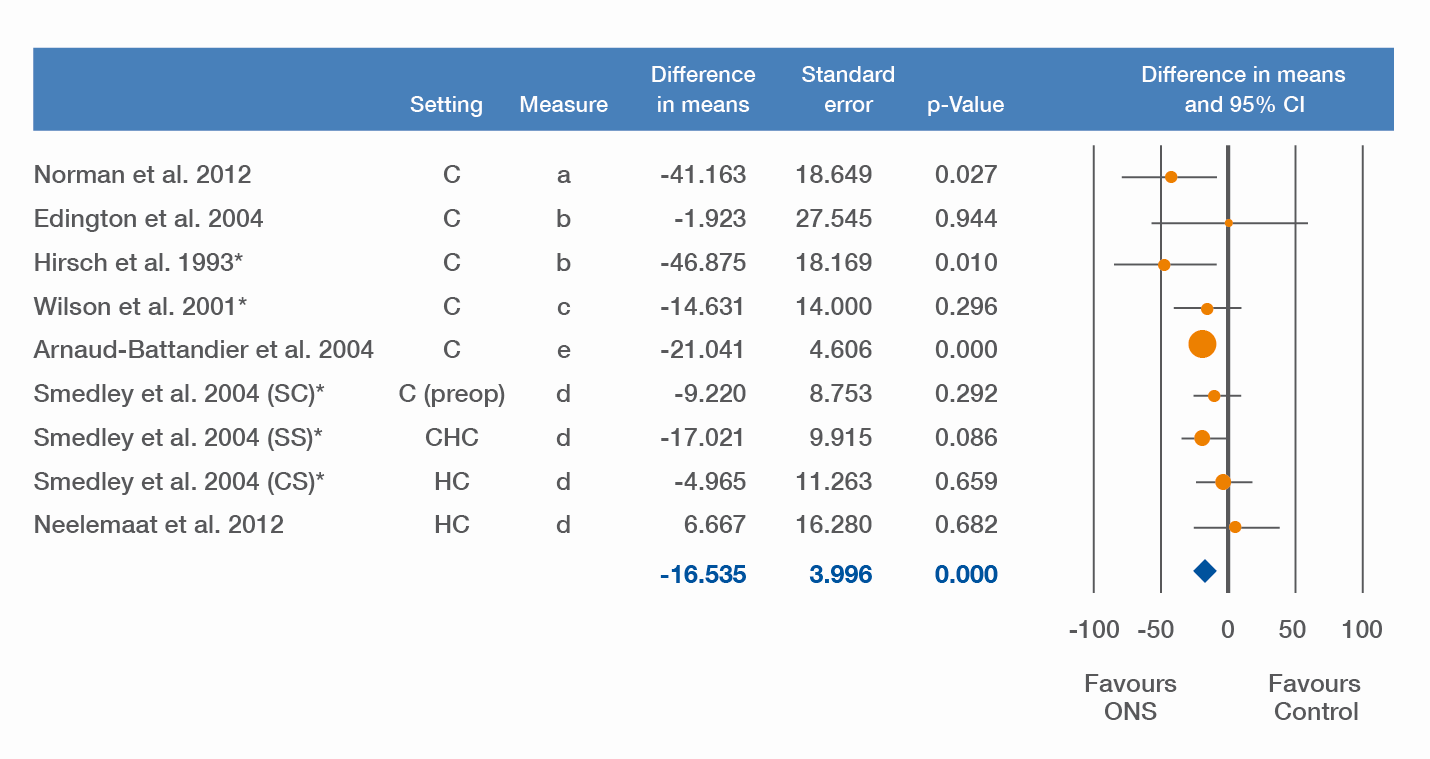
Figure 3.24
Meta-analysis of hospitalisation in the ONS and comparison (control) groups based on RCTs. (Adapted from Elia et al. 2016) 113
The results expressed as a percentage of control group (negative values indicate a cost saving in favour of the ONS group); C = community; CHC = community followed by hospital and in the community again after discharge from hospital; HC = hospital followed by the community; C (pre-op) = preoperatively although it may have been continued for a short period in hospital before surgery). a = proportion of patients admitted; b = n admission/patient; c = proportion of study period spent in hospital; d = bed-days/patient. *Calculated using data presented in the BAPEN report.
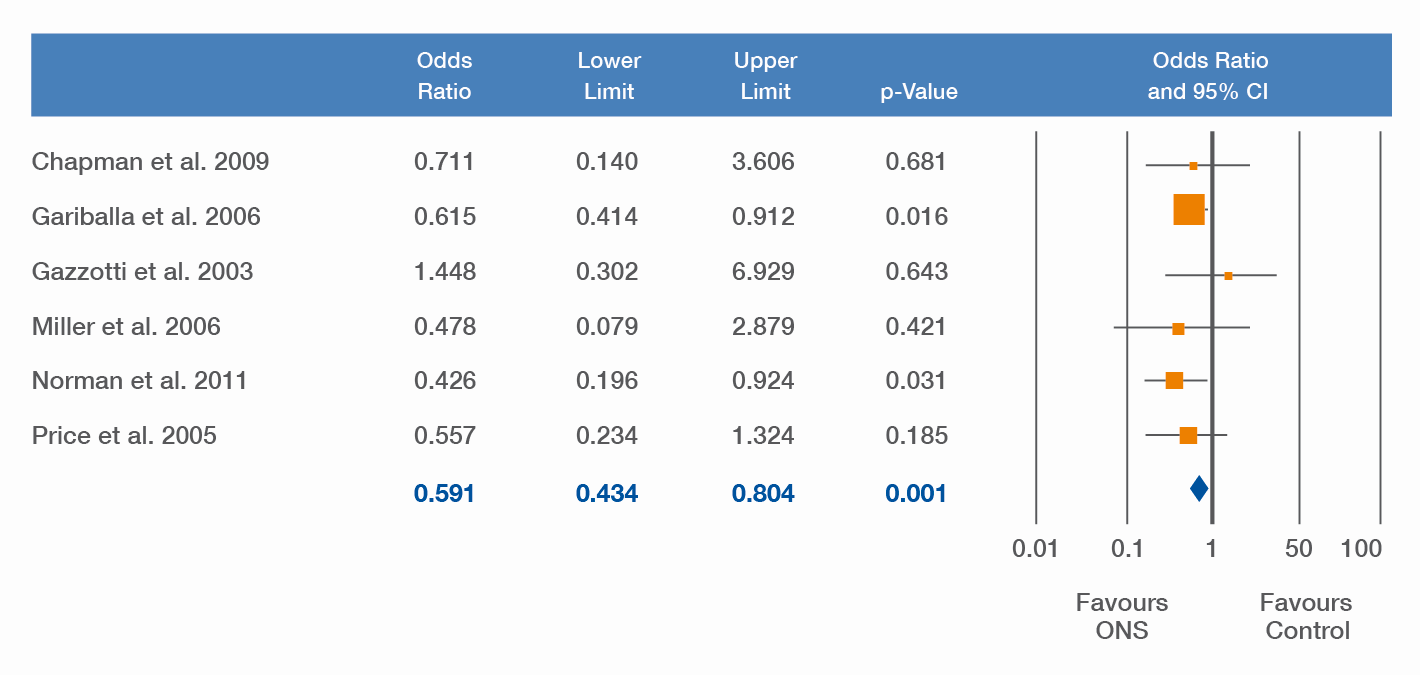
Figure 3.25
Random effects meta-analysis of RCT reporting number of patients (re)admitted to hospital with ONS. (6 RCT, n = 852) (Adapted from Stratton et al 2013) 114
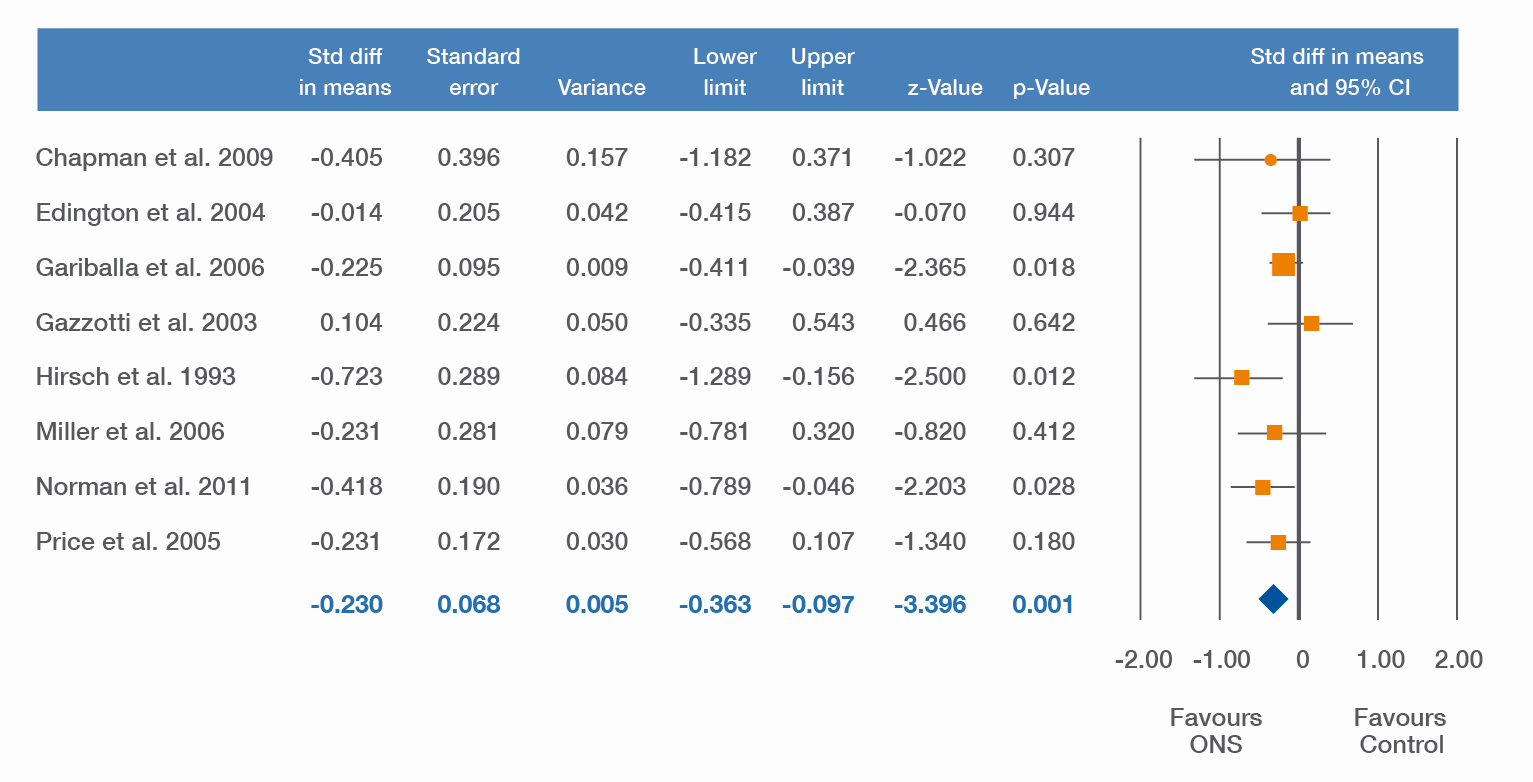
Figure 3.26
Random effects meta-analysis of all RCT reporting (re)admissions to hospital with ONS. RCT, n = 999) (adapted from Stratton et al. 2013) 113
- A meta-analysis of 2 RCTs in acutely ill patients with a wide variety of conditions and in patients with a GI disease (n = 546) (where ONS was given in hospital and community in one study, and, in the community in the other one), showed that oral nutritional intervention with high-protein ONS had a significant effect on reduction of hospital readmissions compared with controls (OR 0.59 [95% CI 0.41–0.84] days, p = 0.004 random effects model) (see Figure 3.27).9 High-protein ONS reduced overall readmissions by 30% (number of readmissions in a control group used as a reference).9
- A systematic review and meta-analysis investigated the effects of post-discharge nutritional support on hospital readmissions among malnourished medical patients. The analysis included 14 RCTs with a total of 2,438 participants. This review showed that outpatient nutritional support significantly improved survival rates and nutritional intake (energy, protein, and body weight). In addition, compared to the control group, patients receiving outpatient nutritional support had lower mortality (OR 0.63, 95% CI 0.48 to 0.84, p = 0.001). No significant differences were found in hospital readmission rates between the intervention and control groups. However, moderate heterogeneity was observed, likely due to variations in intervention duration and differences in patient diagnoses at the time of admission. Examining readmission rates and other quality-related outcomes is crucial and carries economic significance for healthcare systems. While in-hospital nutritional support has been shown to be cost-effective, comparable evidence for managing malnutrition in outpatient settings remains limited.115
- A systematic review and meta-analysis evaluated the impact of dietary counselling with or without ONS on hospitalised adults who are malnourished or at risk of malnutrition. The analysis included 16 studies and compared these interventions with standard care. Results showed that dietary counselling slightly reduced the risk of readmissions (RR = 0.83, p = 0.10), though the evidence was of low certainty (see more in Figure 3.28). The certainty of the evidence was primarily downgraded due to inconsistency, likely stemming from the heterogeneity of study populations. Additionally, some control groups may have unintentionally received interventions such as ONS or nutrition education due to study design. Reporting on the type, content, and frequency of dietary counselling, as well as the qualifications and experience of the clinicians involved, was often insufficient. Overall, the findings were constrained by the limited availability of high-quality studies.116
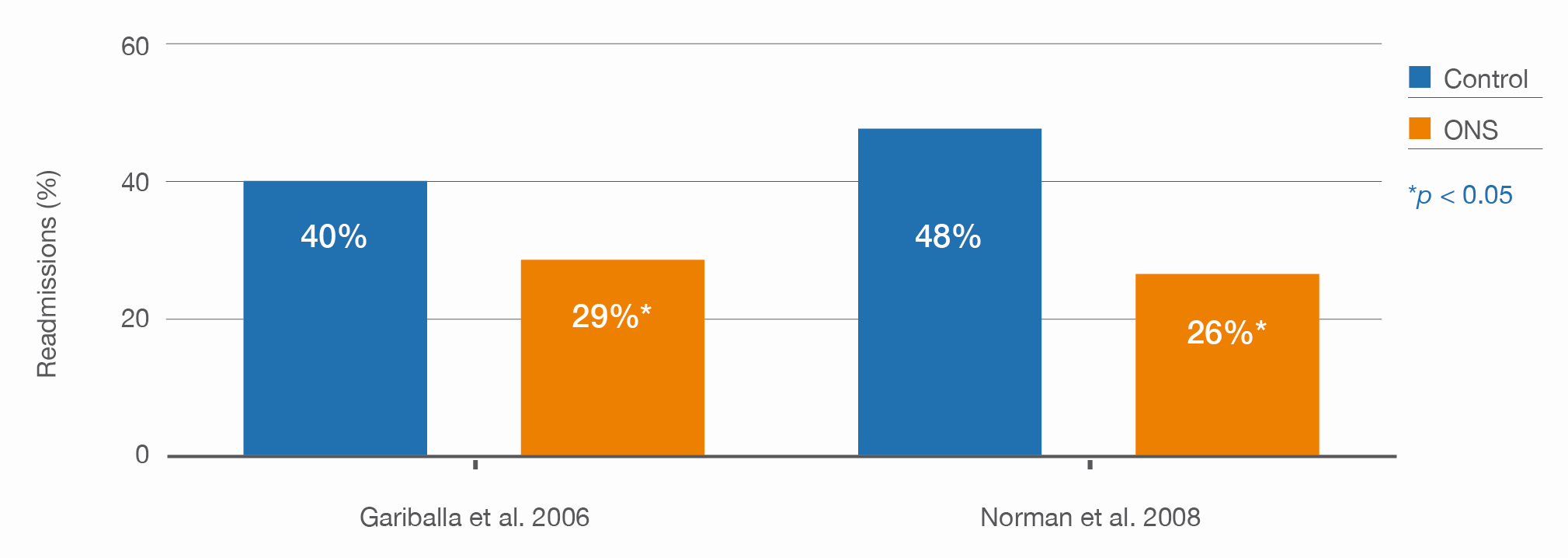
Figure 3.27
Significant reductions in readmissions with high protein ONS(adapted from Cawood et al. 2012) 9
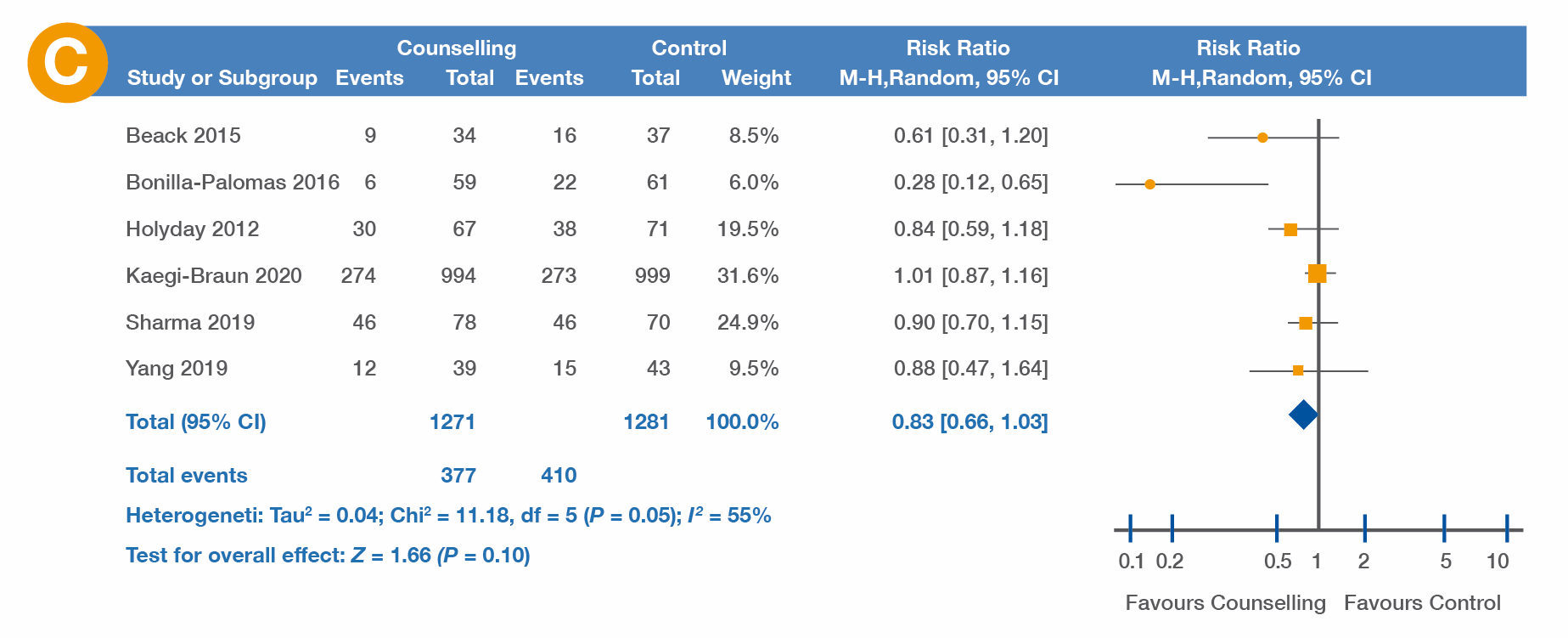
Figure 3.28
Pooled effect size meta-analysis of all RCT reporting 6 months (re)admissions to hospital with ONS. (6 RCT, n = 2552) (adapted from Wong et al. 2022)116
ONS can improve rehabilitation outcome
- In undernourished patients admitted to a stroke service, those randomised to receive an intensive (higher energy, protein and vitamin C content) supplement (n = 51) were more likely to be discharged home (63%) compared with patients (n = 51) given standard ONS (43%) (p < 0.05) (34% reduction in discharges to institutional settings).54
- A study in older patients with hip fracture investigating the effects of hospital meals plus ONS vs hospital meals alone (both groups also received usual rehabilitation therapy, oral calcium and vitamin D supplements) for 4 weeks, found that patients in the intervention group had a significantly lower length of stay in rehabilitation (mean [SD] 26.2 days [8.2] vs. 29.9 days [11.2]; p = 0.04) than the control group.117
- In a retrospective cohort study, 1,012 post-stroke patients (median age 75.6 years, 54.1% men) were investigated to assess the impact of the triad approach—combining intensive rehabilitation, personalised nutrition support, and oral management by dental professionals. The study found that the triad approach was significantly associated with improved outcomes in activities of daily living (ADL), muscle strength, and skeletal muscle mass. Patients receiving the triad approach showed higher functional independence (FIM-motor), increased handgrip strength (HGS), and greater skeletal muscle mass index (SMI) at discharge compared to those receiving one or a combination of interventions.118