
3.2.4.2 COMPLICATIONS
 ETF can reduce complication rates in hospital patients
- A systematic review by Stratton et al. found that complication rates were significantly reduced by ETF compared with routine care in some patient groups. Complication rates, including sepsis, wound and urinary infections and pneumonia, were significantly lower with ETF than with routine care (33% vs 48%), with meta-analysis suggesting an odds ratio of 0.50 (95% CI 0.35–0.70). Significant reductions in infective complications were also noted (odds ratio 0.26 [95% CI 0.15–0.44]). Weight change may be associated with the improvements in complications.50
- A Cochrane systematic review showed that ETF was associated with a reduced risk of sepsis compared to PN (RR 0.59, 95% CI 0.37 to 0.95; 7 studies, 361 participants).73
Early enteral nutrition (compared to delayed enteral nutrition) is associated with lower complication rates in critically ill patients
- As part of recent guidelines on nutritional support therapy in adult critically ill patients a meta-analysis of 21 studies was undertaken and showed that provision of early EN was associated with a significant reduction in infectious morbidity (RR = 0.74; 95% CI, 0.58–0.93; p = 0.01), compared with withholding early EN (delayed EN or STD)(see Figure 3.50).63
- A Cochrane systematic review examined the effects of early EN compared to delayed enteral or parenteral nutrition in ICU patients. The study found that initiating enteral feeding within 48 hours of ICU admission was associated with a significant reduction in infection rates (RR = 0.59, 95% CI 0.37 to 0.95).73
- A synthesis of expert opinions and clinical evidence explored the benefits and risks of early enteral nutrition in critically ill patients. It was agreed that starting full feeding too early in critically ill patients might be harmful. However, the precise mechanisms underlying these risks, as well as the optimal timing and dosage of nutrition, remain unclear and require further research. At present, a cautious approach is recommended, starting with low-dose energy and protein intake during the initial ICU days, followed by a personalized feeding strategy that aligns with the patient’s metabolic status and illness progression (see Figure 3.51).74
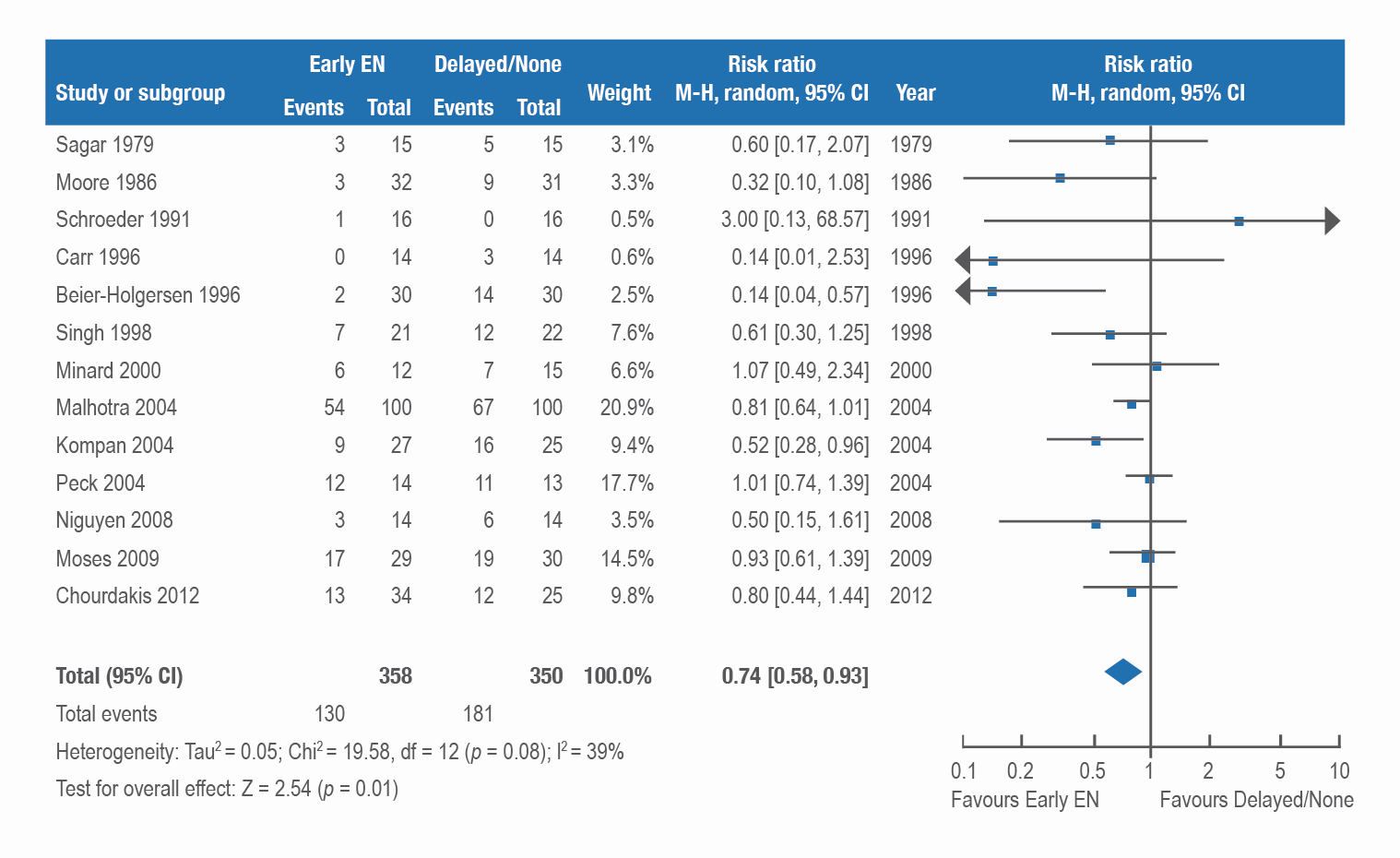
Figure 3.50
Early enteral nutrition (EEN) vs. Delayed enteral nutrition (DEN) associated with a reduced risk of infectious complications (adapted from McClave et al. 2016)63
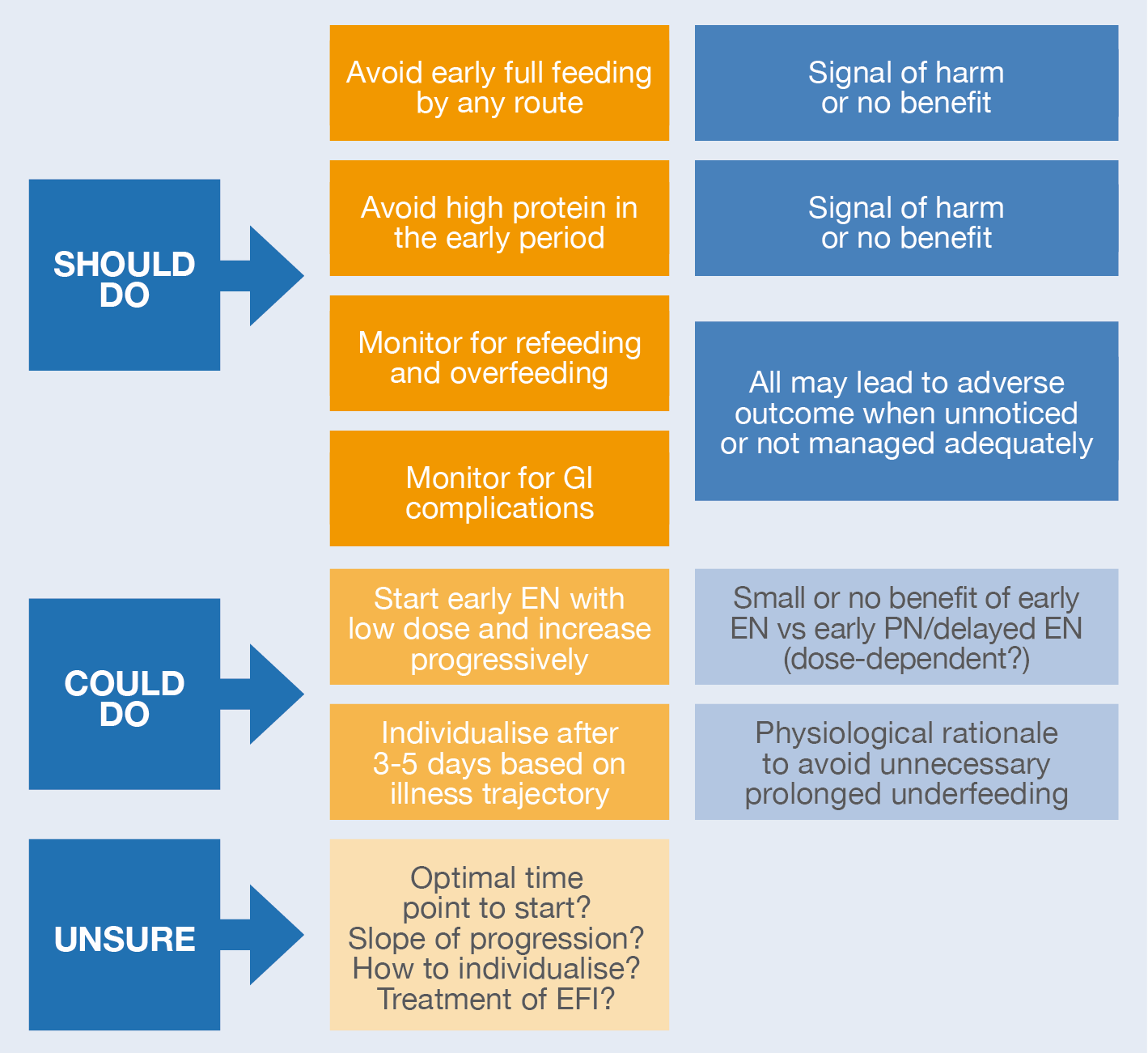
Figure 3.51
Practical summary of current understanding on nutrition. (adapted from Reintam Blaser et al., 2023)74
High energy and protein intakes delivered by ETF reduce the risk of infectious complications in critically ill patients
- In a meta-analysis of randomised controlled trials (8 RCTS, n = 1,895) comparing initial hypocaloric EN versus hypercaloric EN, with different protein intakes, in critically ill patients, there was no statistical difference between the low-energy and high-energy groups in infectious complications (RR, 1.09; 95% CI, 0.92 to 1.29; p = 0.32), or the risk of gastrointestinal intolerance (RR, 0.84; 95% CI, 0.59 to 1.19; p = 0.33). However, subgroup analysis within the same review showed that high-energy intake combined with high-protein intake delivered by ETF reduced the risk of infectious complications (RR, 1.25; 95% CI, 1.04 to 1.52; p = 0.02).75
Higher protein and energy intakes delivered by ETF are associated with more ventilator free days in critically ill septic patients
- In a secondary analysis of pooled data collected prospectively from international nutrition studies (n = 2,270) in critically ill septic patients receiving total ETF, an increase in energy intake via ETF of 1,000 kcal was associated with more ventilator-free days (2.81 days, 95% CI 0.53 to 5.08, p = 0.02) as was an increase of 30g protein delivered by ETF per day (95% CI 0.58 to 3.27, p = 0.005).72
Early enteral nutrition (compared to delayed enteral nutrition and total parenteral nutrition) is associated with a reduced rate of complications in critically ill patients
- In a meta-analysis including 12 RCTs, complications associated with early initiation of EN (EEN) in patients with acute pancreatitis were assessed by stratifying relevant RCTs into subgroups according to the starting time of EN (<24 h or between 24 and 72 h after admission). Results showed that EEN, but not TPN or delayed enteral nutrition (DEN), was associated with reduced risk of:64
- pancreatic infection (21/186 vs. 53/206) (RR: 0.44, 95% CI: 0.28–0.69, p = 0.0004, I2 = 0%);
- organ failure (51/297 vs. 90/317) (RR: 0.59, 95% CI: 0.44–0.79, p = 0.0003, I2 = 10%) (see Figure 3.52);
- hyperglycaemia (18/116 vs. 51/120) (RR: 0.38, 95% CI: 0.24–0.59, p <0.0001, I2 = 0%);
- catheter-related septic complications (5/113 vs. 23/117) (RR: 0.29, 95% CI: 0.13– 0.64, p = 0.002, I2 = 0%).
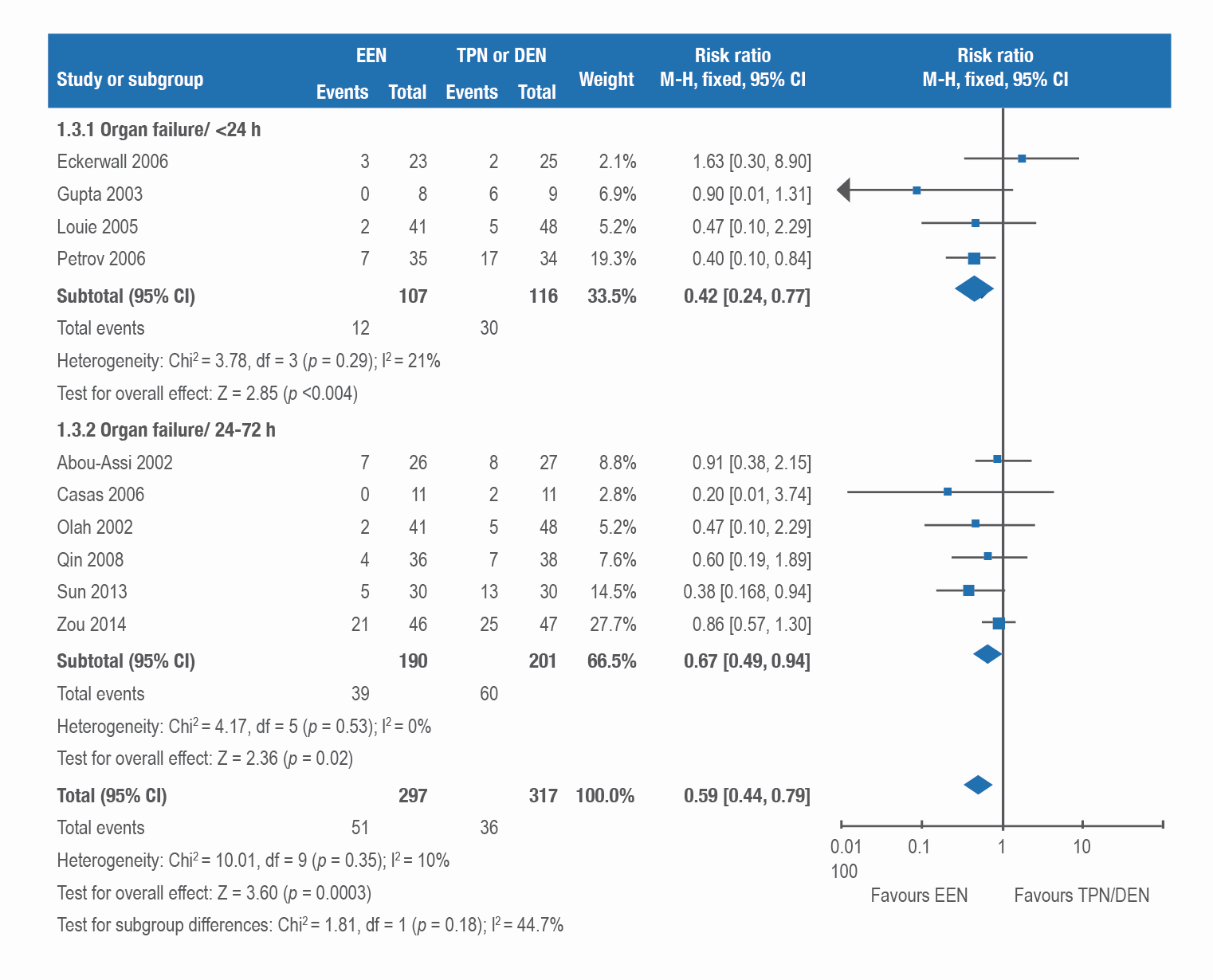
Figure 3.52
Early Enteral Nutrition (EEN) (vs. Parenteral Nutrition (PN) vs. Delayed Enteral Nutrition (DEN)) associated with reduced risk of organ failure (adapted from Li et al. 2014) 64
- Eleven studies containing a total of 775 patients with acute pancreatitis were included in a meta-analysis to assess the effect of EEN on ICU outcomes. Early enteral nutrition was associated with significant reductions in:65
- all infections as a whole (OR 0.38; 95%CI 0.21–0.68, p <0.05) (see Figure 3.53);
- catheter-related septic complications (OR 0.26; 95%CI 0.11–0.58, p <0.05);
- pancreatic infection (OR 0.49; 95%CI 0.31–0.78, p <0.05);
- hyperglycaemia (OR 0.24; 95%CI 0.11–0.52, p <0.05);
- the length of hospitalisation (mean difference -2.18; 95% CI -3.48-(-0.87); p <0.05);
- no difference found in pulmonary complications (p >0.05).
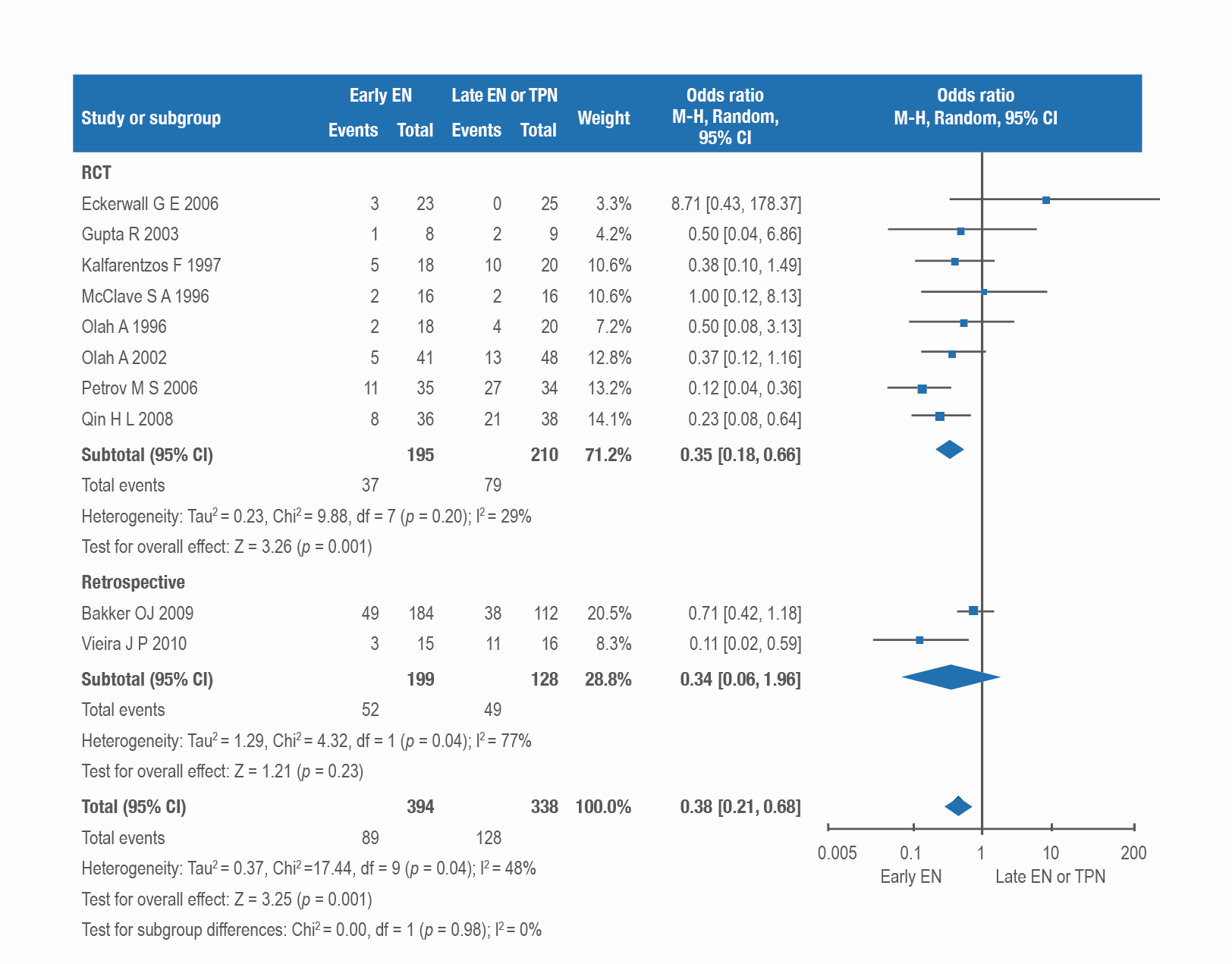
Figure 3.53
Early Enteral Nutrition (EEN) associated with reduced risk of all infectious complications as a whole in acute pancreatitis (adapted from Li et al. 2013) 65
- A meta-analysis which assessed 5 RCTs and 3 non-randomized prospective studies (NPSs) all on patients with traumatic brain injury showed that, compared with delayed feeding, early feeding was associated with a significant reduction in the rate of infectious complications (RR = 0.77; 95% CI, 0.59–0.99).58;ⁱ
- In a meta-analysis of studies assessing the effect of early enteral nutrition in adult trauma patients in intensive care, the provision of early EN (within 24 hours of injury) significantly reduced the incidence of pneumonia compared to standard EN care provided >24hrs (9/27 vs. 16/25, p = 0.050) in one eligible trial.66
- In a meta-analysis of individuals from the EN arm of randomised studies, EEN within 24 hours of admission was associated with a lower incidence of complications compared with EN started after 24 hours.76
- EEN within 24 hours of admission was associated with a lower incidence of the primary composite endpoint (adjusted OR of 0.44 [95% CI 0.20-0.96] and an NNTⁱⁱ of 4 patients). The primary composite endpoint included infected pancreatic necrosis, organ failure, or mortality.
- The same analysis showed a significant reduction in the rate of organ failure following EN within 24 h of admission (16% compared to 42%; adjusted OR 0.42; 95% CI 0.19-0.94, NNT 4).
ⁱThis meta-analysis also included two studies that compared early PN vs. delayed EN. It is not possible from the data presented in the paper to separate out the results specific to the early EN studies only. iiNNT Number needed to treat
EN is associated with improved inflammatory markers and disease activity in adults with Crohn’s Disease
- In a meta-analysis of 11 studies on adults with Crohn’s disease, EN was found to significantly improve inflammatory markers, with polymeric formulas showing superior effects compared to elemental formulas. EN led to short-term reductions in disease activity, although no significant differences in remission rates were observed between ETF and PN. Data from the included trials suggest that EN is a safe and effective intervention in managing inflammatory bowel disease, with fewer complications than PN, and is especially beneficial when used in the short term. The analysis also found that treatment duration and formula type influenced outcomes, with shorter durations and polymeric formulations yielding more favourable clinical responses.77
Peptide-Based Formulas Are Associated with a Reduced Rate of Complications in Patients with Enteral Feeding Intolerance
- Peptide-based formulas, in comparison to standard polymeric formulas, are shown to reduce complications in patients with gastrointestinal GI intolerance and malabsorption issues. Studies have shown that transitioning intolerant patients to peptide-based diets led to significant improvements in symptoms such as nausea, vomiting, diarrhoea, and abdominal distension. Additionally, peptide-based formulas help preserve gut integrity, which may contribute to a lower risk of sepsis.1
 ETF can improve clinical outcomes in patients in the community
- In the review by Stratton et al. (2003) some trials suggested improvements in clinical outcome, such as fewer and shorter hospitalisations, lower mortality rates and reduced use of medication in certain patient groups.50
- A systematic review of 14 studies focusing on adults receiving enteral tube feeding, in community or home settings found that ETF significantly improved nutritional status, reduced malnutrition, and enhanced QoL, particularly in patients recovering post-surgery (e.g., esophagectomy) or managing chronic illnesses such as head and neck cancer or Crohn’s disease. Nine of the 14 studies reported an overall improvement in QoL, mentioning benefits like improved energy levels, better nutritional markers, and decreased hospital readmissions. The review also highlighted that technological aids, such as mobile feeding pumps, contributed positively by minimizing disruption to daily life, thereby enhancing patient satisfaction and independence.57
 PEG placement does not appear to be associated with increased gastro-oesophageal reflux disease (GORD) symptoms in children
- In a systematic review of 8 studies (case series and retrospective reviews) looking at the symptoms of GORD following PEG placement in children there was no difference or a decrease in the severity of GORD following PEG placement in 6 of the reviewed studies.78
- ASPEN Safe Practices for Enteral Nutrition Therapy4 reports that early initiation of ETF in paediatric patients is associated with improved nutritional status, reduced infection rates, and shorter hospital stays. The use of pureed-by-gastrostomy tube diets in children with feeding intolerance, particularly after fundoplication surgery, was found to reduce symptoms like gagging and retching, thereby improving feeding tolerance and comfort. Furthermore, when ETF is safely and correctly implemented using standardised protocols, it supports growth, development, and recovery in acutely and chronically ill children.